

More news on this day
Hundreds of travelers across the Middle East were left in limbo today as widespread disruption hit major hubs in Saudi Arabia, Egypt, Türkiye, the United Arab Emirates, Kuwait, and Israel, with 586 flights delayed and 23 cancelled, disrupting operations at airports in Dubai, Cairo, Riyadh, Istanbul, and other key gateways.
Get the latest news straight to your inbox!
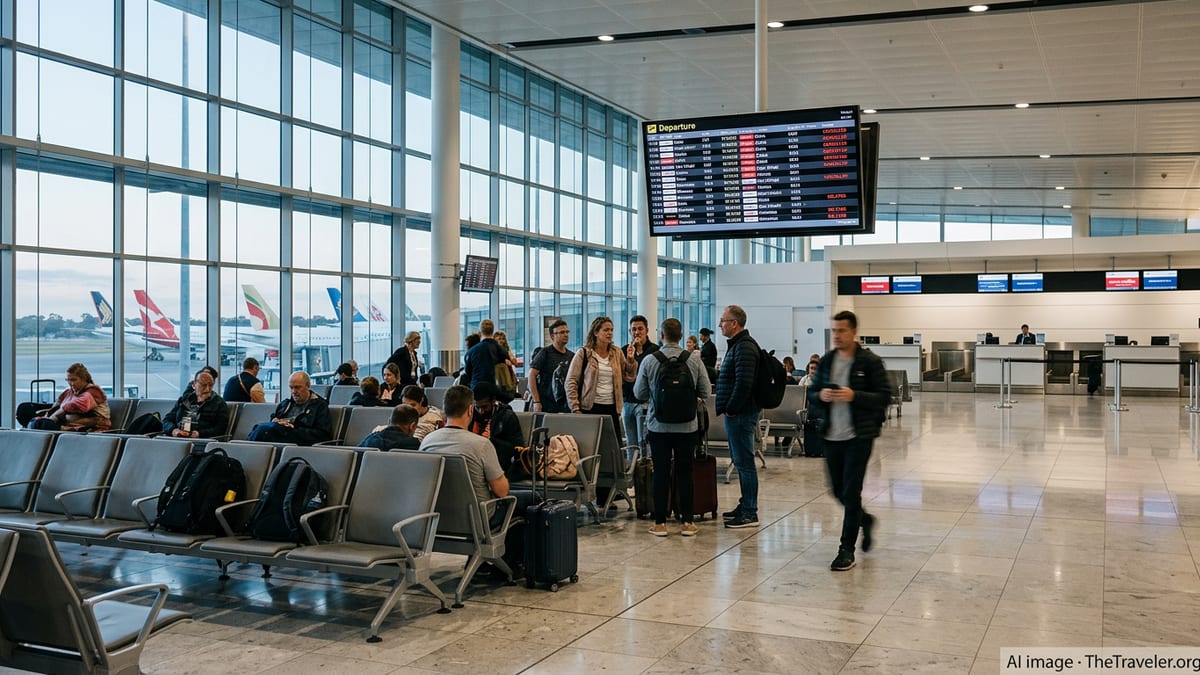
Fresh Wave Of Disruptions Across Middle Eastern Hubs
Published flight-status data and operational updates indicate that a new wave of delays and cancellations swept across the region today, compounding weeks of instability in Middle Eastern airspace. While the total number of affected flights is smaller than some earlier spikes linked to recent tensions, the impact on passengers at major transfer hubs has been acute.
Delays and cancellations have been concentrated at heavily used international airports, including Dubai International, Cairo International, King Khalid International in Riyadh, and Istanbul’s main hub. These airports function as critical crossroads for traffic between Europe, Asia, and Africa, so disruption to even a fraction of daily movements can quickly cascade into missed connections and overnight backlogs for travelers in transit.
Operational data suggests that carriers have been forced to adjust schedules throughout the day, with aircraft and crews out of position following earlier waves of airspace closures and reroutings over parts of West Asia. Airlines continue to publish rolling updates warning that departures may be held at short notice, even when flights are not formally cancelled.
The latest turmoil comes on top of a broader pattern of instability that has gripped regional aviation since late February, with thousands of flights affected over recent weeks as airspace restrictions and shifting security assessments compelled airlines to curtail or reroute services across the Middle East and adjoining regions.
Emirates, Pegasus, Saudia And EgyptAir Among Affected Carriers
Publicly available schedules and disruption trackers show that the latest wave of delays and cancellations has affected a broad mix of full service and low cost airlines. Flag carriers such as Emirates, Saudia, and EgyptAir appear among the most exposed, reflecting their heavy reliance on the hubs most directly impacted.
In Dubai, Emirates services have already been operating under constrained conditions for several weeks, with earlier suspensions and selective resumptions creating a patchwork of restored and still-cancelled routes. Today’s delays add further strain, particularly for long haul passengers attempting to connect between Asia and Europe via the airline’s primary hub.
In Türkiye, Pegasus Airlines has faced growing schedule disruption as regional airspace bottlenecks ripple into Istanbul operations. Industry analysis this week highlighted that Pegasus was among carriers hit by large numbers of delays and cancellations across Asia and the Middle East, as flights were rerouted around restricted areas and turnaround times increased at congested airports.
Saudi Arabia’s Saudia and Egypt’s EgyptAir have also been drawn into the turbulence, with Riyadh and Cairo seeing elevated levels of disruption. Earlier reports described Egypt as an increasingly critical corridor for rerouted traffic between Europe and Asia, a status that has pushed additional pressure onto EgyptAir’s network and on Cairo’s capacity to absorb diverted or delayed flights.
Why 586 Delays And 23 Cancellations Matter For Travelers
On busy global routes, a figure of 586 delayed and 23 cancelled flights across multiple countries may appear modest compared with previous days that saw thousands of flights disrupted. For travelers caught in the middle, however, even a relatively limited wave of operational problems can translate into long queues, missed connections, and unexpected overnight stays.
Airline operations experts note that late running flights do not exist in isolation. A delayed inbound aircraft can force subsequent departures to push back as well, scrambling crew rosters and slot allocations. At major hubs like Dubai, Cairo, Riyadh, Istanbul, and Kuwait City, each schedule change can have a knock on effect on tightly timed banks of connecting flights.
Today’s pattern of disruption is particularly challenging for travelers on multi leg itineraries, such as those connecting from South or Southeast Asia to Europe through Gulf or Levantine hubs. When a first segment is delayed, minimum connection windows can vanish, leaving passengers stranded even when their onward flight departs on time. In other cases, onward services may themselves be delayed or consolidated, adding further uncertainty.
Compounding the problem, some travelers are still holding tickets on routes that have seen repeated schedule changes over the past month. Rolling adjustments by airlines, including extended suspensions on some city pairs and limited resumptions on others, have left passengers facing last minute rebookings or complex detours via alternate hubs with limited spare capacity.
Airspace Constraints And Security Tensions Continue To Drive Risk
The root causes of today’s disruptions trace back to the broader security tensions and airspace constraints that have affected wide swathes of the Middle East since late February. Governments across the region have periodically restricted or closed sections of airspace in response to military developments, forcing airlines to reroute, reduce frequencies, or temporarily halt services on certain corridors.
Earlier analyses from aviation data providers and regional media outlets described how closures or severe restrictions over parts of Iran, Iraq, Israel, Syria, and neighboring states sharply reduced the number of viable routings between Europe, the Gulf, and Asia. Gulf hubs such as Dubai, Doha, and Abu Dhabi were particularly affected, with thousands of flights cancelled during peak periods of the crisis and many more forced to take longer, fuel intensive detours.
Recent coverage from regional newsrooms and specialist travel publications has underlined that the situation remains highly fluid. Some airspace has reopened or partially eased, while other segments continue to face intermittent constraints. Freight-focused carriers and passenger airlines alike have warned that any renewed escalation or additional restrictions could quickly reverse tentative improvements in on time performance.
Against this backdrop, today’s 586 delays and 23 cancellations serve as a reminder that even incremental changes to airspace availability can reverberate through complex route networks. Airlines are continuing to build in operational buffers and contingency plans, yet their ability to maintain stable schedules remains tied to evolving security assessments beyond their direct control.
What Passengers Can Do If Their Flight Is Affected
Travel industry guidance suggests that passengers booked on routes touching the Middle East should continue to prepare for possible disruption, even if their flights remain scheduled. Consumer advocates advise travelers to monitor airline apps and flight status tools closely on the day of travel, and to register contact details with their carrier so that schedule changes can be communicated quickly.
Passengers stranded due to cancellations or long delays are generally encouraged to seek written confirmation of disruption from the airline, along with any meal, hotel, or ground transport vouchers that may be offered under the carrier’s own policies. Keeping receipts for out of pocket expenses can help travelers pursue reimbursement or goodwill compensation later, especially on itineraries involving multiple carriers.
Regulatory protections vary by jurisdiction. Some travelers departing from or transiting through the European Union, for example, may benefit from compensation rules on flights operated by EU or certain non EU airlines, depending on the exact cause of cancellation or delay and the origin of the journey. Elsewhere, relief may take the form of rebooking, refunds, or travel credits offered at the airline’s discretion.
With schedules across Saudi Arabia, Egypt, Türkiye, the UAE, Kuwait, and Israel still susceptible to rapid change, travel planners broadly recommend allowing longer connection times, avoiding tight self connections on separate tickets, and considering flexible fares or insurance products where possible. For now, the latest figures underscore that disruption remains a defining feature of air travel across the region rather than an isolated anomaly.