

More news on this day
More than 11,000 flights to, from and through key Gulf hubs including Dubai, Doha and Abu Dhabi have been cancelled in recent days, as unprecedented airspace closures linked to the Iran conflict plunge Middle East aviation into historic turmoil.
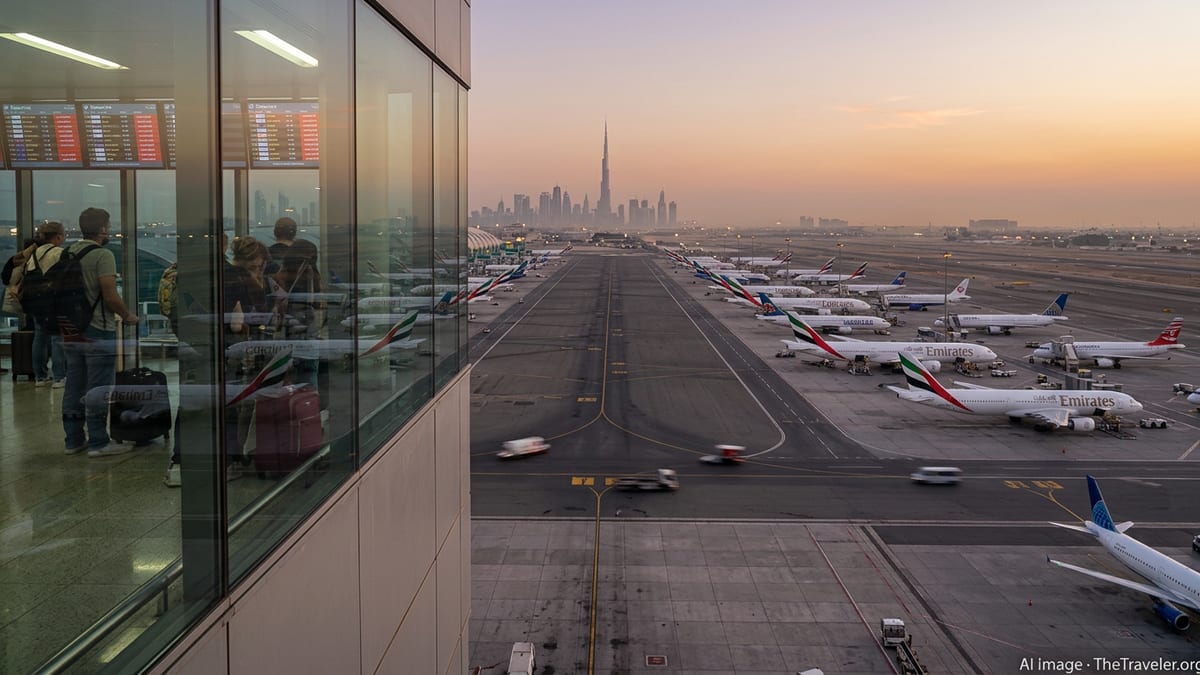
Gulf Super-Hubs Brought to a Standstill
Dubai International, Hamad International in Doha and Abu Dhabi’s Zayed International Airport, normally among the busiest transfer points between Europe, Asia and Africa, have seen schedules slashed as airlines react to fast-moving security developments. Flight-tracking and disruption-monitoring services report that cancellations across seven major Middle East airports, including the three Gulf super-hubs, have now exceeded 12,300 services, eclipsing previous regional disruption caused by storms and flooding.
At Dubai International, where Emirates alone operates hundreds of daily departures, more than four in five scheduled flights were grounded at the height of the shutdown, according to industry data. Abu Dhabi and Doha have also operated at sharply reduced capacity, with a mix of outright cancellations, rolling delays and enforced diversions as carriers scramble to re-route aircraft around closed or restricted air corridors.
The scale of the disruption is rippling far beyond the Gulf. Airlines in Europe, South Asia and East Asia that rely on overflying the Middle East or connecting passengers through Gulf hubs have cancelled services, added hours to flight times with lengthy detours, or temporarily pulled aircraft off certain routes.
Airspace Closures and Security Fears Drive Disruption
The turmoil follows a sharp escalation in regional tensions, with military action involving Iran and Israel prompting temporary closure or severe restriction of large swathes of Middle Eastern airspace. Aviation authorities in the United Arab Emirates, Qatar, Kuwait and Bahrain imposed tight controls, while some airports reported damage to infrastructure and ground operations.
Airlines based in the region, including Emirates, Etihad Airways and Qatar Airways, have been joined by major global carriers such as Lufthansa, Air France, British Airways, Air India, IndiGo, Cathay Pacific, Singapore Airlines, Delta Air Lines and American Airlines in cancelling or suspending flights. Several have issued blanket waivers allowing passengers booked to or via Dubai, Abu Dhabi and Doha to change dates or destinations without penalties.
Industry analysts say the current wave of cancellations, which some estimates put at more than 4,000 flights per day at its peak, represents one of the most severe shocks to Middle East aviation in decades. The region had only recently recovered from weather-related disruptions, including record flooding in the UAE in 2024 that forced the cancellation of more than 1,200 flights in Dubai over two days, underscoring how vulnerable hub-and-spoke operations are to sudden shocks.
Travellers Stranded Worldwide as Knock-On Effects Spread
As airlines ground aircraft or divert around restricted areas, hundreds of thousands of passengers have found themselves stranded or facing multi-day delays. Long-haul travellers attempting to return to Europe, North America, Africa or Asia via Gulf hubs have reported repeated cancellations, last-minute rebookings and lengthy queues at airport service desks.
Secondary airports across the wider region and beyond are feeling the strain. In Bangladesh, for example, authorities at Shah Amanat International Airport in Chattogram confirmed that more than ten flights to and from Gulf destinations, including Dubai, Abu Dhabi, Sharjah and Doha, were cancelled in a single day because receiving airports remained closed or severely restricted. Similar patterns are emerging at airports across India, Pakistan and East Africa, where Gulf-bound traffic forms a lifeline for migrant workers and visiting families.
Travel insurers and passenger-rights organisations report a surge in enquiries as frustrated customers try to understand their options for refunds, hotel stays and alternative journeys. Consumer advocates are urging travellers not to cancel tickets pre-emptively, warning that doing so could weaken entitlement to airline support if the carrier later cancels or significantly delays the flight.
Carriers Adapt Schedules as Limited Services Resume
While large parts of Middle East airspace remain constrained, some carriers have begun cautiously restoring selected services to Dubai, Doha and Abu Dhabi as conditions permit. Virgin Atlantic resumed its scheduled Dubai to London route after an initial suspension, while several European and Asian airlines are operating modified schedules that avoid the most sensitive air corridors or keep aircraft on the ground overnight until daylight operations are deemed safer.
Gulf carriers are adopting a patchwork of measures, from consolidating passengers onto fewer flights to operating rescue services for travellers stranded at outstations. Saudia and Oman Air are among airlines that have temporarily suspended routes across the Gulf and into Europe, while low-cost operators such as flynas and Air Arabia have announced rolling suspensions on multiple regional routes, adjusted day by day as advisories are updated.
Airport operators in Dubai, Doha and Abu Dhabi say they are working with airlines and air traffic control authorities to restore capacity as soon as it is safe to do so. However, with flight plans needing to be revalidated and aircraft and crew rotations in disarray, aviation experts warn that schedules will remain volatile for days, and potentially weeks, even after core airspace corridors reopen.
Advice for Travellers Heading to or Through the Gulf
With conditions changing rapidly, aviation authorities and airlines are urging passengers booked to travel through Dubai, Doha or Abu Dhabi to monitor flight status closely and wait for official confirmation before heading to the airport. Many carriers have advised customers not to present themselves at check in unless their flight is explicitly shown as operating, in order to ease pressure on already crowded terminals.
Passengers whose flights are cancelled are generally being offered rebooking on the next available service or, in some cases, full refunds or vouchers. Some international airlines have expanded travel waivers to include a broad range of Middle Eastern destinations, allowing customers to postpone trips or switch to alternative gateways where capacity is available.
Travel planners recommend building additional buffer time into itineraries involving the Gulf, avoiding tight connections for onward long-haul sectors, and considering alternative routings via hubs in Europe or Asia while disruption persists. For now, the combination of security concerns, airspace closures and operational bottlenecks means the region’s role as a seamless global crossroads has been dramatically, if temporarily, curtailed.