

More news on this day
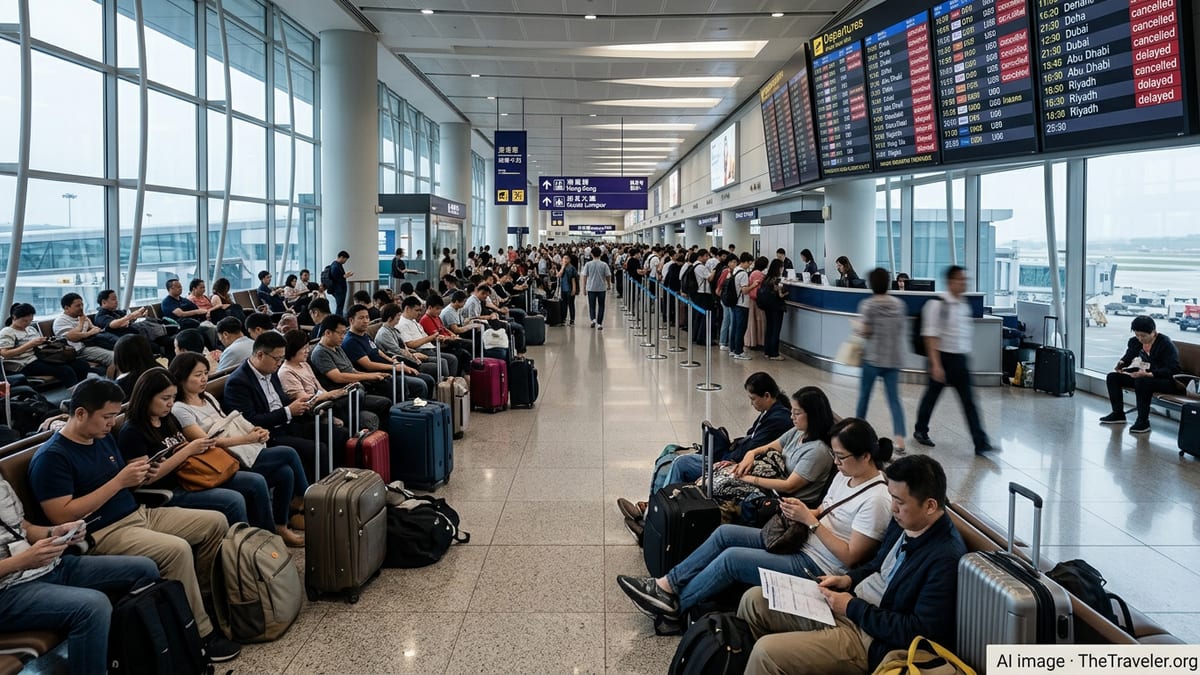
Hundreds of flights across the Middle East and Europe were disrupted this week as airports in Cairo, Istanbul and Dubai recorded 375 delays and 17 cancellations, snarling operations for airlines including Egypt Air, Air Arabia, Gulf Air and Emirates and stranding passengers as far afield as Abu Dhabi, Kuwait City, Paris and Amsterdam.
Get the latest news straight to your inbox!
Ripple Effects Across Regional Hubs
According to published coverage from aviation trackers and industry news outlets, the latest disruption centers on three key hubs: Cairo International Airport, Istanbul Sabiha Gökçen and Dubai International. These airports collectively reported 375 delayed flights and 17 outright cancellations in a single operating window, underscoring the fragility of air travel in a region already grappling with heightened geopolitical tension.
Reports indicate that passengers traveling on Egypt Air, Air Arabia, Gulf Air and Emirates were among the hardest hit. Many were left waiting long hours in crowded terminals as departure times slipped repeatedly or flights disappeared from departure boards. In some cases, aircraft remained on the ground while airlines re-evaluated routings around restricted airspace and sought new slots at already congested airports.
Publicly available flight data shows that services linking the Middle East to Europe and beyond have been especially vulnerable. Routes that typically rely on overflying contested or closed airspace have faced extended flight times, last-minute diversions or cancellations, further complicating the recovery of already stretched schedules.
Impact on Major Carriers and Key Routes
Egypt Air’s regional and European network has come under particular strain, with disruptions on services operating through Cairo to destinations such as Paris and Amsterdam. Coverage from travel industry outlets notes that some passengers endured missed connections and unexpected overnight stays after late-arriving flights could no longer meet onward departures.
Low-cost and regional operators have also been affected. Air Arabia, which links Gulf and North African cities to hubs including Dubai and Abu Dhabi, has had to juggle reduced frequencies and altered departure times, reshaping itineraries on short notice as operating conditions shift.
Gulf Air and Emirates, both heavily reliant on smooth hub-and-spoke operations, have seen knock-on effects ripple well beyond the Middle East. Flights connecting via Dubai to European cities such as Paris and Amsterdam and to regional destinations including Kuwait City and Abu Dhabi have experienced schedule changes, equipment swaps and, in some cases, cancellations that left aircraft and crew out of their usual rotations.
Industry analyses suggest that the combination of airspace restrictions and concentrated disruption at a small number of mega-hubs creates outsized consequences. When even a limited number of flights are cancelled, the loss of connecting options can cascade through networks, affecting passengers who are nowhere near the original point of disruption.
Constraints from Airspace Closures and Security Concerns
The latest problems come against a backdrop of wider airspace closures and security-related constraints across parts of the Middle East. Aviation briefings and specialist travel advisories describe a patchwork of restrictions in several countries, prompting airlines to reroute away from certain corridors and, in some instances, to suspend services entirely on safety grounds.
These measures have left carriers balancing competing priorities: maintaining connectivity where possible, preserving operational safety and managing the commercial impact of extended flight times, additional fuel costs and repositioning of aircraft and crew. Publicly available information shows that some airlines have opted for longer, more northerly routings to bypass sensitive areas, adding hours to flight times between the Gulf and European hubs.
For passengers, these adjustments translate into longer journeys, missed connections and uncertainty around departure and arrival times. Travel advisories note that even flights that eventually operate may face rolling delays as airlines adapt to evolving restrictions and changing slot allocations at constrained airports.
Stranded Passengers and Limited Alternatives
At ground level, the disruption has been most visible in crowded terminals from Cairo to Dubai, where passengers have reported long queues at rebooking desks and difficulty securing alternative routes. With key hubs such as Dubai and Istanbul operating under pressure, spare capacity on remaining services has been limited, reducing options for rapid re-accommodation.
Travel industry guidance highlights that passengers bound for cities including Abu Dhabi, Kuwait City, Paris and Amsterdam have sometimes been rerouted through secondary hubs or rebooked on later dates. In high-demand markets, seats on unaffected flights have sold out quickly, forcing some travelers to wait days before new itineraries could be confirmed.
Publicly available information from consumer-rights organizations and airline notices underlines the importance of regularly checking flight status and maintaining flexibility around travel plans. In several cases, carriers have introduced temporary waiver policies, allowing date or route changes without standard penalties, but these measures vary by airline and are subject to change as the situation evolves.
Outlook for Travelers in the Coming Days
Aviation analysts quoted in open reports suggest that while some flights are beginning to stabilize, the overall picture remains volatile. Schedules at Cairo, Istanbul and Dubai are still subject to late adjustments as airlines respond to airspace developments, operational bottlenecks and aircraft availability.
Travel commentary indicates that further short-notice cancellations or extended delays cannot be ruled out, particularly on services connecting the Middle East with Europe and other long-haul markets. Even if no new restrictions are introduced, it may take days for carriers to fully restore their usual wave patterns of arrivals and departures and to reposition aircraft and crews.
For now, publicly available guidance recommends that travelers build extra buffer time into connections, consider travel insurance that covers disruption and remain prepared for last-minute changes. With 375 delays and 17 cancellations already logged in this latest episode, the situation serves as a reminder of how quickly conditions in the Middle East can reshape global air travel and affect journeys far beyond the region itself.