

More news on this day
Thousands of air travelers across the Middle East and beyond are facing missed connections, overnight airport stays and last minute rebookings as a new wave of cancellations and delays hits major hubs in Saudi Arabia, Turkey, the United Arab Emirates, Qatar and Egypt.
Get the latest news straight to your inbox!
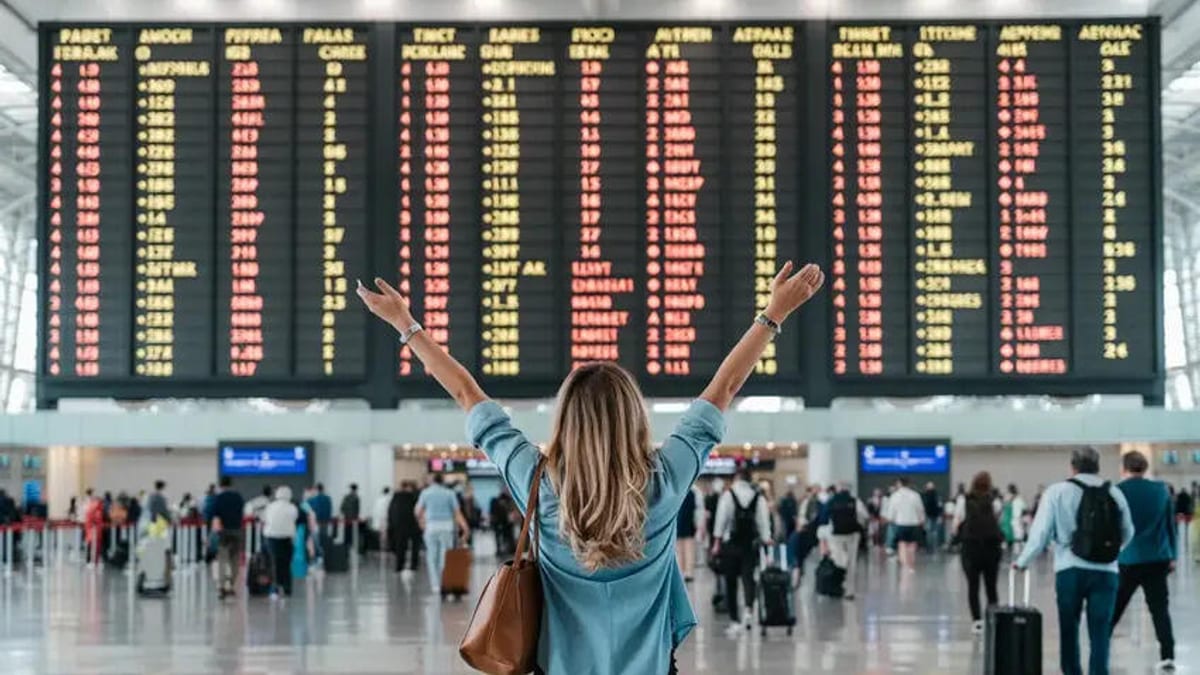
Image by Global Travel Alerts, Advisories, International Travel Alerts
Hundreds of Flights Scrapped as Delays Surge
Operational data compiled from publicly available airline and airport updates indicates that at least 227 flights have been cancelled and a further 1,939 delayed across the wider region in recent days, as carriers struggle with disrupted airspace, congested rerouting corridors and knock on scheduling problems. The impact is being felt most acutely at hub airports in Jeddah, Cairo, Istanbul and Dubai, but secondary gateways from the Gulf to the eastern Mediterranean are also affected.
Regional and international airlines including Gulf Air, Saudia, Pegasus Airlines and Saudi low cost carrier Flynas have all appeared in disruption tallies as they adjust schedules, consolidate services and, in some cases, temporarily suspend routes. While many flights are still operating, the pattern of rolling delays and sudden cancellations is creating uncertainty for passengers trying to connect between Europe, Asia, Africa and Australasia via Middle East hubs.
Analytics firms tracking global aviation movements report that the Middle East remains one of the most severely affected regions worldwide by schedule disruption this month, following earlier mass cancellations when airspace closures and security concerns first escalated. Although the current figure of 227 cancellations and nearly two thousand delays represents only a slice of the wider crisis, it underlines how even partial interruptions at a handful of strategic hubs can ripple through global networks.
Disruption levels have varied day to day, with some airports briefly returning to near normal operations before fresh bottlenecks emerge. For travelers, however, the practical effect has been a prolonged period of uncertainty, with itinerary changes often being communicated only hours before departure as airlines wait for updated routing permissions and slot allocations.
Key Hubs in Jeddah, Cairo, Istanbul and Dubai Under Strain
Publicly available airport status boards and media reports show that Jeddah’s King Abdulaziz International Airport and Cairo International Airport continue to carry a heavy share of the traffic displaced from more heavily restricted airspace further east. As a result, even flights technically allowed to operate are facing congestion related delays, longer ground times and tighter turnaround windows.
In Turkey, Istanbul’s dual role as both a European and Middle Eastern hub has placed additional pressure on carriers transiting between the Black Sea region, the Gulf and South Asia. Turkish and foreign airlines operating via Istanbul have been forced to retime services, add fuel for longer diversionary routings and in some cases cap passenger loads to manage weight restrictions on extended paths that avoid the most sensitive airspace.
Dubai International Airport and other airports in the United Arab Emirates remain central to the unfolding story. Earlier strikes and temporary suspensions in and around Gulf hubs have already led to thousands of cancellations across the month, and recovery remains uneven. According to industry coverage, carriers using Dubai as a connecting point, including Gulf Air and various codeshare partners, have periodically halted or trimmed frequencies while safety assessments and infrastructure checks proceed.
Qatar’s Hamad International Airport and additional regional hubs in Bahrain and Kuwait have also been dealing with waves of diverted and disrupted traffic. Although some services have resumed under limited corridors described by aviation authorities as safe for commercial operations, the fragile nature of these arrangements keeps schedules vulnerable to sudden change and forces airlines to maintain irregular timetables.
Airlines Forced to Redraw Networks on the Fly
The latest pattern of 227 cancellations and 1,939 delays is the visible tip of a broader restructuring effort behind the scenes as airlines race to reconfigure networks around partial airspace closures and elevated security risks. Gulf Air, for example, has already allowed greater flexibility on bookings during March, reflecting the uncertainty around its ability to operate reliably through some Gulf corridors.
Saudi flag carrier Saudia and low cost operator Flynas, which normally operate dense domestic and regional schedules from bases including Jeddah and Riyadh, have been adjusting frequencies and swapping aircraft types to match volatile demand and routing constraints. Flight tracking data and schedule changes show that some shorter regional legs have been consolidated while longer haul services are retained where possible to preserve key intercontinental links.
Turkish carrier Pegasus Airlines and other Istanbul based operators have been similarly affected, rerouting flights to avoid the most sensitive airspace and occasionally diverting services to alternative airports when congestion at primary hubs spikes. These changes increase block times, fuel burn and crew duty hours, all of which feed into the rolling wave of delays reflected in the latest figures.
Industry analysts note in published commentary that the Middle East’s role as a connective bridge between continents makes even limited disruption disproportionately impactful compared with more self contained markets. When a single Gulf hub reduces operations, flights as far away as Southeast Asia, Western Europe or East Africa can face irregular schedules, as aircraft, crews and spare capacity are shuffled in real time.
Passengers Face Stranded Nights and Chaotic Rebookings
Behind the statistics, the human impact of the cancellations and delays has been visible in crowded terminals, long customer service queues and social media accounts of stranded travelers. Passengers transiting through Jeddah, Dubai, Doha, Cairo and Istanbul report sudden gate changes, rolling departure estimates and last minute notices that connecting flights have been cancelled or retimed by many hours.
Travel forums and public posts describe families sleeping on terminal floors, workers fearing visa complications as unplanned layovers stretch into additional days, and students racing to secure scarce alternative seats on still operating routes. For some, the only workable option has been to route around the Middle East entirely, even if that means longer journeys via Europe or Africa and significant additional cost.
Consumer advocates and travel specialists quoted in recent coverage advise passengers with upcoming itineraries through the region to monitor their bookings closely, download airline apps and be prepared for rapid changes. With many carriers issuing rolling schedule updates rather than long term timetables, even flights that appear confirmed several days out may be at risk of adjustment as operational conditions shift.
For travelers already en route, the combination of capacity constraints and ongoing security assessments means that same day rebooking is not always possible. Some passengers are being offered hotel accommodation and meal vouchers where local regulations require, while others transiting through airports without such obligations report minimal support beyond automated rebooking messages and generic delay notices.
Governments and Airports Move to Ease the Pressure
Authorities across the Gulf and wider Middle East are deploying a mix of policy and operational responses aimed at easing pressure on both airports and travelers. In Qatar, for instance, publicly available guidance shows that the government has extended visa validity and waived certain overstay fines for visitors who can demonstrate that flight cancellations or airspace closures prevented timely departure.
Similar temporary leniency measures have been reported in other Gulf states, as governments seek to avoid penalizing tourists and business travelers stranded as a result of disruptions beyond their control. These steps are particularly significant for passengers whose original round trip tickets involved tight visa windows that are now being exceeded by unplanned extended stays.
Airport operators and national aviation bodies in Egypt, Saudi Arabia, the United Arab Emirates and Turkey are also working to increase throughput where safety conditions allow, opening additional check in counters, staggering departure waves and coordinating closely with air traffic control centers to manage rerouted flows. Public statements emphasize that safety remains the determining factor for any resumption or expansion of services, which in turn means that the pace of normalization is likely to be gradual rather than immediate.
With geopolitical tensions and security assessments still fluid, industry observers expect that the pattern of uneven operations, periodic cancellations and chronic delays will persist into the coming weeks. For now, passengers planning to transit through Jeddah, Cairo, Istanbul, Dubai, Doha and other Middle Eastern hubs are being urged by airlines and travel intermediaries to build in extra time, maintain flexible plans and stay alert to rapid shifts in the region’s evolving flight map.