

More news on this day
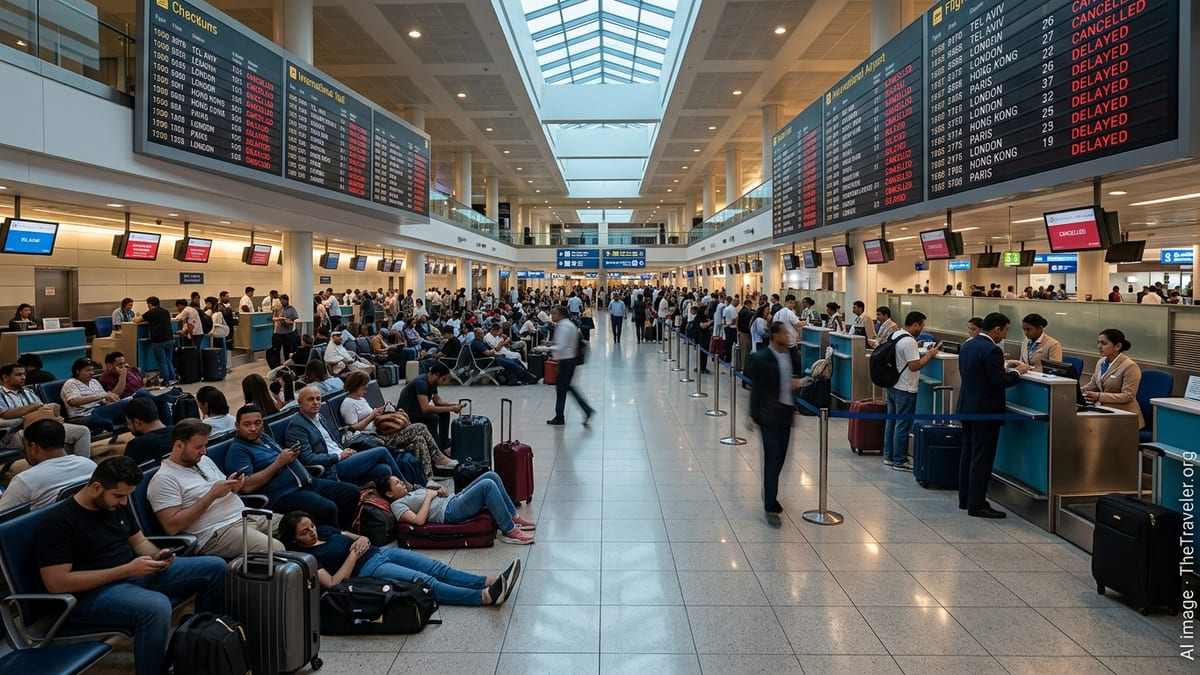
Hundreds of air travelers were left stranded across the Middle East and Europe today as rolling flight cancellations and delays linked to regional security tensions continued to disrupt operations in Bahrain, the United Arab Emirates, Qatar, Oman and beyond.
Get the latest news straight to your inbox!
Persistent Airspace Restrictions Keep Disruptions Elevated
Publicly available advisories show that airspace restrictions introduced across much of the Gulf region in late February and early March, in response to escalating conflict involving Iran and several Arab states, are still reshaping commercial flight patterns. While some countries have partially reopened their skies, capacity remains sharply reduced and schedules unstable, with airlines repeatedly adjusting routes and frequencies at short notice.
Industry notices circulated in early March described closures or severe constraints affecting airspace over the United Arab Emirates, Bahrain, Qatar and parts of Saudi Arabia, as well as knock-on effects in neighbouring states such as Oman. Despite gradual attempts to restart limited services, today’s data indicate that a significant share of planned departures and arrivals in the wider region continues to be cancelled or delayed, contributing to a tally of around 160 cancellations and more than 300 delays across key carriers and hubs.
Travel-management briefings issued during March pointed to what was described as an unprecedented strain on air traffic control capacity on remaining open corridors, particularly over Saudi Arabia, where rerouted traffic has concentrated. That congestion has translated into extensive holding patterns and missed slots, ensuring that even flights able to operate frequently depart behind schedule.
Against this backdrop, aviation analysts expect disruption metrics to fluctuate from day to day as airlines test new routings and gradually layer back capacity, while staying alert to further security developments and any renewed restrictions on Gulf airspace.
Major Gulf and European Hubs Feel the Strain
Dubai International Airport, one of the world’s busiest long-haul hubs, remains at the center of the turbulence. Tracking platforms and airline operational updates show that Emirates continues to operate a reduced but steadily rebuilding schedule after a period in early March when departures from Dubai were largely suspended. Today’s operations are markedly below typical late-March volumes, with cancellations and knock-on delays affecting connecting traffic across Africa, Asia, Europe and the Americas.
In Saudi Arabia, Jeddah’s King Abdulaziz International Airport has emerged as both a diversion point and alternative gateway as carriers reroute around airspace closures elsewhere. Saudia and other airlines have added or adjusted services through Jeddah and other Saudi cities, but high demand and tight air traffic control capacity have contributed to extended delays for both regional and long-haul passengers.
Ripple effects are acutely visible in European hubs linked to the Gulf. Airports in Athens and Frankfurt, which serve as key connection points for itineraries between Europe, the Middle East and Asia, are reporting elevated levels of disruption on routes touching Gulf gateways. Flight-status boards on Saturday reflected a cluster of delayed or cancelled services operated by Saudia, Emirates, Gulf Air, KLM and other international partners as aircraft and crews remained out of position.
Airport data and social media posts from passengers also point to crowded transit areas and improvised overnight stays, particularly among travelers whose journeys relied on tightly timed connections via Dubai or other Gulf hubs now operating on restricted timetables.
Saudia, Emirates, Gulf Air, KLM and Others Adjust Schedules
Flag carriers across the region have spent much of March in reactive mode, publishing rolling updates as airspace rules and security assessments evolve. Saudia has previously suspended or limited services on certain Gulf routes when neighboring states closed their airspace, and today’s schedules suggest that some connections remain either cancelled or significantly reduced compared with pre-crisis norms.
Emirates, typically operating hundreds of daily flights through Dubai, cut its departures to a fraction of usual levels earlier in the month. Current operations show a gradual rebuilding of the network but with multiple cancellations and late departures still recorded today, particularly on services threading through the most constrained air corridors. Travelers booked on Emirates services via Dubai are facing a higher risk of last-minute schedule changes and missed onward connections.
Gulf Air, which relies heavily on Bahrain as a transfer hub, has been among the most exposed carriers. Public information indicates recurring cancellations on Bahrain-linked services since the onset of the airspace closures, and many passengers today are still encountering rebookings or extended layovers as the airline works within limited operational windows.
European airline KLM and other international carriers have also scaled back or rerouted flights touching Gulf airports. Some services between European cities and Dubai, Doha or other Middle Eastern destinations are operating on elongated routings or altered schedules, while others are absent from departure boards entirely, contributing to the overall tally of cancellations and delays affecting itineraries through Athens, Frankfurt and other European gateways.
Passenger Impact: Stranded Travelers and Complex Rebookings
For passengers, today’s figures on cancellations and delays translate into missed holidays, disrupted business trips and complicated journeys home. Accounts shared across online forums point to travelers who have been stranded for days at airports in the Gulf and Europe after repeated cancellations, with some reporting that they have exhausted visa validity, leave from work or budget while waiting for alternative flights.
With demand for limited available seats surging, fare levels on unaffected routes and airlines have climbed sharply, making self-funded rebooking difficult for many travelers. Some have opted to purchase last-minute tickets via entirely different regions, such as routing through North Africa or Central Asia, in an effort to bypass congested or restricted Gulf airspace.
The mismatch between real-time operational changes and passenger notifications has also drawn criticism. Several travelers describe receiving late or conflicting information about the status of their flights, including departures still listed as on time even as local media and aviation trackers showed widespread suspensions. This gap has led to crowded check-in areas and long queues at airline service desks as passengers seek clarification and assistance.
Travel advisories issued by corporate travel managers and risk consultancies throughout March have urged travelers with imminent departures to monitor flight status closely and to be prepared for rapid changes, including last-minute rerouting, overnight stays or the need to depart from or arrive at alternative airports.
What Travelers Should Watch in the Coming Days
Although today’s disruption numbers are high, industry observers note that they reflect a system in the midst of gradual adjustment rather than complete shutdown. Some Gulf airspace has reopened under restricted conditions, and airlines are progressively testing new routings and rebuilding frequencies as they gauge demand and monitor security developments.
Travel specialists recommend that passengers scheduled to fly through Dubai, Jeddah, Doha, Bahrain, Muscat, Athens or Frankfurt in the near term pay close attention to airline advisories and airport communications. Flexible tickets, generous connection times and a willingness to accept alternative routings through secondary hubs may improve the chances of completing journeys with fewer interruptions.
For now, however, the combination of constrained airspace, saturated air traffic control corridors and cautious airline scheduling continues to translate into an outsized number of cancellations and delays. Until security conditions stabilise and more direct routes across the region can be restored, travelers transiting the Middle East and connected European hubs are likely to face a higher-than-normal risk of unexpected changes to their plans.