

More news on this day
Hundreds of travelers were left waiting in terminals or scrambling for last minute alternatives on April 1 as a new wave of disruptions rippled across airports in Qatar, the United Arab Emirates, Kuwait, Jordan and neighboring states, with at least 289 delayed and 36 canceled flights affecting carriers such as FlyDubai, Emirates, KLM and EgyptAir on routes linking Doha, Amman, Barcelona, Paris and other major hubs.
Get the latest news straight to your inbox!
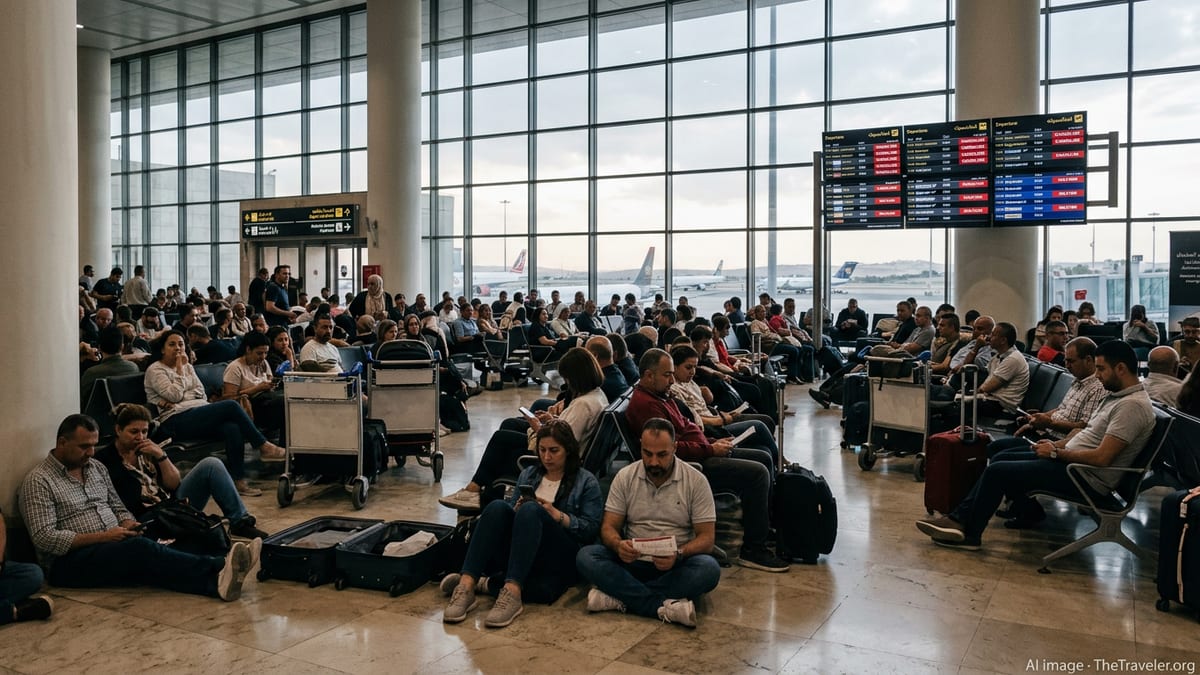
Regional Disruptions Hit Major Middle East Hubs
Publicly available airport and schedule data indicate that air travel across the Middle East remains highly unsettled, with regional hubs in Qatar, the UAE, Kuwait and Jordan experiencing a concentrated spike in delays and cancellations at the start of April. The latest figures point to 289 delayed services and 36 outright cancellations tied to a mixture of lingering airspace restrictions, complex rerouting and continued schedule reshuffles by regional and European airlines.
Doha’s Hamad International Airport and Amman’s Queen Alia International Airport are among the most affected, with knock-on disruptions radiating to European destinations. Flight tracking platforms and operational notices show repeated schedule changes on routes connecting Doha and Amman with Barcelona and Paris, as airlines attempt to re-time or consolidate services to work around constrained air corridors and crew availability.
Although some carriers have reintroduced limited services after earlier suspensions, the operating environment remains unstable. Aviation advisories issued in recent weeks describe a network still recovering from earlier airspace closures around parts of the Middle East and North Africa, leaving airlines with reduced flexibility when unforeseen operational issues arise.
These constraints have turned even minor scheduling problems into systemwide bottlenecks, amplifying the scale of delays recorded on April 1. Regional travel media and industry analyses describe ripple effects not just for origin and destination passengers, but also for those relying on Middle Eastern hubs for long haul connections between Europe, Asia and Africa.
Airlines from the Gulf to Europe Under Strain
Carriers across the region, including FlyDubai, Emirates and EgyptAir, as well as European operators such as KLM, are all cited in public disruption tallies for the current wave of delays and cancellations. Operations data published in recent days show elevated delay ratios on key short haul routes from Dubai to Doha and Kuwait City for FlyDubai, while broader service updates from UAE based airlines frame the current environment as one of constrained, partial operations rather than a full return to normal scheduling.
Gulf based long haul networks are also feeling the strain. Route analysis for Qatar’s main carrier indicates that services from Doha to Barcelona and Paris are operating on revised patterns, including frequency changes and altered aircraft deployment, after a period of suspensions and temporary schedule cuts. These changes, combined with congested slots at European airports, increase the likelihood of rolling delays whenever turnaround times stretch beyond planned buffers.
European airlines that rely on Middle Eastern stopovers or overflight corridors are likewise exposed. Travel industry coverage over the past year has documented periodic suspensions or diversions affecting carriers such as KLM and Lufthansa whenever regional tensions flare or airspace routing is tightened. The latest count of 289 delays and 36 cancellations appears consistent with this pattern of recurring, region wide disruption that spreads quickly across airline alliances and code share agreements.
EgyptAir, which maintains an important bridge between Cairo and regional capitals including Amman and Gulf cities, has previously adjusted its schedules and suspended certain routes during earlier phases of the crisis. The current disruption numbers suggest that even where flights are still operating, they are often subject to extended holding, re sequencing for departure and elongated flight times caused by circuitous routings.
From Doha and Amman to Barcelona and Paris
The latest disruption wave is particularly visible on high profile routes linking Middle Eastern hubs with major European cities. Travelers booked between Doha and Barcelona or Paris report repeated rescheduling, with some itineraries showing earlier cancellations in late March before being partially restored on revised frequencies in early April. Schedule trackers show that Doha to Barcelona services have been moving between reduced and expanded weekly operations, while flights to Paris have alternated between different aircraft types and variable weekly counts.
Amman has faced similar volatility. Queen Alia International Airport is a key origin and transfer point for Jordanian and foreign carriers, and any regional airspace restriction or capacity reduction in neighboring states tends to reverberate across its departures board. Delayed arrivals from Gulf hubs compress turnaround windows for outbound flights to European destinations, increasing the risk that departures to cities such as Paris will miss their allocated slots and face further hold ups.
Barcelona and Paris, meanwhile, are absorbing the downstream consequences. Congested arrival banks, last minute equipment substitutions and crew time limitations make it difficult for airlines to recover from late inbound flights originating in Doha, Amman or Dubai. Operational summaries for several carriers show that services touching these cities are frequently listed as delayed even when they eventually operate, contributing to the aggregate count of 289 disruptions recorded in connection with the current Middle Eastern irregularities.
Passengers on these routes often encounter multi leg complications, as a delayed Middle East to Europe sector can jeopardize connections onward to North America, Africa or other parts of Europe. When flights are among the 36 identified cancellations, travelers must contend with limited rebooking options because replacement flights may also be operating with constrained capacity.
Travelers Face Long Waits, Limited Options and Shifting Advice
For passengers, the operational statistics translate into extended waits in crowded terminals and uncertainty over when, or even whether, they will depart. Reports circulating in traveler communities describe itineraries involving Gulf and Levant hubs being canceled or reissued multiple times over the past month, with some bookings disappearing from airline apps before reappearing under different dates or routings.
Public guidance from airlines and airports in the region has generally emphasized checking flight status before leaving for the airport, underscoring the fluidity of schedules. With airspace restrictions and short notice operational changes still possible, a flight listed as scheduled several hours in advance may yet be delayed or canceled as departure time draws nearer. This uncertainty is particularly acute for those with onward connections in cities such as Barcelona and Paris, where missed links can strand travelers far from home.
Refund and rebooking policies continue to evolve in response to the disruption. Recent coverage of airline practices in Doha highlights extended processing times for refunds, while traveler reports indicate a greater reliance on rerouting passengers exclusively on the operating carrier’s own network, narrowing the scope for cross airline accommodation. Such measures help airlines control costs and manage capacity but can lengthen the time it takes for affected passengers to secure viable alternatives.
Analysts following the situation note that the combination of constrained airspace, tight crew rosters and packed global demand for long haul travel means even modest operational shocks can produce disproportionately large disruption statistics. Unless routing options and regional capacity improve, similar episodes of widespread delays and cancellations are likely to recur, particularly at busy connecting hubs such as Doha, Dubai, Kuwait City and Amman.