

More news on this day
Hundreds of passengers were stranded across the Middle East and beyond on Tuesday as El Al, Emirates and FlyDubai scrubbed 66 flights and delayed another 107, extending a weeklong wave of disruption that has rippled from Israel and the Gulf to Europe and Asia.
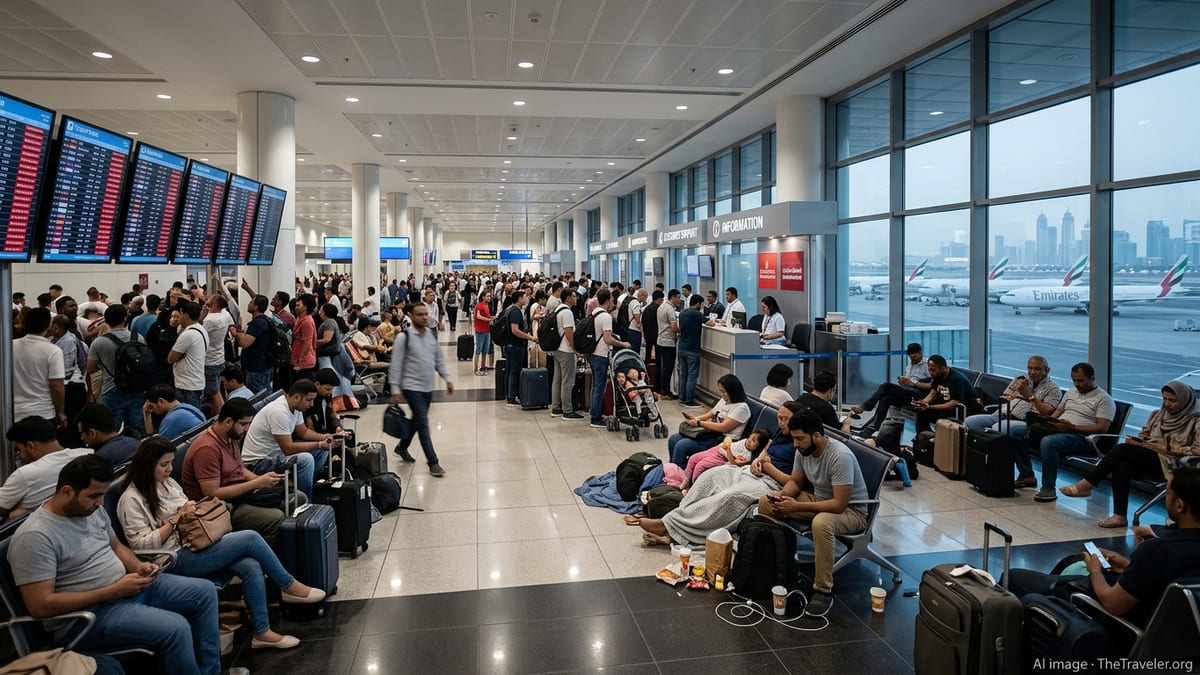
Airspace Crisis Ripples Across Key Hubs
The latest cancellations and delays come amid continuing airspace restrictions linked to the Iran conflict and regional security alerts, which have transformed normally efficient hubs such as Dubai, Tel Aviv and Abu Dhabi into chokepoints for global travel. With large swathes of airspace either closed or heavily controlled, airlines have been forced to thin out schedules, reroute services and ground aircraft, pushing pressure down the line to airports around the world.
Emirates and FlyDubai, which depend on Dubai as a mega-connecting hub linking Europe, Africa and Asia, have been operating reduced and frequently revised timetables in recent days. While both carriers have gradually restored portions of their networks, the latest tally of 66 cancellations and 107 delays across their own operations and those of Israeli flag carrier El Al underscores how fragile the recovery remains.
For many passengers, the impact is felt far from the conflict zone. Travellers bound for the United Kingdom, Hong Kong, France and Thailand have found themselves stuck in transit lounges or unable to even begin their journeys as disruptions cascade through codeshare partners and connecting itineraries that rely on Middle Eastern hubs.
Airlines have issued waivers and promised flexible rebooking, but constrained capacity and ongoing operational uncertainty mean that re-accommodation can take days. Aviation analysts warn that until airspace patterns stabilise, the region’s role as a global crossroads will continue to be severely compromised.
Passengers Stranded From Israel to the UAE and Beyond
In Israel, El Al has trimmed flights in and out of Tel Aviv, citing security considerations and knock-on effects from regional airspace changes. Passengers connecting to long haul destinations via European or Gulf hubs have reported last-minute cancellations or severe delays, leaving them marooned in Ben Gurion Airport or in stopover cities with limited onward options.
In the United Arab Emirates, Dubai International Airport continues to feel the strain of disrupted schedules. Travellers transiting through the city have described packed terminals, long queues for rebooking desks and scarce hotel availability as airlines juggle limited slots with high demand from stranded customers. Some passengers have been offered rerouting via alternative hubs or later dates, but many are facing unexpected nights in airport hotels or terminal seating.
The disruption is not confined to the Middle East. At London Heathrow and other major airports in the United Kingdom, departure boards on Tuesday showed multiple services to and from Dubai and Tel Aviv marked as delayed or cancelled. Similar scenes played out in Hong Kong, Bangkok and Paris, where passengers awaiting Emirates, FlyDubai or El Al services were told to stand by for further updates or seek refunds through their booking channels.
For leisure travellers returning from winter holidays and business travellers trying to make meetings on tight timelines, the uncertainty is proving costly. Some have opted to abandon itineraries altogether, purchasing new tickets on carriers that can avoid the disrupted region, often at premium last minute fares.
Operational Strain on El Al, Emirates and FlyDubai
The operational challenge for El Al, Emirates and FlyDubai is immense. All three airlines are grappling with aircraft and crew stranded out of position, narrow windows of safe or permitted airspace, and a constant stream of schedule changes that must be communicated to customers in real time. Each cancellation or delay reverberates through their networks, knocking onward legs off schedule and complicating efforts to rebuild normal operations.
Emirates has focused on gradually restoring service to key markets, adding extra capacity on trunk routes such as the United Kingdom and Southeast Asia when airspace corridors allow. FlyDubai, with a shorter haul network across the Middle East, South Asia and Eastern Europe, has prioritised routes that can be safely operated under current restrictions, while warning passengers that timings may shift at short notice.
El Al, operating from a country directly involved in the broader security crisis, faces additional constraints, including risk assessments on overflight paths and coordination with authorities on any route changes. That has translated into conservative scheduling on some long haul services, and increased reliance on partner airlines to carry passengers whose original flights can no longer operate as planned.
Aviation consultants note that even as airlines resume more flights, they must keep aircraft in reserve to cope with sudden closures or reroutes, limiting how quickly they can return to full capacity. Turnaround times are longer as crews and ground handlers manage rebookings, special assistance and baggage backlogs for stranded passengers.
Global Travel Networks Feel the Shockwaves
The Middle East’s position as a key junction between continents means local disruption has global consequences. Emirates and FlyDubai funnel large volumes of traffic between Europe and Asia, while El Al feeds connecting networks in Europe and the United States. When these links weaken, itinerary options narrow and remaining routes quickly fill.
In Europe, several carriers that depend on codeshare traffic through Gulf hubs have seen their own schedules destabilised. Flights that would normally connect seamlessly with Dubai or Tel Aviv arrivals are departing with empty seats or require last minute retiming. In Asia, particularly in markets such as Hong Kong and Thailand, tourism operators report a spike in cancellations from travellers who cannot secure reliable connections.
Travel agents in France and the United Kingdom say they are spending hours each day manually rebuilding itineraries, often stitching together complex routings via alternative hubs in Turkey, India or southern Europe. In many cases, travellers who originally booked convenient one stop connections via Dubai or Tel Aviv are now facing two or three stop journeys with significantly longer travel times.
Industry observers caution that the current situation highlights how concentrated global air traffic has become through a handful of mega hubs. With Dubai and other Middle Eastern gateways constrained, the fragility of that model is on display, and some corporate travel managers are re-evaluating routing policies to spread risk across more airlines and airports.
Uncertain Outlook for Travellers
For passengers, the clearest takeaway is continued uncertainty. Airlines are advising customers booked on El Al, Emirates or FlyDubai services in the coming days to monitor their flight status closely and to ensure their contact details are up to date in booking records. Same day schedule changes remain possible, particularly on routes that require transiting contested or restricted airspace.
Travel insurers are fielding an increase in claims and queries related to missed connections, extended hotel stays and rebooked flights. Policy coverage varies widely, and consumer advocates are urging travellers to read the fine print carefully, especially on whether conflict related disruptions are covered or excluded.
Airports and tourism boards in affected destinations are working to limit reputational damage, emphasising that once passengers arrive, local conditions in cities such as Dubai, Tel Aviv, Bangkok and Paris remain largely normal. However, with hundreds of people still sleeping on terminal floors or queuing for rebooking counters, images of disruption are likely to linger in travellers’ minds.
How quickly the situation improves will depend on both security developments and regulatory decisions around airspace access. Until those align in favour of stability, airlines and passengers alike face a travel landscape where confirmed bookings are no guarantee of a smooth journey.