

More news on this day
Air travelers across the Gulf woke up to fresh disruption as Qatar Airways, Royal Jordanian, FlyDubai and Kuwait Airways registered a combined 39 cancellations and 92 delays, stranding passengers at key hubs in Doha, Amman, Dubai and Kuwait City.
Get the latest news straight to your inbox!
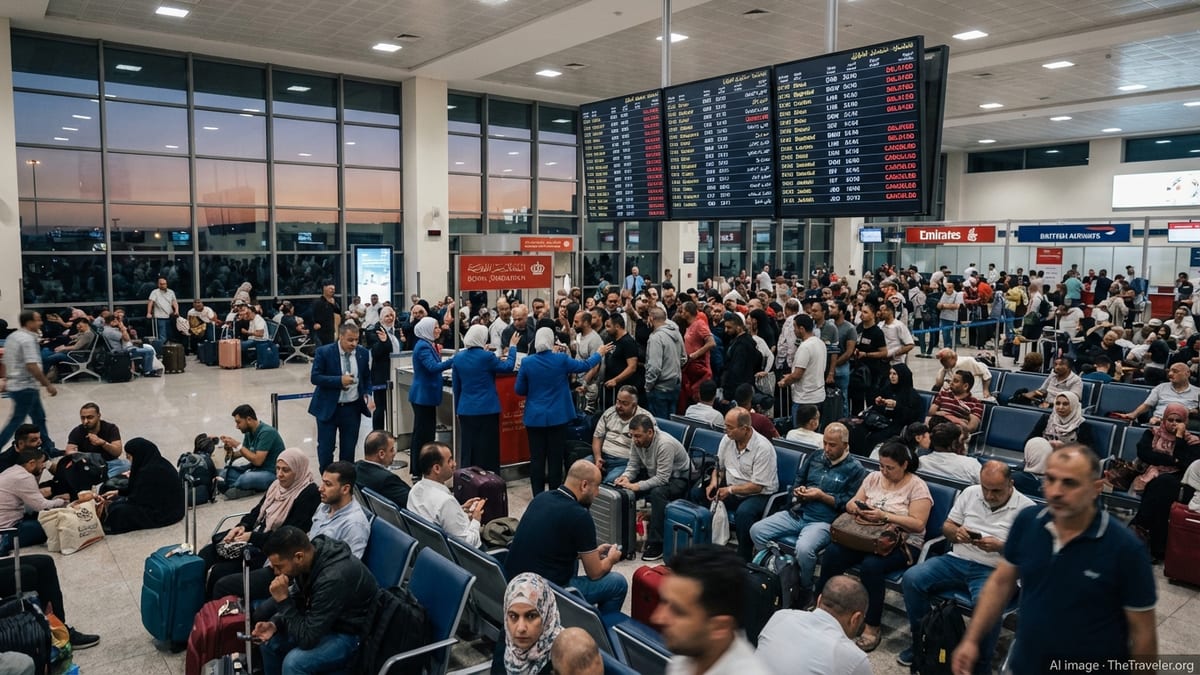
Regional Disruption Intensifies at Major Gulf Gateways
The latest wave of schedule problems has concentrated on four of the region’s busiest aviation markets: Qatar, Jordan, the United Arab Emirates and Kuwait. Data compiled from airport operations and flight-tracking platforms indicates that cancellations and prolonged delays have rippled through Hamad International in Doha, Queen Alia International in Amman, Dubai International and Al Maktoum in the UAE, as well as Kuwait International Airport.
Within this regional picture, Qatar Airways has emerged as one of the most affected carriers, with multiple cancellations and dozens of delayed services in and out of Doha. Published disruption tallies show that the airline has been among the largest single contributors to the latest block of schedule changes, even as it works to rebuild frequencies through its Doha hub.
Royal Jordanian has also been hit, particularly on routes linking Amman with nearby capitals such as Doha and Dubai. Flight history records for some Doha–Amman services show repeated cancellations across late March and into early April, underscoring how fragile connectivity remains on key regional sectors.
In the United Arab Emirates, FlyDubai has faced several cancellations and a significant number of delays at Dubai’s airports, adding to congestion at one of the world’s busiest international hubs. In Kuwait, Kuwait Airways has reported a more modest number of disrupted flights, but its role as the country’s flag carrier means any cancellations or extended delays are quickly felt by transit and origin passengers alike.
Why Flights Are Being Cancelled and Delayed
Publicly available information points to a mix of operational and regional factors behind the spike in disruptions. Travel and aviation industry coverage links the latest cancellations and delays to ongoing airspace constraints and security sensitivities that have affected flight paths across parts of the Middle East since early 2026. Airspace adjustments and longer routings can reduce available aircraft time and crew hours, increasing the risk of knock-on delays.
At Doha’s Hamad International Airport, earlier missile incidents and subsequent airspace management measures prompted schedule reshuffles and temporary capacity reductions. Sector analyses note that these changes have contributed to rolling timetable revisions for carriers such as Qatar Airways, which continues to update its network plan while maintaining dedicated corridors into and out of Qatar.
In Amman, coverage focused on Queen Alia International Airport highlights a cluster of delays and cancellations affecting multiple airlines, with Royal Jordanian among the most impacted. Similar operational pressures, including tight turnaround windows, crew availability and congestion at peak times, have been cited in recent reports on Middle Eastern hubs struggling to return to stable, pre-crisis schedules.
For low-cost and hybrid carriers like FlyDubai, the cumulative effect of regional airspace rerouting, busy airport infrastructure and high load factors can leave little slack in the system. Even a relatively small number of tactical cancellations, combined with dozens of delays, can quickly cascade through daily operations, resulting in the kind of multi-airport disruption witnessed across the UAE and beyond.
How the Disruptions Are Affecting Travelers on the Ground
The immediate impact for passengers has been long queues at check-in and transfer desks, extended time in transit zones and missed onward connections. At Doha and Dubai in particular, where many travelers rely on tight connecting windows, even a short delay can force rebooking onto later services, with limited same-day alternatives on busy trunk routes.
Reports from regional travel media describe travelers stuck overnight in hub airports as aircraft go out of rotation or arrive after curfew restrictions at destination airports. In Amman, disruption at Queen Alia International has affected both outbound Jordanian travelers and international visitors who use the airport as a jumping-off point for regional tourism and business trips.
In Kuwait City, fewer overall flights mean that each cancellation or significant delay has a disproportionate effect. Passengers bound for Doha, Dubai or onward long-haul routes may find that there are only a handful of viable alternatives on the same day, particularly if neighboring hubs are experiencing similar strain.
For families and business travelers alike, uncertainty around departure times and the risk of missed connections have added complexity and cost. Extra nights in hotels, reissued tickets and last-minute itinerary changes have become an unwelcome feature of travel planning in and out of the affected hubs.
What Stranded Passengers Can Do Right Now
Given the high volume of schedule changes, consumer advocates and travel industry analysts emphasize the importance of proactive monitoring. Travelers are advised to check their flight status frequently via airline apps and airport information feeds, as same-day changes remain common across the affected airlines.
Qatar Airways has publicly outlined flexible options for passengers whose journeys fall within an extended disruption window, including the ability to request refunds or move travel to later dates, subject to availability and fare rules. Similar, though not identical, policies have been highlighted in coverage of Royal Jordanian, FlyDubai and Kuwait Airways, where rebooking without penalty is often possible when delays or cancellations are initiated by the airline.
Passengers stranded in transit are generally encouraged, by publicly available guidance, to approach airline customer service desks promptly to secure seats on the next available flight. Those who booked through online travel agencies or traditional agents may need to work through their intermediary for reissues, particularly on multi-airline itineraries that include code-share sectors between carriers such as Qatar Airways and Royal Jordanian.
Travel insurance may offer additional protection, depending on policy terms. Some plans include compensation for long delays, missed connections or enforced overnight stays. Analysts recommend that travelers retain boarding passes, delay notifications and receipts for out-of-pocket expenses, as these documents are often required when seeking reimbursement.
Planning Trips Through Doha, Amman, Dubai and Kuwait in the Coming Days
With schedules still in flux, travelers planning to pass through Doha, Amman, Dubai or Kuwait City in the near term are being urged to build extra resilience into their itineraries. Industry commentary suggests allowing longer connection times than usual, especially when pairing regional flights with long-haul departures to Europe, Asia or North America.
Where possible, travelers may wish to book earlier departures in the day, when aircraft and crews are less affected by cumulative delays. Selecting routes with multiple daily frequencies can also increase options for same-day rebooking if a flight is cancelled or heavily delayed.
Aviation analysts expect that airlines will continue to fine-tune schedules as regional conditions stabilize, but caution that intermittent disruption is likely to persist in the short term. For now, the combined tally of 39 cancellations and 92 delays across Qatar Airways, Royal Jordanian, FlyDubai and Kuwait Airways underscores how fragile the recovery remains, even at some of the world’s most sophisticated hub airports.
For travelers, the message is clear: flexibility, vigilance and careful planning are essential when routing through the Gulf’s key gateways while airlines and airports work to restore more predictable operations.