

More news on this day
Thousands of passengers in Turkey, Israel and Qatar faced cascading travel disruption this weekend as airspace restrictions, security concerns and operational knock-ons triggered waves of cancellations and delays for Turkish Airlines, El Al and Qatar Airways, snarling journeys through Istanbul, Doha, Brussels and other major hubs.
Get the latest news straight to your inbox!
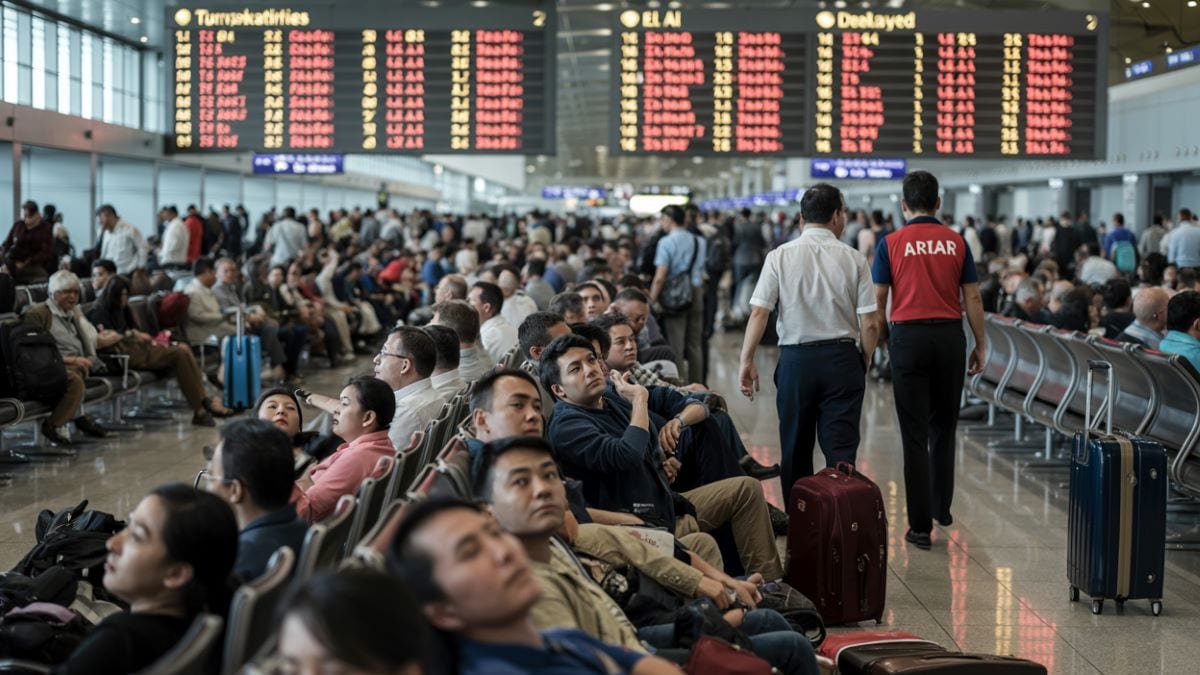
Image by Travel And Tour World
Regional conflict ripples through airline schedules
Publicly available data and media coverage indicate that Middle East air travel remains heavily disrupted following the outbreak of the 2026 Iran war at the end of February. Airspace closures and missile activity around the Gulf have forced airlines to trim schedules, reroute traffic and in some cases suspend normal commercial services altogether.
According to recent aviation summaries, Iran’s strikes on Qatar and other states prompted a temporary shutdown of Qatari airspace, sharply reducing movements at Doha’s Hamad International Airport. Limited navigation corridors have since reopened under emergency conditions, but network operations remain constrained, with standard commercial frequencies yet to be fully restored.
Similar pressures are affecting routes to and from Israel, where airspace restrictions and security considerations have led multiple carriers to suspend or sharply curtail flights. The reduced options into Tel Aviv have funneled more passengers through alternative hubs such as Istanbul and various European gateways, increasing the risk of missed connections and overcrowded rebooking queues when further disruption occurs.
Industry tracking of cancellations and delays across the wider region shows that these measures have stranded travelers far beyond the immediate conflict zone, as connecting passengers find themselves stuck in transit in Turkey, Qatar and European capitals when onward legs are suddenly scrapped or heavily delayed.
Turkish Airlines under pressure in Istanbul and Brussels
Turkish Airlines has emerged as one of the key carriers absorbing rerouted demand. Reports on schedule adjustments show that the airline has cut or reduced services on several Middle East routes in recent weeks, including links to Gulf destinations such as Qatar, Kuwait and the United Arab Emirates, while maintaining high volumes of traffic through its main hub at Istanbul Airport.
Operationally, this has created a fragile network in which a missed slot or airspace constraint can produce significant knock-on effects. Aviation analysts note that when flights into Istanbul arrive late or out of sequence because of diversions around conflict zones, tight connection banks become vulnerable, with onward sectors to cities such as Brussels or other European points more likely to be delayed or cancelled.
Passenger accounts shared on travel forums describe overnight queues at transfer desks and difficulty securing alternative itineraries once flights are pulled at short notice. With aircraft and crews displaced by earlier diversions or cancellations, options to rebook on the same day are often limited, especially on routes where load factors were already high due to previous disruptions elsewhere in the region.
These conditions have contributed to a spike in both cancellations and delays for Turkish Airlines across certain days, with some monitoring suggesting more than one hundred departure and arrival delays systemwide during peak disruption periods. The pattern illustrates how a conflict-centered shock can quickly morph into a broader operational challenge for a major hub carrier.
El Al grapples with a curtailed Israel network
El Al is simultaneously managing a highly restricted operating environment in and out of Israel. Published coverage of airline responses to the Iran conflict shows that many international carriers have suspended Tel Aviv services, increasing reliance on the national airline for essential connectivity even as it contends with its own limitations.
Security-driven scheduling changes, together with airspace constraints, have led to repeated timetable revisions and day-of-operation changes for flights departing Ben Gurion Airport. Travelers connecting via European hubs such as Brussels have reported missed onward connections and extended layovers when El Al rotations are rescheduled at short notice or grounded for security reviews.
Reduced frequencies also mean that recovery from a single cancellation can take days, rather than hours, particularly for long-haul routes with limited weekly services. When one flight is removed from the schedule, subsequent services often depart full with rebooked passengers, leaving others stranded in intermediate points and dependent on scarce seats on partner airlines.
Industry observers point out that this environment complicates contingency planning for travelers who traditionally rely on Israel’s main carrier for reliable links to Europe and North America. With capacity constrained and flight times shifting in response to security assessments, passengers are experiencing a level of unpredictability that makes onward planning and accommodation arrangements far more difficult.
Qatar Airways pares back Doha hub amid rolling delays
For Qatar Airways, the combination of airspace closures, regional instability and earlier winter-weather disruption in Europe has produced a prolonged period of schedule volatility. Documents detailing recent operations show that severe storms in early January already forced widespread cancellations at key European airports, including Amsterdam, with knock-on effects for Doha-bound flights and crew positioning.
Those earlier disruptions have now been compounded by the Iran-related conflict. Information from regional outlets and airline communications indicates that Qatar initially suspended most standard commercial flights following missile strikes and the closure of national airspace. In March, the carrier began operating an interim, reduced schedule, gradually reopening a limited set of routes while prioritizing transit flows through Doha under tighter capacity constraints.
Updates shared by aviation-focused communities in recent days describe a patchwork network in which some long-haul and regional routes are resuming, while others remain cancelled or subject to late changes. Travelers report being rerouted via partner carriers, including Turkish Airlines, only to find that those replacement flights are themselves vulnerable to overbooking, delays or subsequent cancellation.
As the airline works through a revised timetable, tracking data points to dozens of delayed departures across certain days, alongside cancellations tied to both operational limits and airspace restrictions. For passengers, the effect is a heightened risk of last-minute itinerary changes, extended stays in Doha hotels or transit lounges, and a reliance on call centers and online tools that are often overwhelmed by demand.
Passengers face uncertainty as disruption spreads beyond the region
Although the initial shock stems from events in the Middle East, the practical impact for travelers now stretches well into Europe, North America and Asia. With Turkish Airlines, El Al and Qatar Airways all adjusting schedules, passengers transiting Istanbul, Doha and Brussels are encountering an intricate web of missed connections and rolling delays.
Travel community discussions highlight cases where journeys that once required two straightforward legs now involve multiple days in transit, repeated rebookings and sudden changes in routing. Some travelers attempting to reach destinations in the Levant or the Gulf are being offered complex itineraries that loop through secondary hubs or rely on tight minimum connection times that are difficult to meet under current conditions.
Consumer advocates note that rules governing rebooking, hotel accommodation and compensation differ by jurisdiction and by point of departure, which can leave stranded passengers uncertain about their rights when delays stretch beyond several hours. Publicly available guidance from regulators in the European Union and other markets outlines entitlements in the case of long delays or cancellations, but applying those rules in a fast-moving conflict-related disruption often proves challenging.
With no clear timeline for a full restoration of pre-conflict schedules, airline timetables for the coming weeks remain subject to change. Industry analysts are advising travelers with planned connections through Istanbul, Doha or Israeli and nearby airports to monitor flight status closely, allow extra time for transfers, and be prepared for further adjustments as carriers continue to respond to evolving security and airspace conditions.