

More news on this day
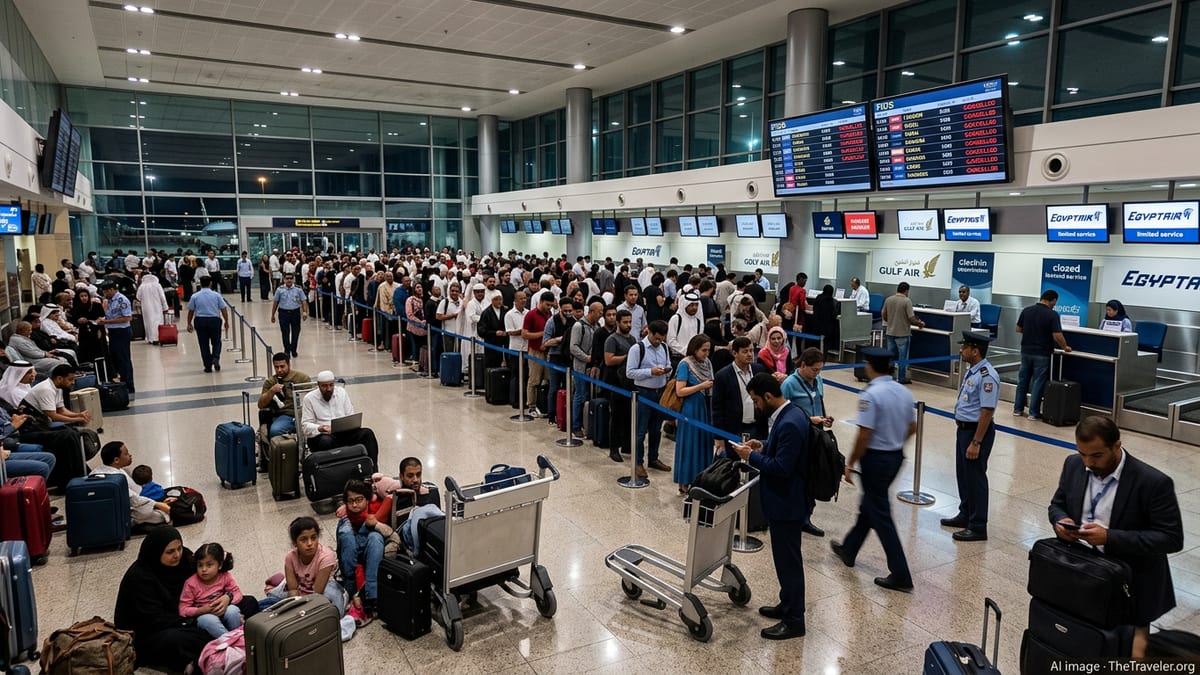
Fresh disruption across the Middle East and wider region has left passengers stranded in the United Arab Emirates, Egypt and Afghanistan, after a cluster of cancellations and delays involving Royal Jordanian, EgyptAir and flydubai upended travel plans at key hubs including Abu Dhabi, Cairo and Kabul.
Get the latest news straight to your inbox!
Cluster of Cancellations Hits Regional Carriers
According to regional aviation trackers and travel-industry coverage, at least 12 flights operated by Royal Jordanian, EgyptAir and flydubai were cancelled over the past 24 hours, alongside 17 delayed departures and arrivals touching Abu Dhabi, Cairo and Kabul. The pattern mirrors a broader wave of flight disruption that has rolled across the Middle East since late February, as carriers repeatedly adjust schedules in response to changing airspace rules and operational constraints.
Royal Jordanian, which maintains links between Amman and key Gulf and North African cities, has been operating under a rolling travel advisory regime this spring, with passengers between late February and mid April offered rebooking flexibility when itineraries are affected. Publicly available information shows that services into the United Arab Emirates and Egypt remain vulnerable to last-minute adjustment, particularly where routings interact with restricted airspace.
EgyptAir has also faced mounting operational pressure at its Cairo hub, where recent data compiled by travel news outlets pointed to dozens of delayed services in early April. When flight schedules tighten, even a limited number of cancellations can cascade through Cairo’s dense network of regional connections, leaving travelers bound for secondary cities in Africa, the Gulf and South Asia with long, unplanned stopovers.
Dubai-based low-cost carrier flydubai, which feeds traffic into Dubai and Abu Dhabi while serving a wide orbit of destinations including Afghanistan, has likewise trimmed and retimed services at short notice. Operational updates from the airline in recent days highlight route suspensions and longer flight times linked to rerouting, underscoring how narrow the margin for disruption has become across its network.
Abu Dhabi, Cairo and Kabul Feel the Strain
Abu Dhabi has emerged as one of the most heavily affected hubs in the current phase of disruption. Industry summaries for early April describe the airport juggling a mix of delayed departures and selective cancellations, as airlines balance safety, airspace availability and crew positioning. Even where local infrastructure remains intact, the need to route around sensitive areas adds flight time and complicates aircraft rotations.
In Cairo, EgyptAir’s home base, pressure is coming from both regional and long-haul directions. Reports from aviation data providers this week show Cairo featuring among the Middle East’s more disrupted airports, with a high volume of late-running flights. For passengers with tight onward connections, even moderate delays have translated into missed links and unplanned overnight stays.
Kabul has faced its own distinct challenges. Afghanistan’s limited connectivity, dependence on a small set of regional partners and heightened security sensitivities mean that any schedule wobble can leave travelers with very few alternatives. When services touching the Gulf or major Arab hubs are cancelled, options for rerouting via South Asia or Central Asia quickly fill, stranding some passengers in transit cities for extended periods.
Travel advisories from regional agencies describe a patchwork of capacity into and out of Afghanistan, with irregular schedules, changing routings and occasional ground stops. When disruptions in Abu Dhabi or Cairo ripple outward, Kabul’s flights are often among the first to be held or rescheduled.
Ongoing Airspace Constraints Behind the Disruption
The latest round of cancellations and delays is unfolding against the backdrop of a wider conflict-driven shake-up of Middle Eastern airspace. Since late February 2026, hostilities centred on Iran have repeatedly triggered temporary closures and restrictions across parts of the Gulf and Levant, forcing airlines to reroute or suspend flights that would normally cross affected corridors.
Coverage from international outlets has described one of the most significant regional aviation disruptions in recent years, with airspace closures over Iran, Iraq and neighbouring countries pushing carriers to longer, less direct paths. This in turn has increased fuel burn, extended flight times and reduced the number of rotations aircraft can complete each day, creating knock-on impacts for timetables.
Airline and travel-agency bulletins reviewed in early April indicate that many carriers still anticipate constrained operations into late April, even as some hubs gradually rebuild schedules. For passengers, this means that apparently isolated cancellations by Royal Jordanian, EgyptAir or flydubai are often symptoms of a much larger operational puzzle that stretches from Europe and North Africa to South and Central Asia.
Meanwhile, logistics providers and courier companies have issued their own service updates flagging suspended or delayed movements across several Middle Eastern countries, including the United Arab Emirates, further underscoring how fragile cross-border transport links remain while airspace restrictions persist.
Travelers Face Long Waits, Limited Alternatives
For passengers caught up in the latest disruptions, the immediate impact has been long queues at transfer desks, crowded airport seating areas and uncertainty over when alternative flights will materialize. Social media posts and community forums in recent weeks reflect a mix of stranded transit passengers in Abu Dhabi, disrupted family trips through Cairo and workers unable to secure prompt onward travel out of Kabul.
Published guidance from airlines and travel agencies stresses the importance of checking flight status repeatedly on the day of departure, rather than relying on schedules booked weeks in advance. With last-minute route changes still common, some carriers have urged travelers not to go to the airport until they have a reissued ticket or a clear confirmation that their flight is operating.
Rebooking has been further complicated by the limited spare capacity in regional networks. Even when airlines issue waivers for date or routing changes, seats on alternative departures can be scarce, particularly on heavily used corridors between the Gulf, Egypt and South Asia. Travelers who accept later dates may find themselves waiting days rather than hours for a confirmed itinerary.
Insurance and refund policies vary, but industry commentators note that many standard travel insurance products were not written with extended, conflict-related airspace closures in mind. Passengers are being advised to scrutinize policy wording carefully and to retain documentation of cancellations and delays in case of later claims.
Outlook: Prolonged Uncertainty for Regional Air Travel
While some carriers have begun to restore elements of their pre-crisis schedules, publicly available advisories suggest that volatility will remain a defining feature of Middle Eastern air travel for the rest of April and potentially beyond. Continued airspace limitations, evolving security assessments and the logistical challenge of repositioning aircraft and crews all point to a slow and uneven recovery.
Travel industry analysts argue that hubs such as Abu Dhabi and Cairo, which serve as connective tissue between Europe, Africa, the Gulf and Asia, will remain under particular strain whenever conflict dynamics shift. As long as key overflight corridors remain constrained, airlines like Royal Jordanian, EgyptAir and flydubai will be forced to keep tinkering with routes and frequencies, leaving passengers exposed to sudden changes.
For now, frequent flyers and travel planners across the region are treating flexibility as essential. Open-dated tickets, generous connection times and backup routing options are becoming standard advice, especially for those whose journeys depend on the smooth functioning of complex multi-leg itineraries through Abu Dhabi, Cairo, Kabul and neighboring hubs.
With the latest tally of 12 cancellations and 17 delays affecting services across the United Arab Emirates, Egypt and Afghanistan, the message for travelers is clear: regional skies remain open, but predictable they are not.