

More news on this day
Thousands of travelers across the Middle East and neighboring hubs have been left stranded or severely delayed as airlines cancel 426 flights and delay a further 1,121 services across Turkey, Egypt, Qatar, Saudi Arabia, the United Arab Emirates and other countries, disrupting major carriers including Saudia, Turkish Airlines, Emirates and Pegasus on key routes through Istanbul, Jeddah, Cairo and Beirut.
Get the latest news straight to your inbox!
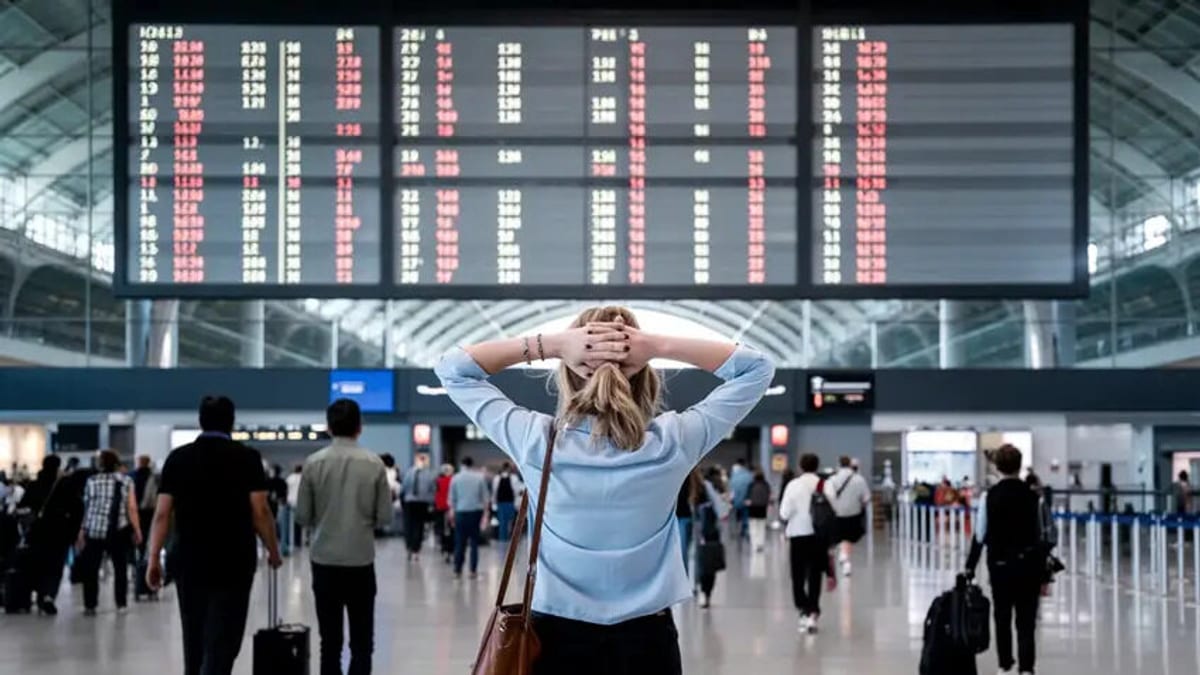
Image by Travel And Tour World
Escalating Regional Tensions Ripple Through Airline Schedules
Publicly available aviation data and recent coverage from regional outlets indicate that airspace restrictions linked to the ongoing conflict involving Iran, Israel and the United States have triggered one of the most severe operational crises for Middle East carriers in years. At the peak of the current disruption, several thousand flights per day have been removed from schedules across the wider region, with today’s snapshot showing at least 426 outright cancellations and 1,121 delays centered on major hubs from Istanbul to the Gulf.
Reports highlight that closures or heavy restrictions in the airspace over Iran, Iraq, Bahrain and Kuwait, along with constrained corridors over Israel, Qatar and the United Arab Emirates, have forced airlines either to suspend flights entirely or accept lengthy reroutes around blocked zones. The result is a cascade of missed connections and rolling delays that extend well beyond the Middle East into Europe, Asia and Africa.
Analysis based on schedules from aviation analytics providers shows that Gulf super-connectors such as Emirates, Qatar Airways and Etihad, as well as regional players including Saudia and Pegasus, have collectively removed thousands of flights from their networks in recent weeks. While some services continue, particularly on adjusted paths via Egypt, Saudi Arabia and Oman, the overall pattern reflects a system struggling to adapt to rapidly changing safety and overflight parameters.
Travel-focused publications describe airports like Dubai, Abu Dhabi and Doha, normally among the world’s busiest international transit hubs, operating with sharply reduced movements and visibly thinner departure boards. This contraction has pushed more pressure onto alternative routings via Istanbul, Cairo and Jeddah, where the current wave of 426 cancellations and over a thousand delays is now most acutely felt by passengers.
Key Hubs in Istanbul, Jeddah, Cairo and Beirut Under Strain
In Turkey, Istanbul’s main airports have seen disrupted operations as airlines adjust to the loss of standard eastbound corridors that normally cross Iranian or Iraqi airspace. Public schedule tracking shows Turkish Airlines and low-cost carrier Pegasus trimming frequencies or retiming flights to parts of the Gulf, South Asia and East Africa to accommodate longer routings and uncertain slot availability at downline airports.
Egypt’s Cairo International Airport has emerged as a vital bridge between Europe and Asia as carriers seek southern detours that avoid the most heavily restricted skies. According to recent Egyptian media reports, civil aviation authorities describe the country as a primary transit alternative, with traffic flows being reshaped around Cairo even as certain services are rescheduled or consolidated in response to the broader crisis.
Saudi Arabia’s Jeddah and Riyadh gateways are also feeling the strain. Publicly available flight boards and regional business coverage point to Saudia and other operators juggling a mixture of cancellations and extended routings, as well as changes to departure times intended to align with newly available corridors through safer airspace over the Red Sea and the Arabian Peninsula.
In Lebanon, Beirut’s Rafic Hariri International Airport, already sensitive to regional volatility, has seen knock-on effects from disruptions to services operated by Middle East and Gulf carriers. While not all flights are suspended, travelers connecting through Beirut on routes to the Gulf, North Africa or Europe have had to contend with irregular operations, last-minute gate changes and waiting times that can stretch well beyond original itineraries.
Passenger Impact: Missed Connections, Extra Costs and Lengthy Reroutes
For passengers, the operational metrics translate into long queues at transfer desks, overburdened call centers and hotel hunts in unfamiliar cities. Travel industry reports describe families sleeping in terminal seating, business travelers scrambling to rebook via alternative hubs and tour groups stranded between destinations as charter and scheduled flights alike are pulled from departure boards.
Because many cancellations are announced with limited notice, same-day rebooking options are often scarce. With regional hubs such as Dubai and Doha operating at reduced capacity, passengers attempting to bypass the Middle East altogether are turning to more distant routings via cities like Singapore, European capitals or North African gateways, frequently at significantly higher fares.
Consumer guidance published by travel and aviation outlets advises affected travelers to maintain detailed records of their original bookings, cancellation notices and any additional expenses incurred, such as overnight accommodation or replacement tickets. This documentation is viewed as critical when later seeking refunds, credits or travel insurance claims tied to disruption caused by airspace closures and conflict-related instability.
Industry commentary notes that some governments in the region, including Qatar, the United Arab Emirates and Saudi Arabia, have introduced or expanded temporary visa flexibility for visitors who find themselves stranded beyond their planned stay. These measures, which may include fee waivers or short-term extensions, are intended to prevent travelers from inadvertently overstaying due to circumstances outside their control.
Carriers Adjust Networks and Policies Amid Ongoing Uncertainty
In response to the evolving situation, airlines across the Middle East and Eastern Mediterranean are reshaping their networks, sometimes on a daily basis. Public information from carriers such as Aegean Airlines and others illustrates a pattern of extended suspensions on routes to Israel, Iraq, Lebanon and selected Gulf destinations, alongside flexible rebooking windows and refund options for passengers whose flights fall within specified periods.
Large Gulf airlines, particularly Qatar Airways, Emirates and Etihad, are reported to have cut substantial portions of their scheduled services over recent weeks, while emphasizing that remaining flights are being operated with revised routings and close attention to international safety guidance. This has reduced the overall connectivity traditionally provided by these hubs, with ripple effects reaching long-haul markets in North America, Europe, Asia and Australasia.
Legacy carriers in Turkey, Egypt and Saudi Arabia are likewise leaning on tactical changes, including upgauging aircraft on select routes to consolidate demand, retiming departures to make better use of open corridors and temporarily suspending thin or seasonal services to free capacity for core markets. These actions are meant to stabilize operations, though they also contribute to continued volatility in published schedules.
Travel experts quoted in recent media coverage argue that, despite the disruption, the region’s airlines have become more adept at crisis management over the past decade. Contingency planning for sudden airspace closures, political tensions and security incidents now plays a central role in network strategy, even if the current scale of cancellations and delays remains exceptional by historical standards.
What Travelers Should Expect in the Coming Weeks
Looking ahead, published analysis from aviation and travel specialists suggests that conditions for passengers planning itineraries through Istanbul, Jeddah, Cairo, Doha, Dubai or Abu Dhabi are likely to remain fluid. Airlines are expected to continue issuing rolling schedule updates, sometimes only a few days in advance, as regional security assessments evolve and airspace authorities adjust restrictions.
Travel advisories from several governments currently encourage a cautious approach to non-essential journeys that rely heavily on Middle Eastern transit points. Some guidance recommends favoring single-ticket itineraries on one airline or alliance, which can simplify rebooking and compensation procedures when disruptions occur, and building longer connection windows into complex routes.
Prospective travelers are also being urged by consumer groups and travel media to check fare conditions carefully, prioritizing tickets that allow changes without heavy penalties. Flexible booking policies introduced during the pandemic era remain in place at some carriers, making it easier to shift dates or reroute if conflict-related disruptions intensify or spread to new corridors.
For now, the combination of 426 cancellations, more than a thousand delays and wider structural pressures on Middle Eastern aviation underscores how closely global travel depends on the region’s hubs. Until airspace restrictions ease and airlines regain scheduling certainty, passengers using these crossroads of international air traffic are likely to face a higher-than-usual risk of last-minute changes to their plans.