

More news on this day
Passengers across the Middle East are facing another day of turmoil on April 3, 2026, as security-related airspace restrictions and rolling operational suspensions leave travelers stranded and major routes through Dubai, Abu Dhabi and Amman heavily disrupted.
Get the latest news straight to your inbox!
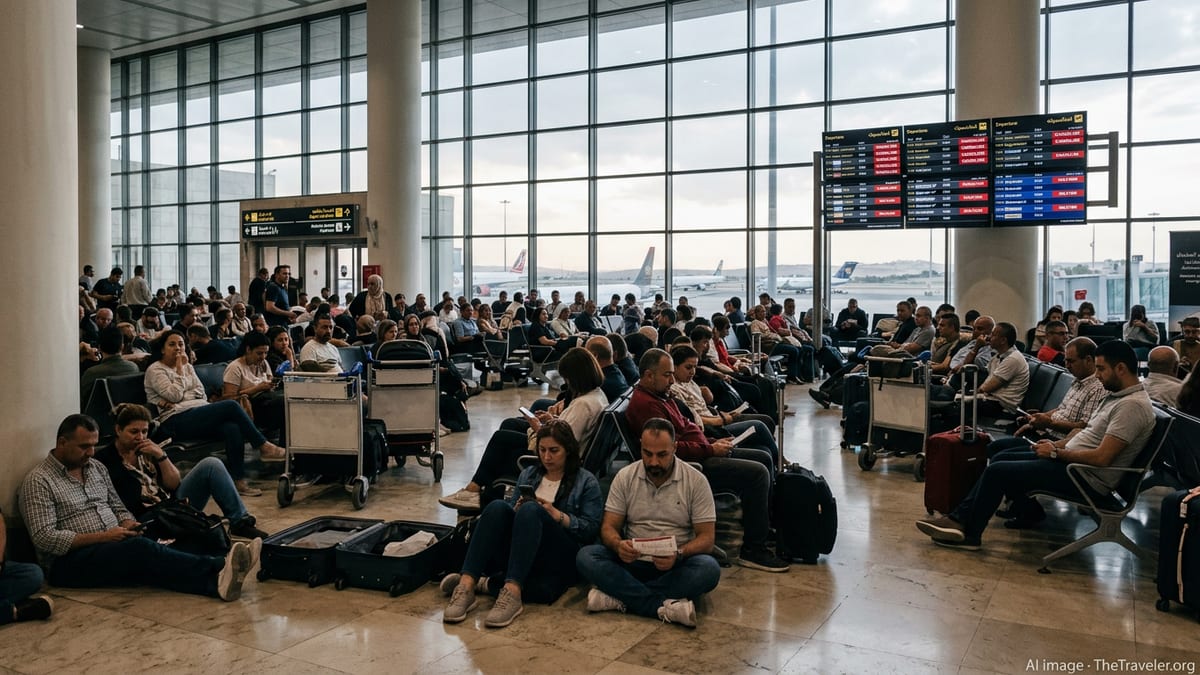
Security Crisis Deepens Disruptions At Gulf Hubs
Published coverage over recent weeks links the latest wave of flight suspensions to the broader regional conflict involving Iran and its neighbors, which has triggered intermittent airspace closures across the United Arab Emirates, Jordan, Qatar, Kuwait and other states. Reports indicate that drone and missile incidents near key aviation facilities, including Dubai International Airport and airports in Abu Dhabi and Jordan, have prompted authorities to tighten overflight rules and temporarily halt services at short notice.
Operational updates reviewed on April 3 show that Dubai International Airport and Abu Dhabi’s Zayed International Airport are open but operating with reduced schedules, with airlines forced to re-route or cancel flights that would ordinarily transit through affected airspace. Travel advisories and conflict-zone bulletins continue to flag parts of Gulf and Levantine airspace as high risk, limiting the corridors available to carriers and adding time and complexity to remaining services.
These constraints have cascaded across airline networks, leaving long-haul connections particularly vulnerable. Flights that rely on Dubai or Abu Dhabi as transfer points between Europe, Asia and Africa have been especially hard hit, with some journeys canceled outright and others facing extended delays as aircraft and crew are repositioned.
Flydubai, Etihad And Regional Carriers Cut Frequencies
Low-cost and network airlines with a heavy focus on regional routes are among the most visibly affected. Public data on flight boards and schedule summaries suggest that FlyDubai is operating at significantly reduced capacity compared with pre-conflict levels, with a substantial portion of its usual Middle East and South Asia network curtailed or operating on limited frequency. Reduced access to neighboring airspace and uncertainty around short-haul sectors have forced the carrier to trim departures in and out of Dubai.
In Abu Dhabi, Etihad Airways has been working with an evolving list of permitted destinations as authorities gradually reopen selected routes under tighter risk controls. Service updates and traveler forums covering the period from early March into April describe a pattern of partial resumptions to a handful of cities while many other scheduled services to and from Abu Dhabi remain suspended or subject to late-notice changes.
Other regional operators, including Air Arabia and Royal Air Maroc, have also adjusted or suspended flights touching Gulf hubs. Royal Air Maroc has extended the suspension of flights to Dubai and Doha into mid-April, while Air Astana has confirmed that its own suspension of services to Dubai will continue through the end of the month. Together, these cuts further constrain capacity into and out of the United Arab Emirates just as demand for onward connections remains high.
Global Airlines Scale Back Services To Dubai, Abu Dhabi And Amman
The disruption is not limited to Gulf-based carriers. International airlines across Africa, Europe and Asia have revised their schedules to the region, with public travel alerts and airline advisories highlighting suspensions and diversions affecting Dubai, Abu Dhabi and Amman. Kenya Airways, Air France and EgyptAir are among the operators adjusting frequencies or temporarily suspending selected flights to these hubs, reducing options for passengers originating in Nairobi, European capitals and North African cities.
According to travel-industry analyses and airport operations data, some European carriers have extended suspension periods for Dubai routes into mid-May, while others are routing aircraft around restricted airspace, prolonging flight times and increasing the risk of delays and missed connections. Carriers in South and East Asia are similarly reconfiguring schedules, with several reducing or temporarily halting Gulf-bound services when reliable routings cannot be secured.
In Jordan, Amman’s Queen Alia International Airport has reopened to commercial flights under close regulatory oversight, but the broader regional picture continues to shape operations. Public advisories describe Jordanian airspace as technically open yet subject to change in response to security assessments, leaving airlines cautious about rebuilding full schedules. As a result, passengers using Amman as a transit point between Europe and the Gulf or onward to Africa may still encounter last-minute cancellations or re-routing.
Thousands Of Passengers Stranded And Re-Routed
Across the network, the cumulative impact of these changes has left thousands of travelers stranded in terminals or forced into complex alternative itineraries. Recent coverage from aviation data providers points to hundreds of cancellations and several thousand delays on peak days across Asia-Pacific and Middle Eastern hubs, with Dubai frequently appearing among the worst-affected airports.
On April 3, publicly available information from airport departure boards in the United Arab Emirates shows lines of delayed flights and unexplained gaps where canceled services to destinations such as Cairo, Amman, Riyadh, Mumbai and European cities would normally appear. Passengers report prolonged waits at customer-service desks as airlines attempt to rebook disrupted journeys using the limited remaining capacity through Dubai, Abu Dhabi and alternative hubs such as Riyadh or Istanbul.
These disruptions compound earlier cancellations dating back to the initial outbreaks of hostilities and subsequent drone and missile incidents. In some countries, including Pakistan, cumulative figures indicate that thousands of flights have been grounded since the onset of the conflict, illustrating the scale of aviation disruption across the wider region and the long tail of operational recovery even when specific airspace segments reopen.
What Travelers Can Expect In The Coming Weeks
Looking ahead into mid-April and beyond, publicly available airline notices suggest that uncertainty will remain the dominant theme for travel through Dubai, Abu Dhabi and Amman. Several carriers, including European and North African airlines, have set suspension windows running at least until the middle of the month, while others note that any return to normal schedules will depend on security assessments and government guidance in multiple jurisdictions.
Industry updates emphasize that airspace over parts of Iran, Iraq, Israel and sections of the Gulf remains constrained, even where airports are technically open. This raises the likelihood that remaining operating flights will continue to use longer detours, increasing flight times and the potential for knock-on delays. Travelers may also see more frequent aircraft swaps, schedule changes and rolling time adjustments as airlines adapt day by day.
Consumer-rights organizations and travel platforms are urging passengers to check their flight status repeatedly in the 24 hours before departure and, where possible, to use airline mobile apps and direct communication channels rather than relying solely on static airport displays. Many carriers are offering flexible rebooking and, in some cases, refunds for trips scheduled during the height of the disruption, though specific options depend on the route, airline and applicable regulations.
For now, the picture across the Middle East’s key transit hubs remains fluid. With FlyDubai, Kenya Airways, Air France, EgyptAir, Etihad Airways and other carriers trimming or suspending at least 22 flights connecting through Dubai, Abu Dhabi and Amman, travelers planning to use these gateways in the coming days are being advised by publicly available guidance to prepare for last-minute changes, bring contingency plans and allow generous buffers for any onward connections.