

More news on this day
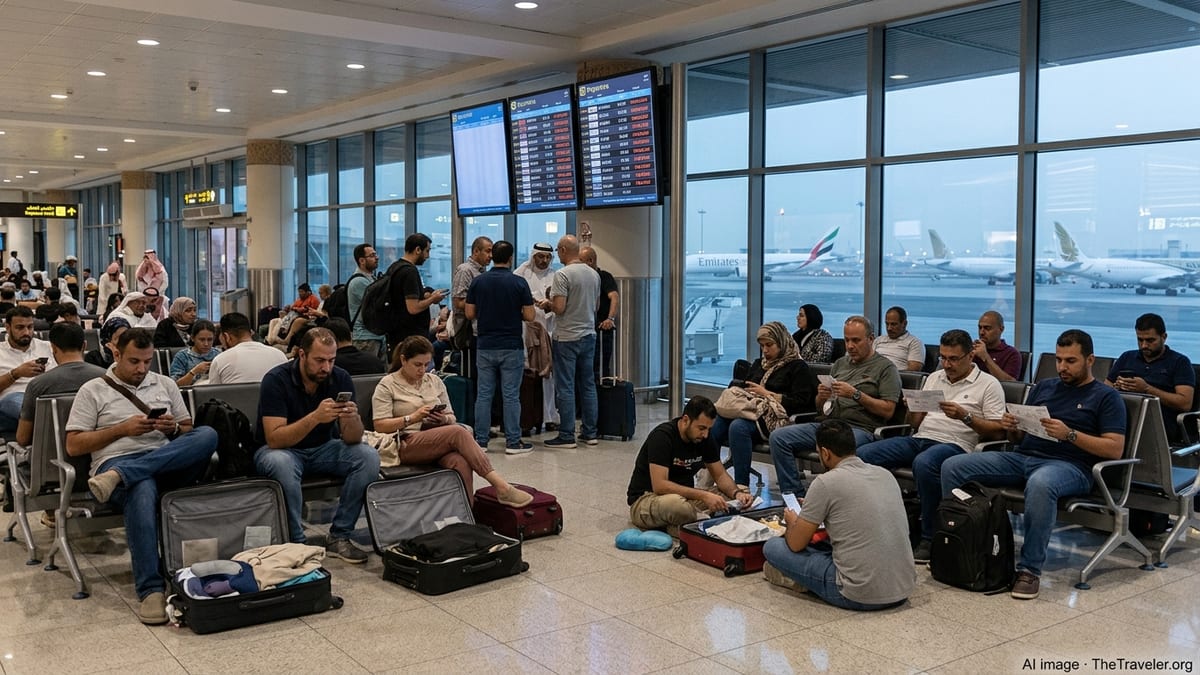
Air travel across parts of the Middle East remains severely disrupted in late March 2026, with dozens of flight cancellations and delays reported at major hubs in Bahrain, Saudi Arabia and Dubai, leaving travelers stranded and struggling to rebook as airlines navigate restricted airspace and evolving security risks.
Get the latest news straight to your inbox!
How the Latest Wave of Disruptions Unfolded
Publicly available aviation and security advisories indicate that airspace restrictions and intermittent airport suspensions have affected several Gulf states since late February, following a sharp escalation in regional tensions. Airlines serving Bahrain, Saudi Arabia and the United Arab Emirates have repeatedly adjusted schedules, producing a rolling pattern of cancellations and extended delays.
Recent travel and risk bulletins describe partial resumptions at some airports in the United Arab Emirates, including Dubai International and Al Maktoum International, after temporary suspensions earlier in March. However, the same reports note that services remain limited, with many flights still cancelled or delayed as carriers reroute aircraft and crews around constrained air corridors.
In Saudi Arabia, airports such as Riyadh’s King Khalid International are currently operating with reduced schedules, and advisories highlight ongoing disruptions tied to regional airspace closures. Bahrain’s connectivity has also been curtailed, with some carriers suspending services entirely or operating only ad hoc flights, resulting in passengers facing long waits for alternative options.
Against this backdrop, travel data from airline and airport dashboards points to at least 50 flight cancellations and 41 delays across key routes touching Bahrain, Saudi Arabia and Dubai over recent days. The numbers reflect only a slice of a wider pattern of disruption that has built up since the start of March.
Where Passengers Are Feeling the Impact Most
The most visible impact is at large transit hubs, particularly Dubai, which normally handles some of the world’s busiest long haul connections between Europe, Asia and Africa. With multiple international carriers scaling back or suspending services into the city, travelers report missed onward connections and extended airport stays as they wait for open seats on remaining flights.
In Bahrain, the combination of restricted airspace and reduced airline operations has constrained both regional and long haul itineraries. Published airline schedules show very limited departures on some days, leaving travelers with few alternatives other than routing through other Gulf or South Asian hubs, if those routes are available at all.
Saudi Arabia is experiencing a more uneven impact. Some airports continue to handle a mix of domestic and selective international services, while others are operating at reduced capacity. Travel advisories describe a heightened risk of same day schedule changes, including flights that are listed as “scheduled” before being cancelled closer to departure time, complicating planning for passengers and tour operators.
For many travelers, the disruption is not just a matter of hours. With popular routes repeatedly cancelled and rebooked, some passengers have seen their return dates pushed back by several days, incurring additional accommodation and living expenses while they wait for confirmed seats out of the region.
What to Do If Your Flight Is Cancelled or Delayed
Airlines serving Bahrain, Saudi Arabia and Dubai have activated disruption policies, which typically include free rebooking within a defined window, as well as refunds when flights are cancelled outright. Public information on airline channels indicates that call centers and digital support platforms are under heavy pressure, leading to long wait times for assistance.
Travel advisories consistently urge passengers not to go to the airport unless their flight status is clearly shown as operating on both the airline’s official channels and the airport’s live departures board. In several cases, airport operators have advised travelers to wait for direct confirmation from their carrier before setting out, due to the risk of last minute suspensions.
For those already stranded, the most practical first step is to secure any available rebooking directly with the airline, even if the new date is several days away. Once a confirmed seat is in place, travelers can then assess whether additional options, such as rerouting via a different regional hub or returning to their origin country with another carrier, are feasible.
Passengers are also being encouraged by consumer advocates to document all additional costs linked to the disruption, including hotels, meals and ground transport, and to review the terms of any travel insurance policy. Many comprehensive policies include coverage for extended delays or cancellations due to airspace closures and security incidents, although the exact conditions vary.
Practical Steps to Navigate the Ongoing Chaos
Given the fluid situation, travelers with upcoming itineraries touching Bahrain, Saudi Arabia or Dubai are being advised to treat all plans as tentative. A common recommendation in published guidance is to monitor flight status multiple times a day in the 72 hours before departure, and again on the day of travel, as changes are often made within hours of scheduled takeoff.
Flexible booking arrangements are especially important in the current environment. Where possible, travelers may wish to choose tickets that allow date or route changes with minimal penalties, and to avoid tight connections through Gulf hubs. Longer layovers and single ticket itineraries on one carrier or alliance can reduce the risk of being left without through protection if one leg is cancelled.
Those already in the region and seeking to leave may find more options by widening their search to include departures from multiple airports within driving distance, where local conditions permit. Some travelers have been able to secure seats from alternative hubs in neighboring countries when their originally booked departure airport remained subject to extended disruption.
Experts in travel risk management also emphasize the importance of maintaining up to date contact details with airlines and booking platforms so that cancellation or rebooking notifications are received quickly. Enrolling in airline mobile apps and push alerts can shorten response times when flights are retimed or moved to different airports.
What This Means for Travel to the Gulf in the Coming Weeks
While some services in the Middle East are gradually resuming after the most intense phase of airspace closures, current assessments suggest that flight schedules across Bahrain, Saudi Arabia and Dubai will likely remain unstable in the near term. Airlines are expected to adjust capacity cautiously as they assess security and operational conditions, which may preserve the risk of sudden cancellations.
Industry commentary points to a broader knock on effect for global travel, particularly on routes linking Europe and Asia that normally rely on Gulf hubs as transit points. Travelers planning trips in April and beyond may encounter reduced flight options or higher fares as carriers consolidate services and prioritize core routes.
Tourism boards and hospitality providers in the region are closely watching developments, since extended aviation disruption can weigh on hotel occupancy and visitor spending. For now, many hotels report working with guests whose stays have been involuntarily extended because of cancelled outbound flights, while also managing new arrivals whose itineraries are still going ahead.
For prospective visitors, the key message from current public guidance is to stay informed, build flexibility into plans, and be prepared for itinerary changes even after tickets are issued. Until airspace restrictions are fully lifted and airlines restore normal frequencies, anyone traveling through Bahrain, Saudi Arabia or Dubai should anticipate the possibility of last minute disruption and plan accordingly.