

More news on this day
Severe weather and cascading airspace restrictions across the Middle East have triggered mass disruption at key hubs in Dubai, Abu Dhabi, Doha and Riyadh, with aviation data showing more than 1,250 flights scrapped and at least 241 delayed as Qatar Airways, Emirates, Etihad Airways and FlyDubai curtail or temporarily ground large parts of their operations.
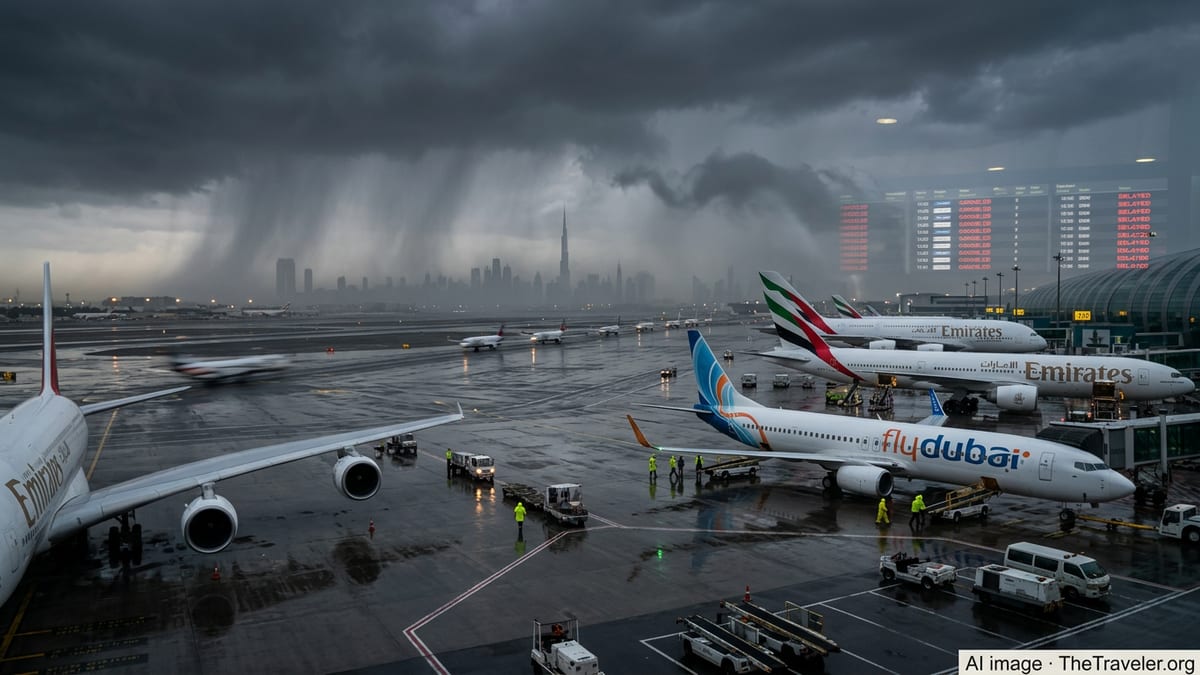
Major Hubs Paralyzed as Weather and Airspace Closures Collide
The latest wave of disruption began as intense storm systems rolled across parts of the Gulf, reducing visibility, flooding airfields and forcing temporary runway closures at several airports. At the same time, authorities in multiple states imposed tight airspace restrictions, sharply limiting takeoffs and landings and complicating efforts to reroute aircraft around the worst weather cells.
At Dubai International and Abu Dhabi’s Zayed International, where Emirates and Etihad usually handle tens of thousands of passengers per day, operations have been cut back to a fraction of normal capacity. Ground handling teams have struggled to tow aircraft away from inundated stands and reposition them for departure once conditions improve, prolonging the knock on effect of each cancellation.
In Doha, Qatar Airways’ home hub at Hamad International has seen large portions of its schedule suspended, with aircraft and crew out of position across Europe, Asia and Africa. Even flights not directly affected by local storms are being cancelled when inbound planes cannot reach Doha on time or must divert to secondary airports because of shifting airspace restrictions.
Riyadh, which has remained technically open, continues to report elevated levels of cancellations and late arrivals on routes that must cross restricted corridors to the north and east. While some domestic services are still operating, regional and long haul connections are frequently delayed as carriers wait for updated weather windows and route clearances.
Airlines Slash Schedules and Prioritise Repatriation
Emirates, based in Dubai, has cancelled or suspended hundreds of flights and is now running a reduced schedule focused on long haul trunk routes and essential connectivity. The airline is prioritising services that repatriate stranded passengers back to their home countries or onward to major transit points where alternative connections are available.
Etihad has taken a similarly conservative approach from Abu Dhabi, holding most of its fleet on the ground during the most intense weather and gradually restoring a limited number of flights as visibility and crosswinds permit. The carrier is concentrating capacity on routes with large numbers of disrupted passengers and on destinations where airspace remains reliably open.
Qatar Airways has issued one of the most far reaching suspensions, grounding the bulk of its regional network as Qatar’s airspace has been intermittently restricted and storms have swept through the Gulf. While select long haul flights continue, many are operating as one off recovery services rather than according to the published timetable.
FlyDubai, the Dubai based low cost carrier, has halted many of its short haul links around the Gulf and into the wider Middle East, where smaller airports are struggling with both adverse weather and staffing constraints. Where it can operate, the airline is warning passengers not to travel to the airport unless they have written confirmation of a rebooked seat.
What This Means for Travelers With Upcoming Flights
For passengers with tickets in the coming days, the most important point is that published schedules bear little resemblance to what is actually flying. Flights may appear confirmed in booking systems even after they have been withdrawn from the live departure board, particularly where airlines are still updating global distribution platforms.
Travelers are being urged to monitor their booking directly on the airline’s website or app, rather than relying on third party travel agencies or generic flight trackers. Many carriers are sending rolling notifications as flights are cancelled, retimed or converted into special recovery services, but delivery can lag if contact details were entered incorrectly at booking.
Airports across the region are advising against arriving more than three hours before a confirmed departure, to avoid overcrowding terminals with passengers whose flights are unlikely to operate. Those who do not have a rebooked flight or written confirmation from their airline are being asked to stay in their accommodation or seek assistance by phone and online channels.
Travelers connecting through Dubai, Abu Dhabi, Doha or Riyadh from other regions should check whether their entire itinerary is still viable. In many cases, long haul sectors to the Gulf have been cancelled even when the origin airport is unaffected, because there is no onward connection available or because the destination hub cannot accept additional inbound aircraft.
Policies on Rebooking, Refunds and Accommodation
In response to the widespread disruption, major Gulf carriers have activated flexible rebooking policies for tickets issued before the storms and associated airspace restrictions. Emirates and Etihad are allowing passengers to rebook without change fees for travel later in March or to request refunds where journeys are no longer possible or practical.
Qatar Airways is offering complimentary date changes and, in some cases, rerouting via partner airlines on alternative paths that avoid the most congested hubs. However, inventory on those alternatives is limited, and priority is generally being given to travelers who have already experienced cancellations or long delays.
FlyDubai is waiving change fees on affected flights and encouraging passengers to opt for travel vouchers if they do not need to fly immediately. The carrier has warned that cash refunds may take longer than usual to process given the volume of requests and the need to manually verify which sectors were impacted.
Accommodation support varies by airport and by local regulation. In some cases, airlines are providing hotel rooms and meal vouchers for passengers who are stranded overnight, particularly when disruption is directly tied to weather and operational decisions. Where airspace closures are mandated by governments, assistance may be more limited, making it essential for travelers to keep receipts for any extra costs they incur.
How the Recovery Is Likely to Unfold
Aviation authorities across the region are working with air traffic control providers to reopen corridors gradually as weather systems move on and safety assessments are completed. Even once airspace is fully available, it will take days for flight operations to normalise, as aircraft and crew must be repositioned and maintenance checks completed after prolonged ground time.
Airlines are expected to focus the first wave of restored capacity on clearing backlogs at the main hubs. That means recovery flights between Dubai, Abu Dhabi, Doha and major cities in Europe, Asia and North America are likely to return first, while some thinner regional routes remain suspended or operate less frequently.
Passengers should be prepared for continued knock on delays as the network restarts. Aircraft arriving late into one hub can delay departures from another, and crews may reach their duty time limits before schedules have fully stabilised. Carriers will continue trimming frequencies and consolidating lightly booked flights in order to free up aircraft for routes with large numbers of stranded travelers.
Industry analysts say it could be a week or more before schedules across the Gulf resemble anything close to normal. Until then, travelers heading to or through Dubai, Abu Dhabi, Doha or Riyadh should build in extra time, remain flexible about routings, and stay closely attuned to direct updates from their airline as the situation evolves.