

More news on this day
Escalating regional tensions and rolling airspace restrictions across Saudi Arabia, Qatar, the United Arab Emirates, and Bahrain are causing severe disruptions to global flight schedules, with thousands of travelers facing cancellations, diversions, and long delays in recent weeks.
Get the latest news straight to your inbox!
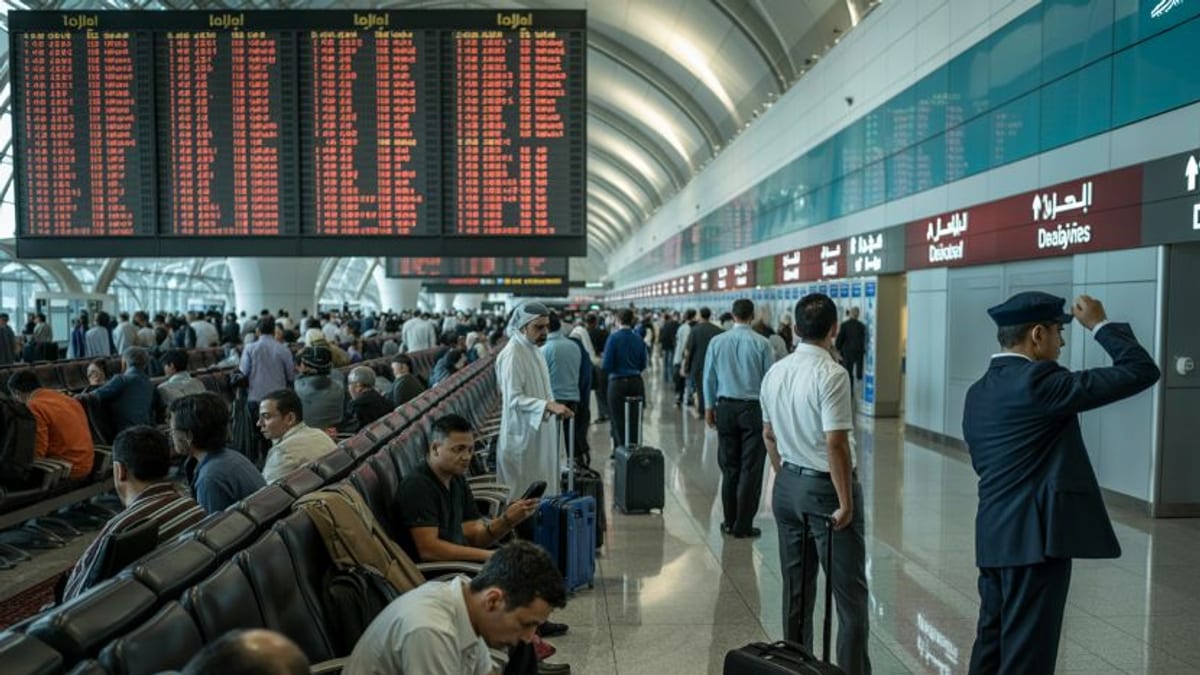
Image by Travel And Tour World
How the Crisis Started and Where Disruptions Are Worst
The latest wave of air traffic disruption in the Gulf is closely tied to the Iran war and a series of reciprocal strikes involving Iran, Israel, and Western allies. Publicly available information shows that since late February 2026, missile and drone attacks and heightened military activity have pushed several states to restrict or close their airspace to civilian traffic for safety reasons.
Qatar has been among the hardest hit. Reports indicate that Qatari airspace was effectively closed in early March, with Hamad International Airport in Doha seeing widespread cancellations and a near-total suspension of regular passenger flights for several days. Travel and logistics advisories describe Qatar’s airspace as remaining heavily restricted, limiting both passenger and cargo operations.
The United Arab Emirates, normally one of the world’s busiest aviation hubs, has experienced rolling disruptions rather than a complete stop. Coverage from regional outlets and international media describes partial airspace closures, debris from intercepted missiles near Dubai International Airport, and temporary suspensions of flights to and from Abu Dhabi and Dubai. Some carriers have halted Gulf operations entirely for defined periods, while others are operating a reduced schedule subject to last-minute changes.
Bahrain has also faced closures and restrictions, particularly affecting its role as a transfer point for regional itineraries. Travelers have reported repeated cancellations on routes using Bahrain as a hub, prompting some airlines to encourage rerouting through alternative gateways or overland connections to airports in neighboring states.
Saudi Arabia’s Mixed Role: Disruptions and a Limited Transit Lifeline
Saudi Arabia occupies a complex position in the current disruption picture. The country has been targeted by drone and missile activity linked to the wider conflict, and major airports such as Riyadh’s King Khalid International have reported limited operations, delays, and cancellations. Security concerns and shifting traffic patterns have reduced direct connectivity on some routes, particularly those that once relied on overflying neighboring states that are now closed or restricted.
At the same time, several industry advisories characterize Saudi airspace as comparatively more available than that of Iran, Iraq, Israel, Qatar, Bahrain, Kuwait, and at times the UAE. As a result, Saudi routes have become a partial east–west corridor for airlines able to secure safe flight plans, even as schedules remain thinner than usual and subject to change at short notice.
For travelers, this means Saudi Arabia may appear as one of the few remaining options when searching for tickets between Europe, Africa, and Asia. However, the apparent availability can be misleading. Capacity constraints, crew and aircraft repositioning, and the need to avoid risk areas have led to frequent last-minute retimings or cancellation of flights that initially show as operating.
Travelers considering Saudi transit should treat any itinerary as fluid. Even if a ticket is confirmed, airport operations can still be affected by changing security assessments, shifting military activity in the region, or knock-on delays from disrupted inbound aircraft.
How Airlines Are Responding: Suspensions, Reroutes, and Pop-Up Alternatives
Airlines based both inside and outside the region have reacted with a mix of blanket suspensions, selective route cuts, and emergency rerouting. Some Gulf-based carriers temporarily halted the majority of flights to and from Qatar and parts of the UAE, then gradually reintroduced limited services as risk assessments evolved. International airlines from Europe, North America, and Asia have suspended direct services to Dubai, Abu Dhabi, Doha, Riyadh, and Manama for days or weeks at a time, in some cases extending waivers and change policies through late March.
Published coverage in travel and aviation media notes that several major European and North American carriers are steering passengers around the Gulf entirely. Egypt, for example, has emerged as a critical bridge between Europe and Asia, with Egyptair increasing frequencies to Dubai, Abu Dhabi, and Sharjah when operationally feasible. Other airlines are using hubs such as Cairo, Istanbul, Athens, and various South and Southeast Asian cities as detour points, sometimes adding ad hoc flights or larger aircraft to absorb displaced demand.
In parallel, some carriers are experimenting with multimodal solutions. Freight and logistics advisories describe air freight being routed into airports such as Muscat or Jeddah and then moved by truck into the UAE, a pattern that in some cases is mirrored on the passenger side when travelers opt to fly into relatively less affected airports and continue overland by road.
Travelers should expect carriers to keep adjusting their strategies day by day. Schedules published several weeks out may not reflect the eventual reality, but they provide a rough guide to which corridors airlines hope to restore as conditions stabilize.
What This Means for Travelers Right Now
For anyone with upcoming travel touching Saudi Arabia, Qatar, the UAE, or Bahrain, the practical impact is clear: more risk of disruption than usual, even if your specific route is not suspended today. Airlines have canceled or delayed a high volume of flights at short notice, particularly those using Doha, Dubai, Abu Dhabi, or Manama as transfer hubs. Travelers have reported diversions to airports across Europe, the Eastern Mediterranean, and South Asia, often accompanied by unexpectedly long layovers.
Publicly available advisories consistently urge passengers to monitor flight status closely and avoid assuming that a ticketed itinerary will operate as scheduled. Many airlines have issued flexible rebooking and refund policies for travel to or via the Gulf, permitting date or routing changes without standard change fees. These policies usually apply within a defined window, often focused on departures between late February and late March 2026, so travelers should read the conditions carefully.
Those already in the region may find that outbound seats are scarce, especially on routes that avoid the most affected airspace. Some travelers have opted to reposition by road to alternative airports in Saudi Arabia or Oman, then connect onward from there. While this can work in specific cases, it requires close attention to visa requirements, border formalities, and insurance coverage, as well as the security situation on the ground.
Importantly, even flights that do operate may use longer routings to skirt closed or risky airspace, adding hours to journey times and increasing the likelihood of missed connections. Travelers should allow generous buffers between separate tickets and avoid tight self-made connections whenever possible.
Planning Ahead: Risk, Routing Choices, and Insurance
Given the fluid situation, travelers booking new trips for the coming weeks face a trade-off between convenience and resilience. Routes that still use Gulf hubs may appear cheaper or more direct, but they carry higher disruption risk than itineraries routed through alternative corridors in North Africa, Europe, or South and Southeast Asia. Many travel specialists now recommend favoring single-ticket itineraries on one airline or alliance, giving the carrier more responsibility to reroute you if schedules change.
Travel insurance has become a more important consideration as well. Policies vary widely in how they treat war, conflict, and government-imposed airspace closures. Some standard products exclude disruptions related to armed conflict, while others may provide limited compensation for delays, missed connections, or unexpected overnight stays. Travelers are advised, based on publicly available consumer guidance, to read the fine print and look specifically for coverage related to trip disruption rather than only trip cancellation.
Flexibility is another key asset. Booking refundable or changeable fares, choosing routings with multiple daily frequencies rather than single daily flights, and avoiding separate tickets on low-cost carriers where possible can all improve your options if plans change suddenly. Even simple steps such as traveling with carry-on only, where feasible, can make it easier to accept last-minute reroutes and avoid baggage being stranded in a hub that later experiences a shutdown.
While there are tentative signs that some airspace restrictions may ease if regional tensions cool, aviation and travel industry commentary suggests that the route map through the Gulf is likely to remain unstable in the short term. For now, anyone planning to pass through Saudi Arabia, Qatar, the UAE, or Bahrain should treat their itinerary as provisional and prepare backup options before departure.