

More news on this day
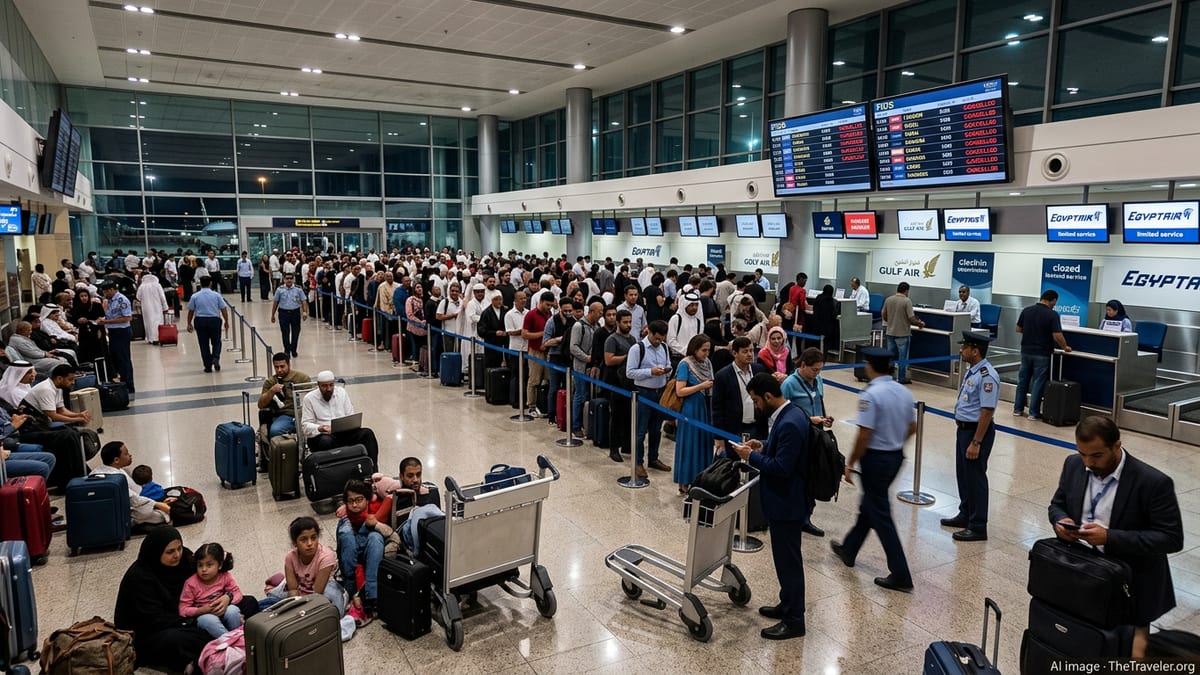
Fresh disruption is rippling across Middle East and Eastern Mediterranean skies in 2026, with new figures showing 29 cancellations and 517 delays affecting flights in Bahrain, Qatar, the United Arab Emirates, Saudi Arabia, Turkey, Kuwait and Cyprus as airlines adjust to an unsettled security environment.
Get the latest news straight to your inbox!
New Numbers Highlight Scale of Regional Disruption
Recent operational data compiled from airport status boards and aviation tracking platforms indicates that carriers serving Bahrain, Qatar, the United Arab Emirates, Saudi Arabia, Turkey, Kuwait and Cyprus collectively reported 29 flight cancellations and 517 delays over a short monitoring window in early April. The figures, highlighted in coverage by travel industry outlets, are being viewed as a snapshot of a wider, evolving disruption rather than an isolated event.
The cancellations are concentrated on routes passing through the most heavily monitored airspace, where conflict-related advisories and temporary route closures have forced airlines to recalibrate schedules. Delays have proved even more pervasive, reflecting the knock-on effect of rerouting, extended flight times around restricted zones, and congestion at hubs attempting to resume partial operations after interruptions.
Industry analysts note that while the raw numbers may seem modest compared with global totals, they are significant because they represent incremental strain layered on top of weeks of instability. For carriers in the Gulf and Eastern Mediterranean, where high-frequency connections and tight connection banks are central to business models, even limited blocks of cancellations and several hundred delayed movements can unravel carefully calibrated networks.
The pattern also reveals a shift from earlier outright suspensions toward a more granular blend of selective cancellations and large volumes of delayed departures and arrivals, pointing to airlines’ efforts to keep at least part of their schedules operating in a volatile environment.
Bahrain’s Airspace Pressures Add to Gulf Network Strain
Bahrain has emerged as one of the latest pressure points, with flight disruptions tied to a tightening web of security advisories across the Gulf. Publicly available notices to airmen show that sections of Bahrain’s flight information region have undergone temporary closures or severe restrictions at various points in March, allowing only limited movements under prior approval.
Reports from regional media and traveler accounts describe periods in which Gulf Air and other carriers curtailed or temporarily grounded outbound operations from Bahrain International Airport, diverting some passengers via nearby hubs such as Dammam when conditions allowed. For travelers, this has meant last-minute rerouting across borders, extended ground time and uncertainty over final destinations.
European aviation safety advisories have continued to flag the wider Bahrain-controlled airspace as an area requiring caution, alongside adjacent regions in Iran, Iraq, Qatar, Kuwait and the United Arab Emirates. Operators are urged to factor in evolving security assessments when planning routings, often resulting in altitude restrictions or avoidance of specific corridors.
These constraints are feeding directly into Bahrain’s role as a connector for regional and long-haul traffic. Even when the airport itself remains technically open, the surrounding risk environment can narrow routing options and lengthen flight paths, contributing to the type of delays captured in the latest disruption figures.
Qatar, UAE and Saudi Arabia Manage Conflicted Hub Operations
Major hubs in Qatar, the United Arab Emirates and Saudi Arabia remain central to the unfolding aviation picture. According to published coverage, airspace closures and conflict-related activity since late February have triggered repeated suspensions and phased restarts at Doha’s Hamad International Airport and Dubai International Airport, both of which normally anchor long-haul connectivity between Europe, Asia and Africa.
In the United Arab Emirates, reports indicate that Dubai’s operations have shifted from full closures to limited, security-conscious schedules, with priority placed on selected long-haul routes and essential regional services. Abu Dhabi has followed a similar pattern, operating a reduced timetable while airlines such as Etihad Airways publish rolling schedule updates and warnings that flights remain subject to last-minute change.
Saudi Arabian gateways, including Riyadh’s King Khalid International Airport and other major airports, have faced their own mixture of cancellations and delays as air traffic controllers and airlines respond to changing threat assessments. Travel advisories produced by risk consultancies describe a fluid operating environment, with domestic and regional links particularly exposed to short-notice adjustments.
For Qatar Airways and other carriers based in these hubs, the challenge lies in rebuilding reliable connection banks while still adhering to safety advisories. Travel agencies and online ticketing platforms are reporting longer minimum connection times and a greater reliance on rebooking tools as itineraries through Doha, Dubai and Riyadh encounter rolling disruption.
Turkey, Kuwait and Cyprus Feel the Ripple Effects
While much of the focus has centered on Gulf hubs, airports in Turkey, Kuwait and Cyprus have also felt the knock-on effects of the regional security situation. Scheduling data referenced in travel trade reporting indicates that airlines serving these markets have contributed to the tally of 29 cancellations and 517 delays, often as a secondary consequence of issues further east.
For Turkey, which straddles Europe and the Middle East, delays have frequently arisen on flights interacting with altered routings over the Eastern Mediterranean, the Levant and the Gulf. Carriers have adjusted flight plans to avoid sensitive airspace, adding minutes or even hours to block times and making punctual, banked connections more difficult to maintain at Istanbul and other Turkish airports.
In Kuwait, published service updates point to temporary suspensions on select international routes and reduced frequencies, shaped by broader restrictions affecting Kuwait’s flight information region. Although Kuwait International Airport has remained open, constrained overflight options and regional detours have increased the likelihood of late arrivals and missed slots.
Cyprus, positioned on the edge of the affected zone, has functioned as both an alternative staging point and a victim of upstream disruption. Regional media accounts describe aircraft arriving late from Gulf and Levant origins, compressing ground handling windows and leading to outbound delays as crews and equipment struggle to reset.
Security Advisories, Rerouting and What Travelers Can Expect
Behind the headline numbers, a dense framework of security notices and advisories is shaping how airlines operate across the Middle East and adjoining regions. Updated guidance from European regulators highlights elevated risks across multiple flight information regions, including Bahrain, Iran, Iraq, Qatar, Kuwait, Saudi Arabia and the United Arab Emirates, urging operators to exercise caution at all flight levels and, in some cases, to avoid particular areas entirely.
United States restrictions for certain overwater sections of the Persian Gulf and Gulf of Oman, which reference Bahrain, Emirates and Muscat-managed airspace, add a further layer of complexity for carriers subject to US jurisdiction. These overlapping directives limit the availability of direct routings and often require flights to skirt large zones, increasing fuel burn and raising costs that are ultimately reflected in fares and schedule resilience.
Travel agencies and booking platforms are responding by issuing broad advisories that schedules remain highly subject to change. Many are encouraging passengers with trips through Bahrain, Qatar, the United Arab Emirates, Saudi Arabia, Turkey, Kuwait and Cyprus in the coming weeks to monitor their flight status far more closely than usual, arrive early at airports and remain prepared for rebookings or extended layovers.
With the underlying geopolitical tensions still unresolved, industry observers suggest that the latest tally of 29 cancellations and 517 delays is likely to be one data point in a longer series of irregular operations. For now, passengers transiting the region face a travel landscape in which flights are operating, but predictability has become a scarce commodity.