

More news on this day
Flight disruption across the Middle East intensified on April 6 as major hubs in Cairo, Istanbul and Dubai recorded hundreds of delays and at least 17 cancellations, stranding passengers and rippling across routes to Abu Dhabi, Kuwait City, Paris, Amsterdam and other international gateways.
Get the latest news straight to your inbox!
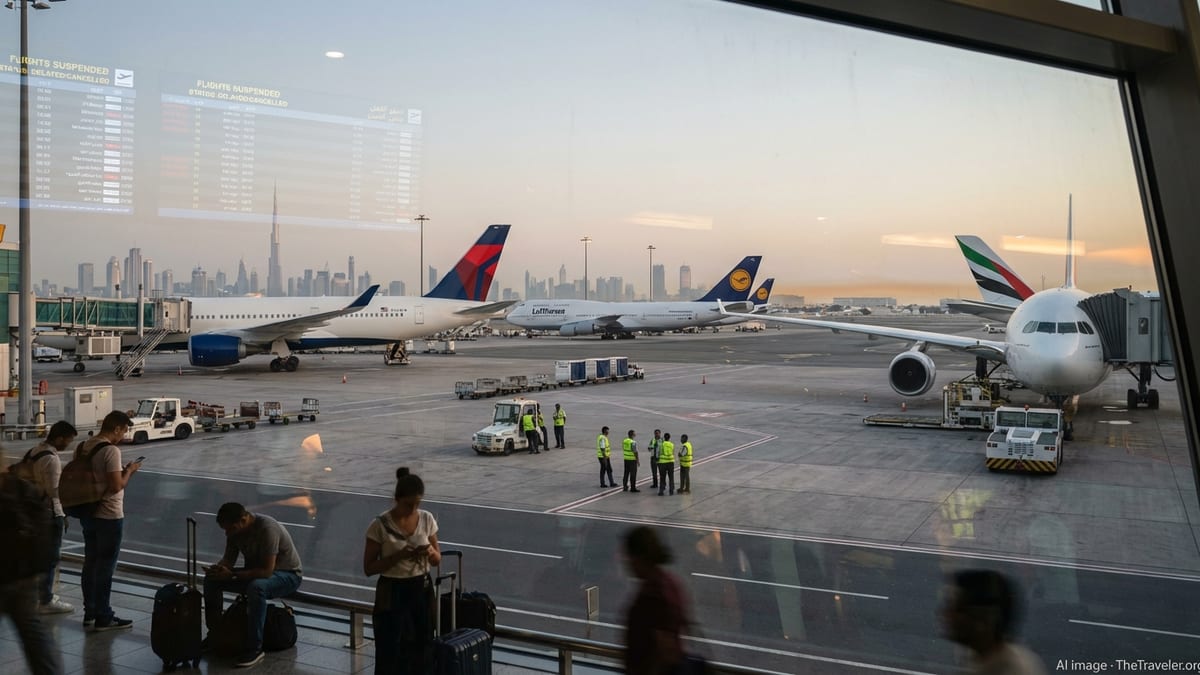
Delays Mount at Cairo, Istanbul and Dubai
Published data from aviation trackers and regional travel outlets indicates that Middle Eastern air traffic has entered a new phase of strain, with around 375 services delayed and at least 17 flights cancelled across multiple hubs over the past 48 hours. Cairo International Airport, Istanbul Airport and Dubai International have seen the heaviest disruption, affecting both regional shuttles and long haul connections into Europe and Asia.
At Cairo International Airport on April 6, operational tallies showed 155 delayed flights and 6 cancellations as congestion built through the day. Publicly available information points to EgyptAir among the worst affected carriers, alongside disruptions for Emirates and other international airlines operating to Frankfurt, Doha, Dubai, Istanbul and London.
Recent reporting on Istanbul Airport describes similar pressure, with earlier waves of delays and cancellations driven by the knock on effect of constrained Middle East airspace. On peak disruption days, more than 100 services in and out of the Turkish hub have been delayed or cancelled, creating onward connection problems across Europe and the Gulf.
Dubai International has also been operating on a reduced schedule, with its main tenant Emirates trimming frequencies and warning travelers to check live flight status tools. Regional coverage notes that the airport has repeatedly recorded clusters of cancellations and delays, particularly on services threading through conflict affected or congested air corridors.
Airlines From EgyptAir to Emirates Feel the Strain
The latest figures build on a series of disruption snapshots across the region that together point to a sustained squeeze on airline operations. A recent assessment of flights in Turkey, the United Arab Emirates, Egypt and Kuwait counted 254 delays and 17 cancellations in a single period, impacting carriers including Saudia, Air Arabia and Emirates along with several regional operators.
EgyptAir has emerged as one of the most delay affected airlines at Cairo, with dozens of late departures and a small number of cancellations, according to open flight tallies. Emirates services between Cairo and Dubai have also experienced repeated schedule changes as the airline adapts to evolving airspace restrictions and reduced capacity across its network.
In the Gulf, Air Arabia and Gulf Air have faced growing challenges at Dubai and Abu Dhabi as well as in Kuwait City and Bahrain. Recent travel advisories for the UAE list multiple cancelled Air Arabia Abu Dhabi arrivals from Bahrain and Kuwait, along with cancelled EgyptAir and Gulf Air flights into the country’s capital, reflecting how operational problems at one hub are quickly exported across the region.
European and transcontinental carriers such as Air France, Lufthansa and KLM are also reshaping schedules, particularly on routes that would normally overfly sensitive Middle East airspace. Some have extended suspensions or detours on services to and from Gulf destinations, adding further pressure to already crowded corridors and increasing the likelihood of knock on delays in cities like Paris and Amsterdam.
Wider Network Effects Reach Europe and Beyond
While the heaviest impact is being felt at Middle Eastern hubs, the disruption is clearly visible across a much wider network. Travel industry reporting over the weekend highlighted hundreds of delayed and cancelled flights touching Saudi Arabia, Egypt, Türkiye, the UAE, Kuwait and Israel in a single day, with Emirates, Pegasus Airlines, Saudia and EgyptAir among the carriers most frequently affected.
As schedules are thinned in the Gulf and Eastern Mediterranean, passengers traveling between Europe and Asia are encountering longer routings and tighter connection windows. Services into and out of Paris, Amsterdam and other major European gateways are reporting late arrivals of aircraft coming from Cairo, Dubai and Istanbul, which then knock timetable reliability on to subsequent flights.
These network effects are particularly acute at mega hubs designed around coordinated banks of arrivals and departures. At Dubai International, even modest blocks of cancellations can disrupt meticulously planned waves of connecting flights, while at Istanbul or Cairo, a cluster of delayed Middle East services can spread across operations to London, Frankfurt or regional African destinations.
Airports in Abu Dhabi and Kuwait City have reported their own sets of cancellations and delays as they absorb overflow traffic and handle rerouted services that might previously have flown more direct paths. This has made it harder for airlines such as Etihad, Gulf Air and Kuwait based carriers to keep to published timetables despite not always being at the center of the original disruption.
Reduced Capacity and Airspace Constraints Drive Ongoing Volatility
The immediate causes of the latest disruption wave vary by airport, but regional coverage points consistently to a combination of airspace restrictions, air traffic control congestion, staffing shortages and operational bottlenecks. Ongoing conflict and security concerns in and around key Middle Eastern corridors have forced many airlines to replan routes, sometimes at short notice, creating longer flight times and narrower gaps between rotations.
Gulf based carriers are still flying at significantly reduced capacity relative to pre crisis levels. Industry analysis this week estimated that airlines in the region were operating at just over half of their flight activity compared with late February, with recovery progressing only gradually. For Emirates, Etihad, Air Arabia and Flydubai, this means carefully rationing available aircraft and crews while also responding to sudden changes in overflight permissions.
These constraints filter down to passengers in the form of rolling schedule revisions, extended ground times and occasionally last minute cancellations. Travel advisories from Gulf and European outlets emphasize that even where airports remain open, the cumulative impact of re routings and reset timetables can leave aircraft and crews out of position, limiting the ability of airlines to absorb unexpected weather, technical problems or spikes in demand.
For airports such as Cairo, Istanbul and Dubai, the combined effect is a more fragile operating environment in which minor incidents can quickly cascade. Ground congestion, crowded terminals and longer security and immigration queues have all been reported, particularly during peak departure banks when multiple delayed flights seek to depart within compressed time windows.
What Passengers Can Expect in the Coming Days
With airlines and regulators still adjusting to the altered airspace picture and reduced regional capacity, publicly available commentary suggests that volatility is likely to persist in the short term. Several carriers indicate that they are reviewing schedules day by day, and some European airlines have extended route suspensions or detours into mid April and beyond.
Travel industry analyses advise passengers with upcoming trips through Cairo, Istanbul, Dubai, Abu Dhabi or Kuwait City to monitor booking platforms and airline status tools closely, even after check in. Same day changes to departure times, aircraft types or routings remain possible, and tight self connected itineraries through these hubs carry higher risk than usual of missed onward flights.
Consumer rights specialists also note that passengers affected by delays or cancellations may have options for rebooking, vouchers or refunds under airline policies and regional regulations. Guidance generally stresses the importance of keeping confirmation emails, boarding passes and written records of delay timings to support any later claims.
For now, the picture across the Middle East remains one of gradual but uneven recovery. As Cairo, Istanbul and Dubai work to stabilize operations in the face of evolving airspace and capacity limitations, travelers connecting between Europe, Africa and Asia should be prepared for continued disruption, even when their own departure airport appears to be running normally.