

More news on this day
Hundreds of passengers across the Middle East are facing long queues, missed connections and disrupted travel plans as 517 flight delays and dozens of cancellations ripple through some of the region’s busiest hubs.
Get the latest news straight to your inbox!
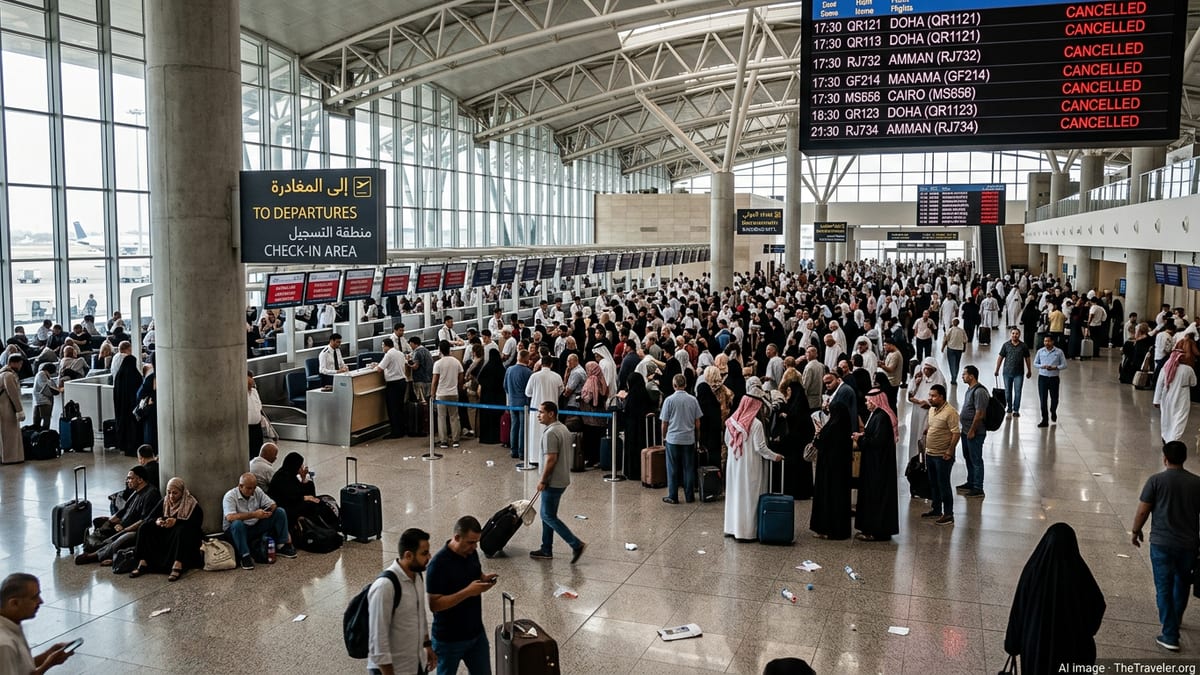
Regional Hubs Struggle Under Fresh Wave of Disruptions
Publicly available aviation data and media reports indicate that airports in Saudi Arabia, Egypt, the United Arab Emirates, Türkiye and Kuwait have recorded at least 517 delayed flights and close to 30 cancellations in a single day, underscoring the continued fragility of air travel through the region’s main gateways.
The latest figures highlight the strain on airports in Dubai, Riyadh, Jeddah, Cairo, Istanbul and Kuwait City, where dense schedules and heavy reliance on connecting traffic make operations particularly sensitive to even minor disruptions. Delays have been concentrated in peak morning and evening bank periods, when waves of inbound and outbound connections are normally tightly choreographed.
Reports from travel-industry outlets describe lines at check in, improvised overnight stays and cascading missed connections, as late arrivals from one hub leave passengers stranded when onward flights depart on time or with reduced capacity. For many travelers using the Middle East as a bridge between Europe, Asia and Africa, a delay of just a few hours can upend entire itineraries.
The disruption comes on top of an already unsettled operating environment across the Middle East, where airspace closures, rerouted corridors and heightened security postures have narrowed the margin for error at major hubs.
Emirates, Saudia, Etihad and Others Bear the Brunt
According to published coverage drawing on airline and airport statistics, the impact of the latest disruption has been spread across a mix of full service and low cost carriers, with national and regional airlines absorbing most of the schedule shock.
Saudi flag carrier Saudia has been cited among the hardest hit, with dozens of delays and several cancellations centered on Jeddah and Riyadh. In Egypt, EgyptAir and other operators serving Cairo International Airport have experienced elevated delay levels that outstrip typical day to day schedule volatility.
In the Gulf, Etihad Airways operations through Abu Dhabi and Emirates services through Dubai have both reported unusually high numbers of delayed departures and arrivals. Flight tracking data shows late running departures from these hubs feeding into secondary disruptions on longer haul services toward Europe, North America and Asia, as aircraft and crews arrive behind schedule.
Low cost and hybrid carriers, including FlyDubai and Pegasus Airlines, have also recorded significant numbers of delayed flights, especially on short haul regional routes. These airlines typically operate tight turnaround times, meaning even modest schedule slips can quickly build into multi hour delays later in the day.
Lingering Effects of Airspace Closures and Conflict Rerouting
The latest wave of delays is unfolding against a backdrop of broader constraints affecting Middle East aviation. Over recent weeks, multiple reports from airlines, travel management firms and logistics providers have pointed to prolonged airspace closures and conflict driven rerouting across parts of the region.
Portions of Iranian, Iraqi and neighboring airspace have at times been restricted or closed, while selected Gulf corridors have seen heavy traffic concentration as carriers are funneled into fewer usable routes. This has reduced flexibility for dispatchers planning flight paths and has lengthened block times on many long haul services linking Europe and Asia via the Middle East.
Industry analyses describe Saudi airspace as one of the few major east west corridors that remains consistently open, with traffic volume far above normal as airlines divert around closed sectors. That concentration can create air traffic control saturation and holding patterns, adding several minutes or more to individual flights and complicating on time performance targets.
Separate travel advisories have noted that airports in Doha, Dubai, Abu Dhabi, Kuwait and Tel Aviv have all moved through phases of partial closure, limited operations or high alert in recent weeks, amplifying the effect of any localized operational issue. While some hubs are now in a recovery phase, schedules remain tightly stretched, and any new disturbance can quickly translate into widespread delays like those recorded today.
Passenger Impact: Missed Connections and Overnight Stranding
For passengers, the numerical tally of 517 delays and dozens of cancellations translates into missed weddings, business meetings, medical appointments and long planned holidays. The specific effect varies widely depending on the routing, but travelers connecting across the Middle East face particular challenges when short minimum connection times collide with rolling schedule changes.
Account summaries from travel forums and social channels point to travelers arriving at regional hubs to find onward flights already departed or heavily oversold, forcing rebookings onto next day services. In some cases, hotels and meal vouchers have been in short supply as airlines and airports respond to surging numbers of disrupted passengers at the same time.
Passengers on one stop itineraries through Cairo, Dubai, Abu Dhabi and Istanbul have reported longer than usual waits at transfer security and immigration points, where limited staffing and surges of delayed arrivals can create bottlenecks. Families with young children and elderly travelers appear particularly affected when overnight stays or extended terminal waits become unavoidable.
Travel management companies tracking the situation say that even travelers whose flights depart on time may still experience disruption if their aircraft must route around restricted airspace, adding flight time and in some cases pushing crews close to duty limits, which can trigger last minute schedule adjustments.
What Today’s Disruptions Signal for Global Transit Flows
The concentration of 517 delays and related cancellations in a single day highlights the pivotal role of Middle Eastern hubs within the wider global aviation system. Airports in the Gulf, Türkiye and Egypt serve as connective tissue between continents, enabling one stop itineraries that rely on high schedule reliability and tight wave structure.
When those nodes come under pressure, the effects spread rapidly across airline networks. Aircraft and crew rotation plans built around predictable turnaround times have less room to absorb unexpected ground holds, while passengers who miss onward flights often require complex rebooking that strains call centers and airport service desks.
Analysts note that the current episode also underscores how geopolitical risk, airspace management and airport capacity planning intersect. Extended conflict rerouting has effectively reduced available sky capacity over parts of the Middle East, even as demand for long haul connectivity remains strong. The result is a thinner operational buffer at exactly the hubs that matter most for global connectivity.
With no rapid resolution expected to the broader regional constraints, observers suggest that elevated levels of delay and periodic spikes, such as today’s 517 late departures and arrivals, may persist in the near term. For travelers, that means building extra time into itineraries, favoring longer connection windows and closely monitoring flight status before heading to the airport.