

More news on this day
A new cluster of flight disruptions across key Middle East hubs has led to 29 cancellations and widespread delays, stranding more than 500 passengers and highlighting the ongoing fragility of regional air travel amid heightened geopolitical tension.
Get the latest news straight to your inbox!
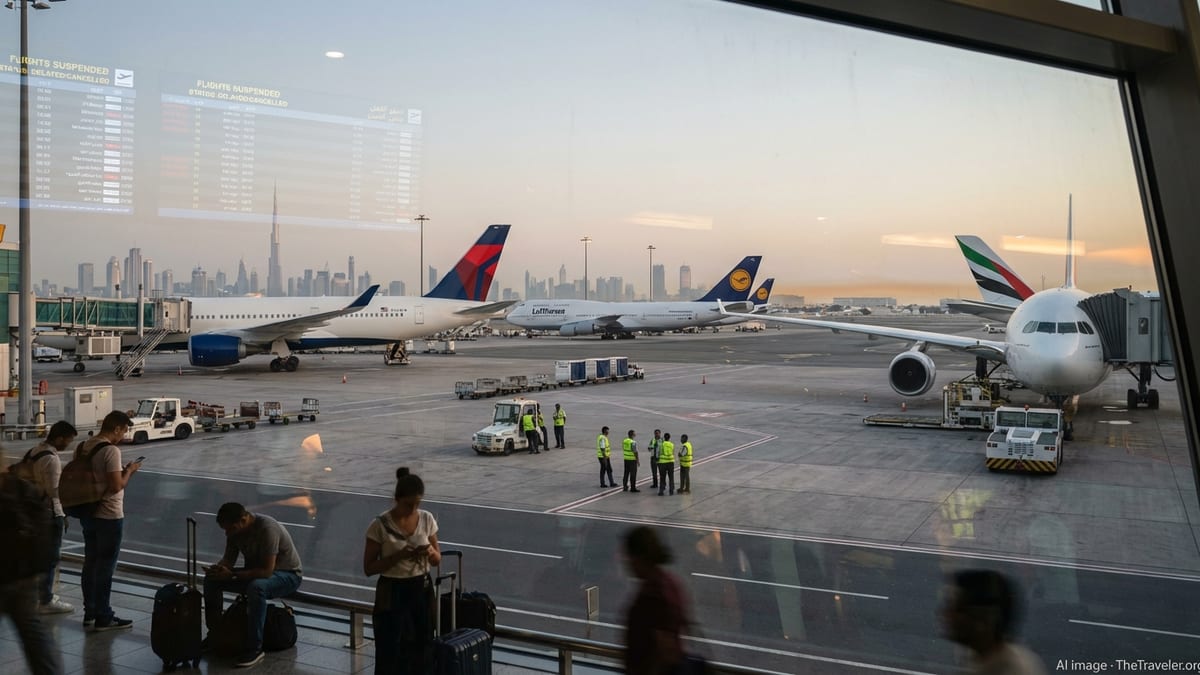
Fresh Wave of Cancellations Ripples Across the Region
Published coverage from regional aviation trackers and travel industry outlets indicates that 29 scheduled flights were canceled in the past 24 hours across a handful of high-traffic Middle East hubs, including Dubai, Doha, Riyadh, Cairo, and Amman. These targeted cancellations sit on top of an already elevated baseline of disruption that has persisted since late February, when conflict in the wider region first triggered airspace closures and emergency schedules.
Operational data compiled by travel news services and airport monitoring platforms points to at least 500 passengers directly affected by these 29 cancellations, with the true figure likely higher once missed connections and downline rebookings are factored in. Many of the axed flights were medium and long haul departures linking the Gulf and Levant to Europe and Asia, magnifying the impact on global itineraries.
The latest disruptions follow a week in which some 30 plus flights were canceled in a single day across Dubai, Riyadh, Jeddah, Doha, Cairo, Amman, and Damascus, alongside hundreds of delays. Those earlier events created a backlog that airlines and airports are still working to clear, meaning that each new wave of cancellations compounds an already stretched system.
While the number of cancellations is modest compared with the thousands recorded at the height of the crisis in early March, the pattern shows how quickly operational stability can unravel when key hubs are operating with little slack in aircraft rotations and crew availability.
Key Hubs Under Pressure as Recovery Stalls
Dubai International and Hamad International in Doha remain central pressure points. Both airports serve as crucial bridges between Europe, Asia, and Africa, and their partial and intermittent shutdowns have had outsized global effects. Aviation analysis reports describe how even short suspensions have forced long haul carriers to reconfigure networks, shift aircraft to secondary hubs, or cancel rotations outright when detour times and crew duty limits become unmanageable.
In the Gulf, Emirates, Qatar Airways, and Saudia continue to operate a mix of reduced and rerouted services, often with longer flight times around restricted airspace and altered overnight patterns. Publicly available timetables and airline advisories show that some frequencies have been consolidated, while others remain listed as “subject to operational review,” a signal that last minute cancellations remain possible.
In the wider region, Riyadh, Jeddah, Cairo, and Amman are all experiencing irregular operations. Recent reporting on Queen Alia International Airport outside Amman detailed a day with nearly 30 delays and multiple cancellations, underscoring how even secondary hubs are struggling to maintain predictable schedules.
These localized disruptions are taking place against a backdrop of still elevated regional risk. Industry bulletins and travel advisories highlight that several Gulf and Levant airspaces remain under special operational restrictions, keeping airports on high alert and limiting the extent to which carriers can restore normal connectivity.
Passenger Impact: Stranded Travelers and Rising Costs
For travelers caught in this latest round of cancellations, the immediate effects are familiar. Reports from passenger advocacy groups and social media posts from affected travelers describe long queues at transfer desks, limited same day rebooking options, and uncertainty around compensation when cancellations are linked to security considerations.
With 500 or more passengers directly grounded by the 29 flights scrapped across key hubs, hotels around major airports in the United Arab Emirates, Qatar, Saudi Arabia, Egypt, and Jordan are once again absorbing last minute bookings from waylaid travelers. Some airlines are offering accommodation and meal vouchers according to their published disruption policies, but others are leaning on force majeure language that can limit entitlements, depending on the jurisdiction and ticket type.
The financial impact on passengers is not limited to extra nights on the ground. Separate analysis of the broader conflict related disruption across the Middle East has noted that fares on remaining Asia to Europe routes have climbed significantly since late February, reflecting constrained capacity and higher operating costs. For travelers rebooking at short notice after a cancellation, this often translates into higher out of pocket expenses or the need to accept more complex multi stop routings.
Some governments have begun coordinating repatriation and relief flights for their citizens stranded in Gulf hubs, particularly for large expatriate communities. However, most leisure and business travelers remain reliant on the commercial network, which continues to operate with narrow margins for disruption.
Airlines Balance Safety, Network Integrity, and Finances
For airlines, the 29 new cancellations are part of a difficult balancing act between safety, regulatory compliance, and commercial survival. Industry briefings from airlines and risk consultancies emphasize that routes through or near sensitive airspace are being reviewed on a daily, and in some cases hourly, basis.
Carriers with deep exposure to Gulf hubs have already suspended or sharply reduced some services, especially on Europe to Asia and Australia to Europe corridors that typically rely on one stop connections via Dubai, Abu Dhabi, or Doha. Data from aviation analytics firms shows that tens of thousands of flights have been cut since the initial escalation, and some airlines warn that prolonged instability could push weaker carriers toward restructuring or insolvency.
At the same time, a few major players have cautiously begun ramping back up on select routes where risk assessments allow. Schedules filed with global distribution systems show that some Gulf based airlines are reintroducing frequencies toward key markets, but these efforts are frequently interrupted by new advisories, temporary hub closures, or knock on effects from previous days’ cancellations.
Low cost and regional carriers are facing their own challenges. Many rely on tight aircraft utilization and quick turnarounds to remain profitable, business models that are difficult to sustain when last minute airspace restrictions force diversions, extended ground time, or overnight crew placements away from home bases.
What Travelers Should Expect in the Coming Days
Looking ahead, publicly available advisories from aviation authorities, airlines, and travel risk consultancies suggest that volatility is likely to continue in the short term. While there are tentative signs of stabilization at some airports, ongoing military activity and shifting airspace notices mean that schedules remain vulnerable to sudden change.
Travel experts recommend that passengers with itineraries involving Dubai, Abu Dhabi, Doha, Riyadh, Jeddah, Cairo, or Amman build extra buffer time into their plans and consider flexible ticket options where possible. Many airlines have extended change fee waivers and are allowing rebooking within defined windows, though fare differences can still apply, particularly on heavily booked alternative routings.
Travelers are also being urged to monitor airline apps and airport information channels closely, as same day adjustments are becoming common. In several recent cases, flights have appeared as on time until only a few hours before departure, when revised risk calculations or fresh airspace directives prompted cancellations or significant delays.
For now, the latest cluster of 29 cancellations and the more than 500 passengers forced to change course serve as a reminder that the Middle East, one of the world’s most important aviation crossroads, remains in a period of operational uncertainty. Until airspace restrictions ease more substantially and hub airports can operate without rolling security constraints, even modest disruptions are likely to reverberate far beyond the region.