

More news on this day
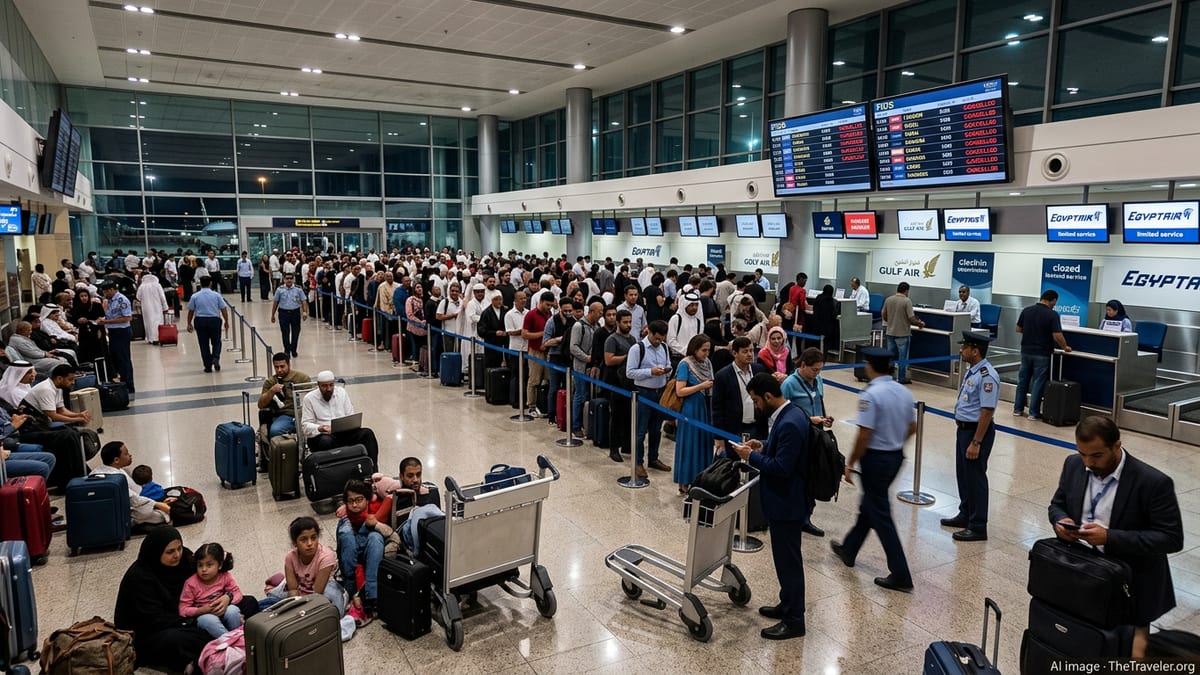
Air travel across the Middle East faced renewed turbulence as airports in Turkey, the United Arab Emirates, Egypt, and Kuwait recorded 254 flight delays and 17 cancellations, disrupting operations for carriers such as Saudia, Air Arabia, Emirates, and others at major hubs from Cairo and Istanbul to Dubai and Kuwait City.
Get the latest news straight to your inbox!
Delays and Cancellations Ripple Across Regional Hubs
Publicly available operational data and industry trackers indicate that the latest wave of disruption has been concentrated at some of the region’s busiest gateways, including Cairo International Airport, Istanbul’s main airports, Dubai International, and Kuwait International. While the total of 254 delays and 17 cancellations may appear modest in the context of daily traffic volumes, the uneven distribution across routes and carriers created pockets of severe congestion.
In practical terms, even a limited number of cancellations can cascade through tightly timed schedules, especially at hub airports where inbound and outbound banks are closely coordinated. Missed connections at Dubai and Istanbul, in particular, affected itineraries linking Europe, Asia, and Africa, adding hours to travel times for passengers who were forced to rebook or overnight in transit.
The disruption also highlighted the vulnerability of regional point to point markets. Flights between Cairo, Kuwait City, and Gulf hubs such as Dubai remain heavily relied upon by migrant workers, business travelers, and leisure passengers, so schedule changes on short notice quickly translated into crowded terminals and long queues at airline service counters.
Saudia, Emirates, Air Arabia and Others Adjust Schedules
Network carriers based in the Gulf and wider Middle East have already been operating with less margin for disruption due to ongoing conflict related airspace restrictions and rerouting across the region. According to recent operational summaries, Saudia, Emirates, Air Arabia and several other regional airlines have been managing higher than usual delay rates as they work around congested corridors and altered routings.
Emirates, which relies heavily on Dubai as a global super hub, has been balancing capacity deployment with schedule reliability following earlier periods of large scale cancellation and delay across the Middle East. Current performance figures on trunk routes such as Dubai to Cairo and back show on time rates that leave limited room to absorb additional disruptions without knock on effects across the network.
Low cost and hybrid carriers such as Air Arabia are also exposed, particularly on high demand routes linking Gulf airports with Cairo and other Egyptian cities. These airlines typically operate tight turnarounds and high daily aircraft utilization, meaning that a delay early in the day can affect multiple subsequent rotations before schedules can be reset overnight.
Operational Bottlenecks and Airspace Constraints Drive Turmoil
Reports and published analyses point to a mix of operational bottlenecks and wider geopolitical factors behind the latest cluster of delays and cancellations. Staffing pressures in air traffic control and ground handling, especially at peak travel times, have intersected with more complex routings required to avoid sensitive or restricted airspace.
Since late February, conflict related tensions have led to thousands of cancellations region wide and a measurable reduction in capacity through traditional long haul hubs in the Gulf. Airlines serving the Middle East have had to reroute around affected zones, add fuel stops on some long haul services, and in some cases suspend specific city pairs altogether, increasing pressure on remaining routes and airports.
These structural challenges mean that even localized weather events, technical issues, or terminal congestion can produce outsized effects on punctuality statistics. Once delays accumulate across multiple airports on the same day, options for rerouting passengers diminish and recovery times lengthen, as seen in the build up to the 254 delays and 17 cancellations logged across Turkey, the UAE, Egypt, and Kuwait.
Passenger Experience Strained as Rebooking and Refunds Surge
For travelers caught in the disruption, the immediate impact has been extended journey times, missed connections, and uncertainty around onward travel plans. Media coverage and airline advisories describe crowded customer service points at major hubs, with passengers queuing to secure hotel vouchers, meal coupons, or alternative flights where space is available.
Carriers operating in the region have been encouraging passengers to check flight status before leaving for the airport and, where possible, to make use of digital channels for rebooking. In some cases, airlines have offered free date changes, rerouting via alternate hubs outside the most affected airspace, or full refunds when services were cancelled outright.
Nevertheless, high demand during busy travel periods limits the available capacity to re accommodate disrupted passengers quickly. Travelers connecting between Asia and Europe or between the Gulf and North Africa have often faced 24 hour or longer delays when the original itinerary involved an affected hub, especially where multiple carriers are simultaneously adjusting timetables.
What the Latest Numbers Mean for Upcoming Travel
Industry observers note that while 254 delays and 17 cancellations do not represent a collapse in regional air travel, they form part of a broader pattern of elevated disruption across the Middle East in recent weeks. Earlier episodes recorded even higher totals of delays and cancellations spread across additional countries, underscoring that operational stability remains fragile.
Forward looking service updates from airlines and travel management companies suggest that schedule adjustments and selective suspensions of routes involving the Middle East will continue in the short term. Some carriers have extended suspensions on specific flights to Dubai and other hubs through April, citing the need to maintain reliable operations on a reduced set of routes rather than overextending aircraft and crews.
For prospective travelers, the latest data reinforces the importance of building flexibility into itineraries that rely on transiting Cairo, Istanbul, Dubai, Kuwait City, or other regional hubs. Longer minimum connection times, fully changeable tickets where available, and close monitoring of airline advisories may help mitigate the impact of further disruptions as the situation in the Middle East remains fluid.