

More news on this day
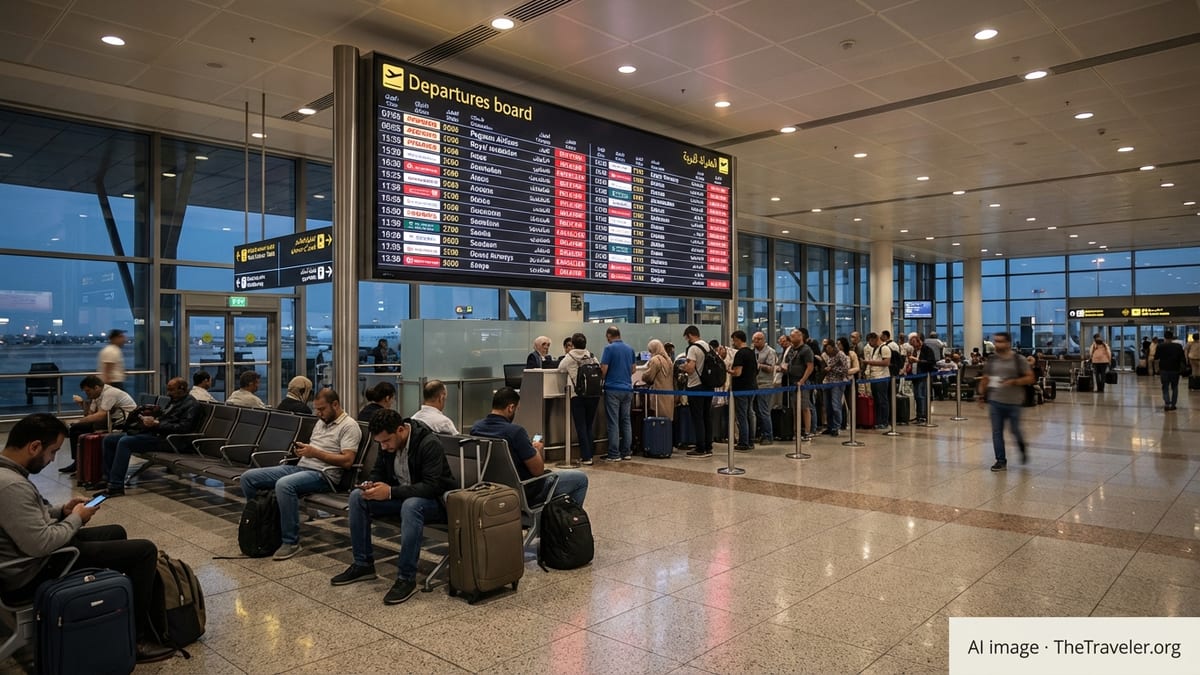
Thousands of travelers across the Middle East are facing another bruising day of disruption as at least 11 flights operated by Pegasus Airlines, Royal Jordanian, Saudia and Kenya Airways were terminated and a further 216 services delayed, according to latest operational data compiled on February 22. The rolling problems are rippling through key hubs in Turkey, Jordan, Saudi Arabia and Kenya, straining airline resources and leaving passengers scrambling to rebook onward connections to and from the region.
Where the Disruptions Are Hitting Hardest
The latest wave of disruption is concentrated on routes linking Turkey, Jordan, Saudi Arabia and major East African and European gateways, with Istanbul, Amman, Riyadh, Jeddah and Nairobi all reporting cascading knock-on delays. While not on the scale of previous mass shutdowns across the Middle East, the termination of 11 flights in a single operational window has tightened capacity on already busy corridors and triggered long queues at transfer desks.
Regional carriers are being hit unevenly. Pegasus is seeing pressure on its low cost network radiating from Turkey into the Levant and Gulf, Royal Jordanian is grappling with schedule instability at its Amman hub, and Saudia is working to re-time departures amid crowded airspace and weather challenges. Kenya Airways, meanwhile, is contending with local labor unrest and infrastructure strain at Nairobi’s Jomo Kenyatta International Airport, compounding knock-on delays on its Middle East links.
Travel analysts note that even a relatively modest number of outright terminations can create disproportionate disruption in a region where many itineraries depend on tight connections. Aircraft and crew out of position in one hub quickly ripple into late departures elsewhere, explaining why 11 cancellations have translated into more than 200 delayed services in a matter of hours.
What Is Driving the Latest Cancellations and Delays
Several overlapping factors are feeding the current disruption pattern. Weather remains a primary trigger, with seasonal systems over parts of the Eastern Mediterranean and Arabian Peninsula forcing temporary runway closures, reduced visibility approaches and extended ground handling times. Storms and low cloud may only shut operations for a short window, but the resulting backlog can take an entire day to clear, particularly when airports are already operating close to capacity.
Operational bottlenecks are also playing a significant role. Ground handling teams from Istanbul to Amman and Riyadh are managing packed schedules, and minor issues such as late catering, slow baggage loading or de icing queues can quickly snowball into missed departure slots. For network carriers like Saudia and Royal Jordanian, protecting banked waves of long haul connections often means holding certain departures, exacerbating delays on shorter regional legs.
In East Africa, recent labor tensions and staffing constraints at Nairobi’s Jomo Kenyatta International Airport have added another layer of vulnerability. Kenya Airways has warned passengers of possible knock-on delays as it juggles reduced ground resources, congested parking stands and a busy timetable of regional and intercontinental flights. When these local issues interact with weather and airspace constraints over the Gulf and Levant, the result is a fragile network where any disruption travels quickly.
Pegasus, Royal Jordanian, Saudia and Kenya Airways Under Pressure
Pegasus Airlines, the Turkey based low cost carrier, is particularly exposed on point to point routes connecting secondary cities in Turkey with Middle Eastern destinations. Its business model relies on quick turnarounds and high daily aircraft utilization. When weather or congestion forces an aircraft to miss its slot or extend ground time, there is limited slack in the schedule, making same day recovery difficult and increasing the risk of terminating late evening rotations.
Royal Jordanian, which operates a hub and spoke network out of Amman, faces different challenges. The airline must decide in real time which connections to protect as delays accumulate, often prioritizing long haul passengers heading to North America or Europe. This can result in shorter regional sectors to Gulf and Levant cities being pushed back or, in the worst cases, being cancelled entirely when crew duty time limits are reached.
Saudia is juggling a sprawling domestic and international network crisscrossing Saudi Arabia’s rapidly growing airports. With Riyadh and Jeddah handling expanding traffic volumes on both religious and business routes, any temporary weather or air traffic control constraint can cause holding patterns, diversions or missed connection banks. Keeping aircraft and crew aligned under such pressure requires continuous rescheduling and, occasionally, tactical terminations to reset the operation.
For Kenya Airways, the current wave of delays comes on top of a challenging few months marked by operational cost pressures and intermittent industrial action that have affected flight punctuality. Its Middle East services from Nairobi form part of a wider long haul and regional network that links East and Central Africa to Gulf hubs. When airport operations in Nairobi slow down, these routes are among those that quickly feel the impact, impacting travelers heading on to Saudi Arabia and beyond.
Impact on Passengers and Key Middle East Routes
For passengers, the most immediate effect of the 11 terminations and 216 delays is the loss of predictability. Travelers connecting through Istanbul, Amman, Riyadh or Nairobi on their way to destinations such as Dubai, Doha, Jeddah or smaller regional cities are reporting missed onward flights, overnight stays and unplanned schedule changes that disrupt business meetings, family gatherings and holiday plans.
Popular routes between Turkey and Gulf states, as well as connections from Jordan and Saudi Arabia into North and East Africa, are particularly vulnerable. These sectors often serve as critical links for labor traffic, medical travel and religious tourism, meaning that a cancelled or heavily delayed flight can have outsized personal and economic consequences. In some instances, passengers are learning of cancellations only after arriving at the airport, underscoring the importance of checking flight status repeatedly on the day of travel.
In addition to time lost, passengers may also face financial costs, especially where disruptions force them to rebook accommodation, miss prepaid tours or rearrange ground transport. Although consumer protection regimes differ across jurisdictions, industry observers say there is growing pressure on carriers operating in and out of the Middle East to offer clearer, more proactive support when large scale delays and terminations hit.
How Airlines Are Responding Operationally
Airline operations teams across the affected carriers have moved into a form of rolling crisis management, adjusting schedules and redeploying aircraft and crews in near real time. Pegasus has been trimming turnaround times where safely possible and has prioritized keeping its core trunk routes operating, even if some less frequent city pairs are merged or dropped for the day to free up capacity.
Royal Jordanian has been leaning on its hub structure in Amman to consolidate disrupted passengers onto later services, coordinating with ground staff to rebook travelers on alternative flights and, where necessary, arrange hotel accommodation for those forced into overnight stays. The airline is also encouraging customers to complete online check in early and monitor digital notifications so that any re-timings are communicated as quickly as possible.
Saudia, with its dense domestic and pilgrimage traffic, is working closely with airport operators and air traffic control to smooth peak periods, occasionally delaying lower demand flights in order to maintain reliability on high priority routes. The carrier has also reminded passengers to arrive at airports well ahead of scheduled departure times, given the likelihood of congested check in and security queues during disruption peaks.
Kenya Airways, meanwhile, has indicated that it is reviewing rostering and ground handling arrangements at Nairobi to improve resilience, while advising passengers traveling to Middle East destinations to allow wider connection windows. The airline is coordinating with partner carriers on interline options to provide alternative paths for stranded travelers when its own operations are significantly affected.
What Stranded Travelers Should Do Right Now
Passenger advocates say that in the current environment, travelers with upcoming trips touching the Middle East should assume that schedules may change at short notice and plan accordingly. The most practical step is to monitor flight status repeatedly from 24 hours before departure, using airline apps and airport information channels, and to ensure contact details in the booking are accurate so that rebooking offers can be delivered quickly.
Experts also recommend building in longer connection times, especially when itineraries involve multiple carriers or self arranged transfers between separate tickets. While a tight, one hour connection may be tempting under normal circumstances, today’s elevated disruption levels mean that missing such a link is significantly more likely. Allowing at least two to three hours between flights in major hubs can provide a crucial buffer.
At the airport, passengers whose flights are cancelled or heavily delayed should seek written confirmation of the disruption from the airline, along with clear information on rebooking options, meal vouchers or hotel accommodation where applicable. Keeping receipts for any out of pocket expenses can prove essential when later seeking reimbursement from airlines, travel insurers or credit card providers, depending on the rules that apply to the specific route and fare.
For those booking new trips into or through the region, flexible tickets and comprehensive travel insurance with explicit coverage for delays and cancellations are becoming more valuable, even if they come at a higher upfront cost. Seasoned travelers note that such flexibility can save both money and stress when weather or regional tensions cause schedules to unravel.
Broader Strains on Middle East Aviation
While the latest tally of 11 terminated flights and 216 delays may appear modest compared with earlier waves of disruption, industry specialists argue that it is another indicator of how fragile aviation operations remain across the Middle East. The region’s airspace and airports have been under sustained pressure from a combination of rapid traffic growth, intermittent geopolitical tension and increasingly volatile weather patterns.
Major hubs like Dubai, Doha, Riyadh, Jeddah, Istanbul and Amman are handling more aircraft movements and connecting passengers than ever, even as they navigate periodic airspace restrictions and shifting routings around conflict zones. This leaves little margin for error when storms, sandstorms or technical issues strike, and compounds the challenge for mid sized players such as Pegasus, Royal Jordanian, Saudia and Kenya Airways that operate alongside giant Gulf carriers.
Analysts point out that the Middle East remains one of the world’s most important connecting regions, linking Asia, Europe and Africa. Sustained operational instability can ripple far beyond the immediate geography, impacting long haul itineraries and cargo supply chains worldwide. The latest disruptions, though smaller in scale, highlight the need for continued investment in air traffic management, airport capacity and contingency planning to absorb shocks more effectively.
For now, passengers planning to fly with Pegasus, Royal Jordanian, Saudia or Kenya Airways through Middle Eastern hubs in the coming days are being urged to stay alert, stay flexible and stay informed. With weather and operational challenges continuing to evolve, airlines and travelers alike are bracing for further schedule changes even as they work to get disrupted journeys back on track.