

More news on this day
Air travelers across Saudi Arabia, the United Arab Emirates and Bahrain are facing renewed disruption as a cluster of cancellations and delays affecting at least 27 flights and 10 more departures hits Saudia, FlyDubai and Gulf Air passengers amid continuing regional instability and airspace restrictions.
Get the latest news straight to your inbox!
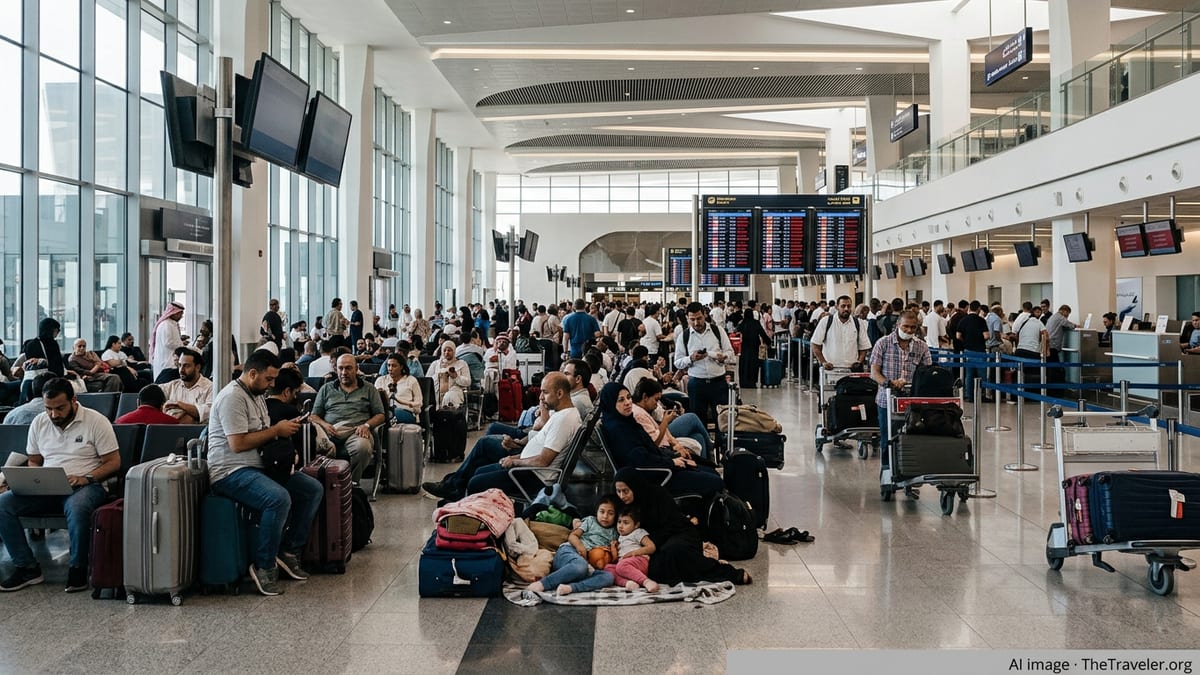
Regional Tensions Keep Pressure on Gulf Aviation
The latest wave of disruption comes in the wake of weeks of elevated tension across the Gulf, with missile and drone activity prompting periodic airspace closures and operational restrictions. Publicly available flight-tracking data and regional media coverage show that key hubs in Riyadh, Jeddah, Dubai and Bahrain have all experienced repeated interruptions since late February 2026, often with little notice to travelers.
Authorities in several Gulf states have periodically restricted or closed segments of airspace for safety, forcing airlines either to cancel services outright or adopt longer, more circuitous routings. Industry analyses indicate that thousands of flights have been affected since the initial escalation, with some carriers still operating reduced schedules or shifting routes to alternative airports in neighboring countries.
Within this broader pattern, the newly reported tally of 27 cancellations and 10 delays affecting Saudia, FlyDubai and Gulf Air reflects an ongoing, rather than isolated, disruption. Aviation analysts note that even a relatively small number of canceled or late flights can trigger knock-on effects for crew rotations, aircraft positioning and onward connections across already stretched networks.
Travel advisories from multiple governments continue to flag a fluid operational environment for air travel in parts of the Middle East, emphasizing that flight status can change on short notice and that conditions may differ markedly between carriers and airports, even on the same day.
How Saudia, FlyDubai and Gulf Air Passengers Are Being Affected
Recent disruption reports point to concentrated impacts on routes linking Saudi Arabia, the UAE and Bahrain, where Saudia, FlyDubai and Gulf Air normally provide dense connectivity. Cancellations have been recorded on selected services into and out of Riyadh, Jeddah and Dammam in Saudi Arabia, Dubai in the UAE, and Bahrain International Airport, as airlines respond to airspace constraints and shifting safety assessments.
For Saudia, publicly available schedules and local coverage show that the flag carrier has already been operating with adjustments, including earlier suspensions on several regional routes. The additional cancellations now being reported add pressure for travelers using Saudi hubs as gateways to Asia, Africa and Europe, potentially increasing reliance on rebookings through alternative carriers or airports when space is available.
FlyDubai, a major operator of short and medium-haul services from Dubai International, has also been affected as its point-to-point model depends on tight aircraft utilization. Even a limited number of grounded or delayed departures can disrupt rotations across the network, particularly for passengers using Dubai as a transfer point between South Asia, the Middle East and Eastern Europe.
Gulf Air passengers are facing particular uncertainty because Bahrain’s airspace and airport operations have experienced periodic suspensions. When Bahrain International Airport operations are curtailed, Gulf Air has at times shifted capacity to Saudi Arabia’s Dammam airport to maintain limited connectivity, adding complexity for passengers who must reroute ground transfers and revise itineraries at short notice.
What Travelers Should Check Before Heading to the Airport
Given the pace of change, industry guidance consistently stresses that travelers should not rely on static booking information alone. Passengers booked on Saudia, FlyDubai or Gulf Air are being urged by airlines and airport advisories to check flight status repeatedly in the 24 hours before departure, including a final check shortly before leaving for the airport.
Travel experts recommend monitoring multiple channels, including airline apps and airport departure boards, because schedules have in some cases been revised several times in a single day. In addition, some carriers have temporarily retimed or rerouted flights without immediately updating all third-party booking sites, leaving travelers at risk of outdated information if they depend solely on initial confirmation emails.
Passengers connecting through Riyadh, Jeddah, Dubai or Bahrain are particularly exposed, as a delay or cancellation on the first leg can sever long-haul onward connections. Where possible, aviation specialists suggest allowing longer layovers than usual and avoiding tight transfers, especially for journeys involving more than one airline or separate tickets.
Those starting trips in smaller regional airports should also pay close attention to departure times, as in some cases feeder flights have been canceled or consolidated to manage capacity. Arriving at the airport earlier than normal can provide more time to adjust bookings if schedules shift at the last minute.
Rebooking Options, Refunds and Passenger Rights
Airlines operating in the region have been updating their disruption policies as the situation evolves. Public notices from affected carriers indicate a general willingness to offer fee-free rebooking, refunds or travel vouchers on flights canceled for operational or safety reasons, particularly where airspace closures prevent normal operations.
The exact options available depend on the ticket type, route and point of purchase. Passengers with Saudia, FlyDubai or Gulf Air tickets are being advised in consumer guidance to review fare rules carefully and to contact the original booking channel, whether the airline directly or a travel agency, to confirm what changes are permitted without penalty.
Consumer-advocacy organizations point out that passenger protections for flights in and out of the Middle East differ from those in regions such as the European Union, where specific compensation rules apply in many cases of delay or cancellation. In the Gulf, many carriers adopt their own policies that can range from basic refunds to broader flexibility, including date changes and rerouting within the same cabin class when operational disruption is beyond the airline’s control.
Travelers are being encouraged to keep documentation of all expenses incurred as a result of disruption, such as hotel stays or meals, in case the airline or travel insurer later offers reimbursement. Travel insurance policies that include disruption coverage can be particularly valuable in the current environment, but coverage terms vary widely and should be checked in advance of travel.
Planning Ahead in a Volatile Travel Environment
With regional tensions still elevated and the aviation system under strain, analysts expect further pockets of disruption in the weeks ahead, even if full airspace closures become less frequent. Airlines may continue to make short-notice adjustments to schedules, aircraft types and routings in response to changing risk assessments or operational constraints.
For travelers, this means that flexibility and contingency planning are now central to trips involving Saudi Arabia, the UAE and Bahrain. Booking refundable or changeable tickets where possible, opting for single-ticket itineraries on one carrier, and building in extra time for connections can all help reduce exposure to last-minute changes.
Travel planners also highlight the importance of keeping contact details updated with airlines so that disruption alerts reach passengers quickly. Enrolling in airline loyalty programs or apps can offer additional notification channels, including push alerts and real-time gate information, which can be crucial when airport display boards become crowded with changes.
While the figure of 27 canceled flights and 10 delays is modest compared with the worst days of recent disruption, it underlines that the Middle East aviation network remains sensitive to regional events. Passengers flying with Saudia, FlyDubai and Gulf Air through Saudi Arabia, the UAE and Bahrain are being encouraged to treat schedules as subject to change and to prepare accordingly.