

More news on this day
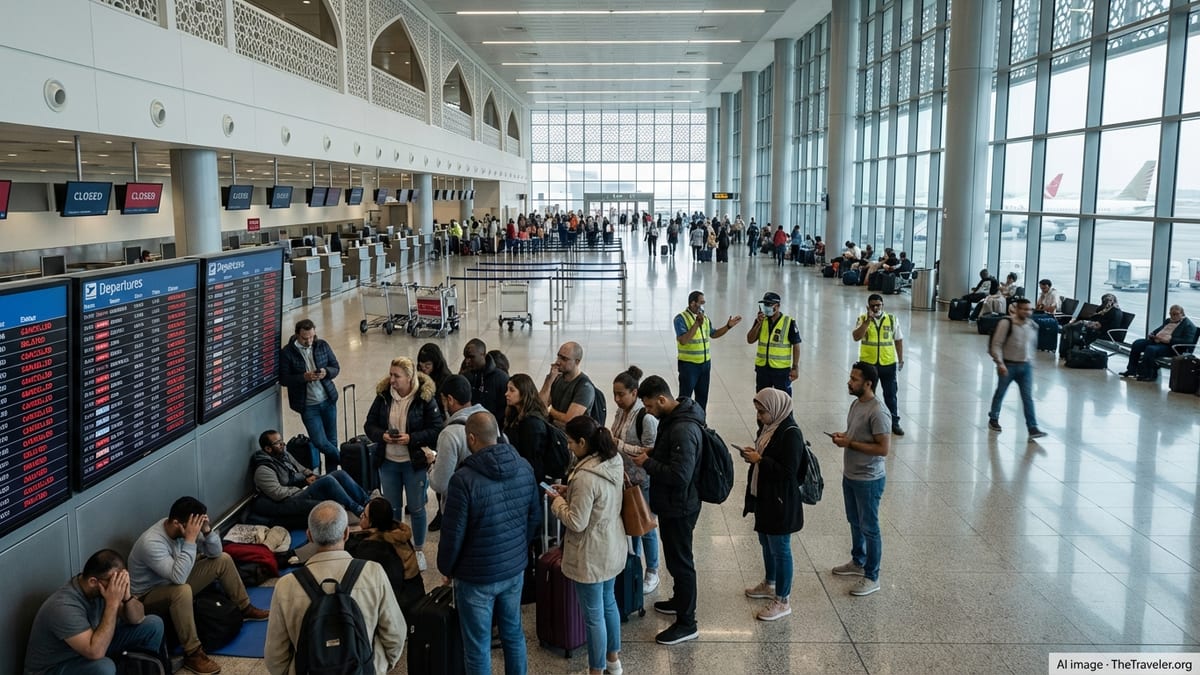
Air travelers across Saudi Arabia, the United Arab Emirates and Bahrain are facing another wave of disruption as fresh operational setbacks triggered 27 flight cancellations and 10 delays on services operated by Saudia, Flydubai and Gulf Air, reflecting how fragile aviation schedules remain amid ongoing regional tensions and airspace restrictions.
Get the latest news straight to your inbox!
Fresh Disruptions Across Key Gulf Hubs
Publicly available flight-tracking data and industry updates indicate that the latest round of cancellations and delays is concentrated at major hubs including Riyadh, Jeddah and Dammam in Saudi Arabia, Dubai in the UAE, and the still‑shuttered Bahrain International Airport. While exact tallies fluctuate throughout the day, operational snapshots from regional aviation trackers on 5 and 6 April show at least 27 flights canceled and 10 delayed on Saudia, Flydubai and Gulf Air routes touching these countries.
The new disruptions are unfolding against a broader backdrop in which Gulf airlines are operating at just over half of their pre‑crisis capacity, according to recent analysis of flight activity trends. This reduced schedule reflects a patchwork of airspace closures, reroutings and safety measures introduced since late February, when regional conflict led to missile and drone strikes on critical aviation corridors and facilities, including incidents that temporarily halted operations at Dubai International Airport.
Travel industry briefings and corporate advisories describe Saudi Arabia as one of the few remaining major east–west corridors that is broadly open, but under heavy strain from diversion traffic. That congestion, combined with intermittent route closures in neighboring states, has increased the likelihood of last‑minute timetable changes, extended flight times and rolling ground delays for both transit and origin‑destination passengers.
For travelers booked on Saudia, Flydubai or Gulf Air, the impact is highly route‑specific. Some point‑to‑point domestic and regional services continue to operate largely on time, while flights crossing more volatile airspace or relying on closed hubs such as Bahrain International are seeing repeated schedule changes, consolidations or outright cancellations.
Saudia: Extended Suspensions and Network Constraints
Saudia has spent much of March and early April operating under extended suspensions to several Gulf destinations, a policy detailed in multiple public notices and widely covered by regional media. These reports note that the carrier has halted services to key cities including Dubai, Abu Dhabi, Doha and Bahrain for defined periods, while maintaining most domestic routes and selected long‑haul operations.
Recent travel advisories and security assessments describe Saudi airspace as partially restricted, with specific border corridors subject to tighter controls. Saudia and its cargo arm have been adjusting routings and frequency in response, which has occasionally resulted in clusters of short‑notice cancellations concentrated on particular days when air traffic control capacity is constrained or nearby airspace closures ripple across the network.
The 27 cancellations and 10 delays affecting Saudia, Flydubai and Gulf Air include a number of Saudia flights serving suspended Gulf points, according to schedule snapshots and airport operations boards reviewed on 5 April. In several instances, flights remained visible in booking engines for days after official suspensions were announced, only to be removed or marked as canceled closer to departure, creating confusion for passengers who had not closely monitored status updates.
Travel analysts tracking the Saudi market suggest that the national carrier is prioritizing high‑demand domestic sectors and essential international links while allowing lower‑yield or operationally complex routes to remain paused. That strategy can be efficient from a network management perspective but leaves some leisure and connecting travelers with limited near‑term alternatives, especially if they planned to use Gulf hubs as stepping stones to Europe, Asia or Africa.
Flydubai: Reduced Capacity and Ongoing Rerouting
Dubai‑based Flydubai has also been heavily exposed to the current operating environment. Recent coverage in regional travel outlets shows the airline among the most affected carriers on some of the worst disruption days, with a mix of cancellations and delays driven by both local runway and airspace constraints and knock‑on effects from closures elsewhere in the Gulf.
Operational updates published by Flydubai indicate that the carrier has been rerouting certain services and warning passengers that flight durations and transit times through Dubai may be longer than usual. These advisories emphasize that schedules remain subject to change as airspace and airport restrictions evolve, even as the airline gradually restores more of its network following the initial shock of missile and drone attacks on the UAE in late February.
On 5 April, travel news monitoring showed Flydubai accounting for a portion of the 27 cancellations and 10 delays reported across the three carriers in question, particularly on routes connecting Dubai to Saudi Arabian cities already under pressure from diversion traffic. Publicly available accounts from affected travelers describe missed onward connections, forced overnight stays and challenges finding available seats on alternative flights within a reasonable time frame.
Despite these setbacks, recent aviation data suggests that Flydubai and other UAE‑based airlines are steadily rebuilding operations, helped by incremental relaxations in some airspace restrictions and the introduction of exceptional flight corridors designed to keep essential traffic flowing. However, the combination of limited spare capacity, heightened security procedures and weather‑related variables means that even modest disruptions can quickly cascade through tightly wound schedules.
Gulf Air and Bahrain: Closed Hub, Temporary Workarounds
Gulf Air faces a distinct set of challenges due to the ongoing closure of Bahrain’s airspace and Bahrain International Airport to regular commercial operations. Recent reporting indicates that the kingdom’s authorities have kept airspace fully shut to routine passenger flights as of Easter Sunday on 5 April, citing safety considerations linked to regional conflict.
In response, Gulf Air has been operating a temporary hub solution through King Fahd International Airport in Dammam, Saudi Arabia, for several long‑haul and regional routes. Travel advisories and customer communications describe rerouted services from Bahrain to Dammam for flights to cities such as London, Mumbai, Nairobi and Cairo, with bus or ground transport links handling the Bahrain segment where possible.
The latest set of 27 cancellations and 10 delays includes multiple Gulf Air services that were scheduled to operate via Bahrain but could not proceed due to the continuing airspace closure or operational limits at Dammam. Passengers with tickets still showing Bahrain as their transit point report discrepancies between original itineraries and real‑time operational plans, underscoring the importance of checking directly with the airline or booking provider before travel.
Industry observers note that Gulf Air’s reliance on a temporary Saudi hub introduces additional complexity, especially during peak travel days when Dammam is also accommodating diverted traffic from other carriers. Limited aircraft and crew availability, along with evolving slot allocations, mean that some flights remain vulnerable to cancellation even after being retimed or rebooked via alternative routings.
What Travelers Should Be Watching Now
For passengers planning to fly with Saudia, Flydubai or Gulf Air in the coming days, publicly available guidance from travel risk consultants and airline notices points to several practical steps. The most consistent recommendation is to verify flight status frequently in the 24 to 48 hours before departure through airline apps or airport information pages rather than relying solely on original booking confirmations.
Travel advisories for the Middle East emphasize that schedules can change rapidly when missile activity, drone alerts or airspace restrictions intensify. This can result in rolling ground stops, sudden diversions or extended in‑air holds, particularly around busy hubs such as Dubai, Riyadh and Jeddah. Travelers with tight connections, especially those involving separate tickets on different carriers, remain at higher risk of missed onward flights if earlier segments are delayed.
Several airlines in the region, including Saudia, Flydubai and Gulf Air, have periodically introduced waiver policies during the current crisis, allowing affected passengers to change dates or routes without standard penalties, or to request refunds under specific conditions. These policies tend to be time‑limited and route‑specific, so travelers are advised to review the latest conditions published by their carrier or ticketing agent.
Insurance specialists also suggest that passengers review the fine print of travel insurance or credit‑card coverage, as benefits for delays, cancellations and missed connections can vary widely. In a fluid operational environment, having documented proof of cancellations or significant delays, as well as receipts for extra expenses such as hotels and meals, can be crucial when filing claims after the trip.