

More news on this day
Middle East aviation disruption intensified on March 31, 2026, as Saudia, Qatar Airways and Royal Jordanian together registered 99 delays and 28 cancellations, snarling routes that link the region with Morocco, Qatar, Vietnam, the Philippines and other key markets.
Get the latest news straight to your inbox!
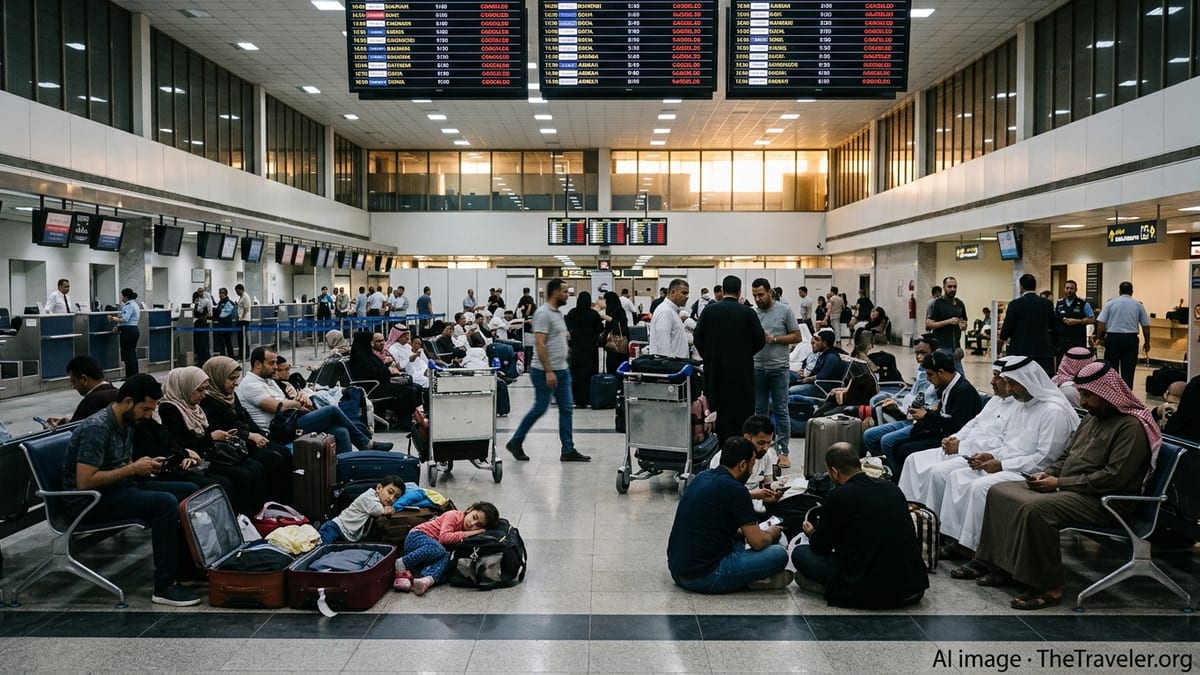
Fresh Wave of Disruptions Across Key Middle East Carriers
Publicly available operational data for March 31 indicates that the three regional flag carriers are still struggling to stabilize their schedules after weeks of conflict-related turbulence in Gulf airspace. Saudia, Qatar Airways and Royal Jordanian collectively recorded 99 delayed departures and arrivals alongside 28 outright cancellations in a single day, according to aviation tracking dashboards and industry monitoring reports.
The disruptions were concentrated at major hubs such as Jeddah, Riyadh, Doha and Amman, where rolling delays spread across connecting banks of flights. Reports indicate that technical issues at Saudia and residual congestion at regional airports compounded the impact of earlier airspace closures and route diversions.
Operational irregularities affected both short-haul and long-haul networks. Travelers connecting between North Africa, the Middle East and Asia were among the hardest hit, with missed connections and extended layovers becoming common, based on regional travel bulletins and airport status updates.
Conflict and Airspace Closures Keep Pressure on Schedules
The latest wave of delays and cancellations comes against the backdrop of the ongoing Iran war, which has led to repeated missile and drone attacks around the Gulf since late February 2026. Governments across the region have responded with partial or full airspace closures over several days, forcing airlines to re-route or suspend services on key corridors.
According to published coverage from international media and aviation consultancies, airspace restrictions over Qatar, Saudi Arabia and neighboring states resulted in thousands of daily cancellations earlier in March. Although some routes have since reopened, the cumulative effect on aircraft and crew positioning continues to ripple through airline schedules at the end of the month.
Qatar Airways has been operating a reduced schedule out of Doha under special security and operational guidelines, while Saudia and Royal Jordanian have faced knock-on delays from congested regional skies and limited routing options. Industry briefings note that even incremental changes in airspace availability can disrupt tightly timed hub operations, leading to clusters of late departures and missed connections.
Routes to Morocco, Qatar, Vietnam and the Philippines Disrupted
The March 31 disruption pattern shows that the fallout is not confined to the Middle East. Long-haul and regional services that connect Gulf hubs to Morocco, Vietnam, the Philippines and other parts of Asia and Africa have also been affected by the 99 delays and 28 cancellations reported across the three airlines.
Travel industry news reports highlight delays on services linking Gulf hubs with Casablanca and other North African gateways, where travelers rely heavily on Saudia and Royal Jordanian for connections to the broader Middle East and Europe. In several cases, late inbound aircraft forced rolling delays on onward flights, leaving passengers facing extended waits in transit terminals.
In Asia, publicly available flight-status boards for Vietnamese and Philippine airports on March 31 showed pushed-back departure times and last-minute schedule changes on services operated by or connecting to Qatar Airways and Saudia. These disruptions added to earlier weeks of uncertainty for travelers using Doha, Jeddah or Riyadh as gateways between Southeast Asia and Europe.
For Gulf residents traveling home from work postings in Southeast Asia, delays on these long-haul routes have been particularly disruptive, with some reports describing missed family events and disrupted business plans as flights were rescheduled or re-routed on short notice.
Stranded Passengers, Tight Rebooking Windows and Limited Options
Consumer reports and regional travel forums suggest that the operational challenges have been compounded by constrained rebooking options. With multiple carriers simultaneously trimming capacity or suspending certain routes in response to the security situation, available seats on alternative flights have been limited, especially around peak travel days in late March.
Guidance documents published by Qatar Airways and other carriers in recent weeks outline temporary commercial policies for changes and refunds, but many passengers continue to report confusion over changing rules and cut-off dates. Travelers transferring between Saudia, Qatar Airways and Royal Jordanian have faced particular difficulty when disruptions on one airline knock on to separate tickets or partner connections.
At several regional hubs, local media accounts describe crowded customer-service desks and long queues at transit counters as travelers seek rebooking or overnight accommodation following late-night cancellations. With hotel capacity around some airports already stretched by earlier waves of disruption, same-day solutions have not always been available.
Travel Advisories Urge Flexible Plans as Situation Remains Fluid
Industry advisories issued in March by corporate travel managers and global travel-management companies continue to characterize the operating environment in the Middle East as fluid. These bulletins recommend that travelers flying with Saudia, Qatar Airways and Royal Jordanian build in additional connection time, monitor flight status closely in the 24 to 48 hours before departure and remain prepared for last-minute schedule changes.
Some corporate travel programs have temporarily limited nonessential trips through the region or advised rerouting via alternative hubs where feasible. However, given the importance of Gulf and Levant hubs for links between Europe, Africa and Asia, completely avoiding the affected carriers and airports is not always practical.
With conflict in the region still unresolved and airspace restrictions subject to rapid change, analysts cited in recent aviation and business coverage suggest that passengers should expect continued volatility into April. The March 31 tally of 99 delays and 28 cancellations across Saudia, Qatar Airways and Royal Jordanian underscores that, for now, Middle East travel remains highly exposed to geopolitical shifts and operational shocks far beyond the control of individual travelers.