

More news on this day
A cascading wave of airspace closures and flight suspensions across the Gulf is disrupting April 2026 travel plans for thousands of passengers from Denmark, Germany, the UK, Italy, France, Ireland, Portugal, Turkey and other European countries who rely heavily on hubs in the United Arab Emirates, Qatar and Bahrain.
Get the latest news straight to your inbox!
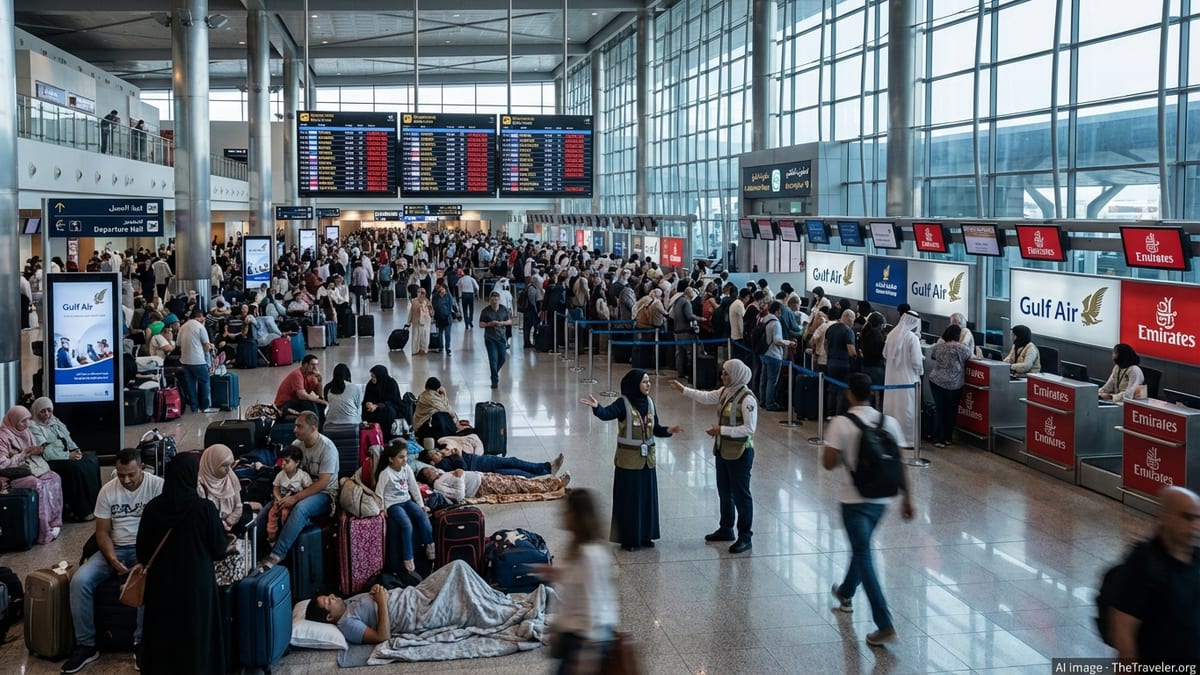
Conflict-Linked Airspace Closures Ripple Across Gulf Hubs
Published coverage since late February 2026 links the aviation turmoil to a sharp escalation in the conflict involving the United States, Israel and Iran, which triggered retaliatory strikes across the Gulf. In response, several states, including the United Arab Emirates, Qatar and Bahrain, either closed their airspace outright or imposed severe restrictions, leading to mass cancellations and diversions of international services.
Dubai International Airport, one of the world’s busiest hubs and a critical bridge between Europe and Asia, temporarily halted commercial operations after Iranian drone and missile attacks damaged fuel facilities and raised safety concerns. While Dubai has since moved into a phased reopening, reports indicate that traffic remains well below normal levels, with numerous airlines still operating skeleton schedules or avoiding the airspace altogether.
Qatar and Bahrain have also seen significant disruption. Air navigation in Qatari airspace has reopened only under limited emergency conditions, mainly for evacuation and cargo operations, with standard commercial flights still heavily curtailed. Bahrain International Airport has faced periodic shutdowns tied to national airspace closures, leaving its home carrier and foreign airlines with no option but to suspend or reroute flights.
Industry advisories and travel alerts suggest that these measures are likely to extend across much of April, particularly for services that overfly the most sensitive parts of Gulf and Iranian airspace. Even where airports have nominally reopened, carriers are reflecting caution in their schedules, keeping frequencies low and selectively reinstating routes.
European Travelers Lose Key Transit Gateways
The squeeze on Gulf connectivity is being felt acutely in Europe, where millions of passengers each year connect to long haul destinations via Dubai, Abu Dhabi and Doha. Airlines such as Emirates, Etihad and Qatar Airways usually provide dense links from cities including Copenhagen, Berlin, Frankfurt, London, Paris, Dublin, Lisbon and Istanbul, feeding onward flights to Asia, Africa and Australasia.
Following the start of hostilities on 28 February, schedule data compiled by aviation analysts shows more than 14,000 flights canceled out of the Middle East within just a few weeks. Many of these were services between European capitals and Gulf hubs or onward sectors that depended on those connections, immediately stranding or delaying tens of thousands of European passengers.
By early April, some Gulf-based carriers had begun rebuilding limited networks. Emirates has progressively restored operations at Dubai, while Etihad is operating a reduced schedule from Abu Dhabi to around 80 destinations worldwide. Qatar Airways is running a narrow set of flights and has signaled plans to reach more than 120 destinations by mid May, but remains far short of its previous connectivity.
For travelers in Denmark and its European neighbors, the effect is a patchwork of options. Some flights to the Gulf continue on a constrained basis, while others are canceled outright or rerouted via alternative hubs. Bookings that once relied on straightforward one stop itineraries to cities like Bangkok, Sydney or Johannesburg are now being rebooked onto longer, more complex routings through Istanbul, Southeast Asia or southern Europe.
National Carriers and European Hubs Struggle to Absorb Demand
European and Turkish airlines are simultaneously grappling with the loss of Gulf airspace as a transit corridor and a surge in passengers seeking alternatives. Reports indicate that Turkish Airlines has suspended or restricted flights to several Gulf and Levant destinations through at least late April, even as Istanbul serves as a major diversion point for passengers unable to fly via Dubai or Doha.
Within the European Union, major groups including Lufthansa, Air France KLM and IAG have scaled back operations to Gulf and wider Middle East destinations or paused them entirely on certain routes. Publicly available information shows that flights from core hubs such as Frankfurt, Munich, Paris, Amsterdam and London to Dubai, Doha, Abu Dhabi, Bahrain and Tel Aviv have faced extended suspensions or sharply reduced frequencies.
These changes are putting pressure on intra European and transcontinental networks. With Gulf carriers constrained, European airlines are selling out faster on direct services to South and Southeast Asia, while also contending with longer flight paths that divert around closed or risky airspace. Travel search platforms report higher average fares on Europe Asia routes and more frequent last minute schedule changes as carriers adjust to shifting restrictions.
Smaller markets, including departures from Copenhagen, Dublin, Lisbon or secondary German and Italian cities, are particularly exposed. Many relied on Gulf airlines for long haul connectivity and now face limited alternatives beyond backtracking to larger European hubs or accepting significantly longer travel times via multi stop routes.
Thickening Web of Restrictions Extends Into Late April
As of the first week of April 2026, travel advisories and airline notices show a complex matrix of deadlines and extensions. Some carriers have suspended operations to parts of the Gulf until mid or late April, while others have set suspension dates stretching into May and beyond for specific airports.
updated guidance from European, Asian and African airlines details widespread cancellations to Dubai, Abu Dhabi, Doha, Bahrain and neighboring airports through at least 30 April. Several carriers specify that flights to Iraq, Lebanon, Kuwait, Qatar and select Emirati airports remain offline until late May, underscoring expectations of a prolonged disruption even if hostilities ease.
Travel agencies and tour operators are echoing these assessments, warning customers across Denmark, Germany, the UK, Italy, France, Ireland and Portugal to anticipate rolling schedule changes throughout April. Many bookings that initially appeared “confirmed” for mid month departures via Gulf hubs have subsequently been canceled or rebooked, sometimes multiple times, as airlines revise timetables day by day.
The uncertainty is particularly acute for passengers connecting between Europe and Asia or Australia. Some long haul flights from Europe are technically operating, but with altered routings, additional fuel stops or last minute aircraft changes intended to avoid sensitive airspace, adding hours to journey times and complicating onward connections.
What Travelers Should Expect in the Coming Weeks
Travel industry guidance emphasizes that the situation remains highly fluid, with operational decisions in the Gulf tied closely to security assessments and regional diplomacy. Even where limited services have resumed, airlines are advising passengers to monitor bookings closely and to be prepared for changes up to the day of departure.
For April travel from Denmark and other affected European countries, the practical implications are likely to include longer travel times, higher fares on remaining routes, and constrained availability on popular dates. Travelers who built itineraries around fast one stop connections via Dubai, Abu Dhabi or Doha may find those options severely limited or unavailable.
Analysts also note the potential for secondary knock on effects within Europe. As long haul capacity via the Gulf remains depressed, European carriers could redirect aircraft to high demand transatlantic or intra European routes, temporarily improving options there while further tightening supply on Asia bound services. This dynamic may shift rapidly if Gulf hubs manage to scale up operations later in the spring.
For now, travelers across Denmark, Germany, the UK, Italy, France, Ireland, Portugal, Turkey and neighboring states are confronting one of the most significant disruptions to Europe Middle East Asia connectivity in recent years. With no firm timeline for a full restoration of flights and airspace access, April 2026 is shaping up to be a challenging month for anyone planning to cross between Europe and the wider world.