

More news on this day
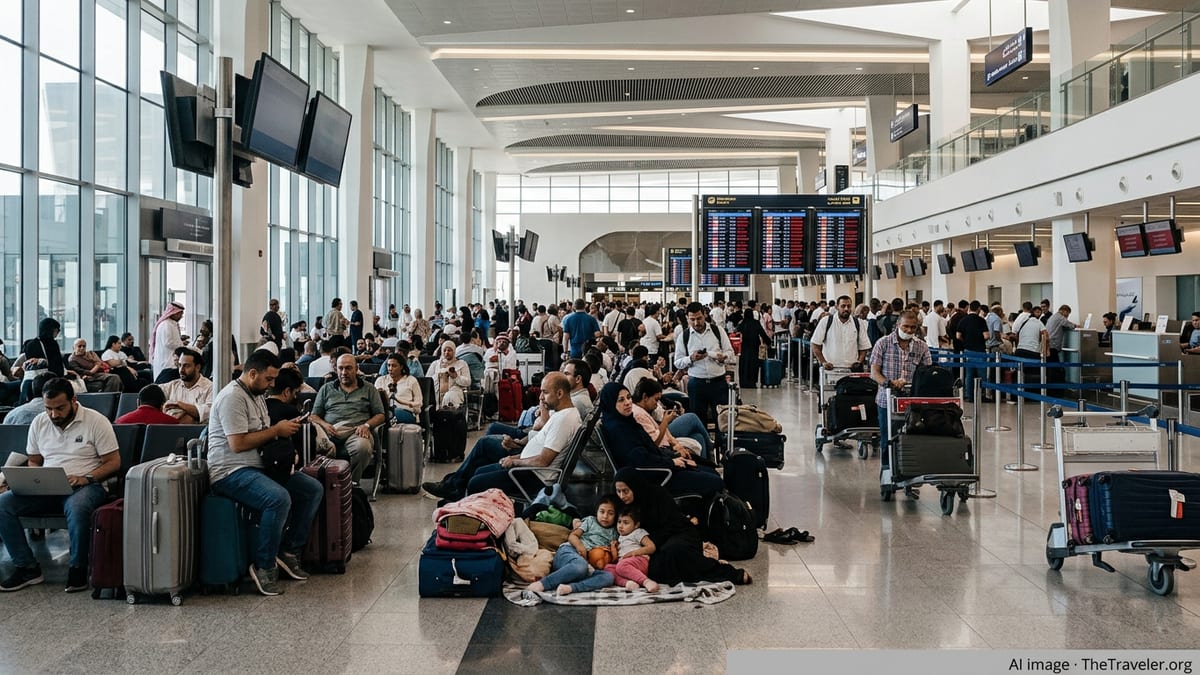
Air travel across the Middle East is facing another day of heavy disruption as Cairo, Istanbul and Dubai report hundreds of delayed services and a fresh round of cancellations, interrupting operations for EgyptAir, Emirates, Air Arabia, Gulf Air and other carriers on key routes linking Abu Dhabi, Kuwait City, Paris, Amsterdam and additional global hubs.
Get the latest news straight to your inbox!
New Figures Highlight Scale of Delays and Cancellations
Recent operational data from regional monitoring and aviation-tracking reports indicates that major Middle East gateways have collectively seen around 375 delayed departures and at least 17 outright cancellations over the latest 24-hour period. Cairo International Airport, Istanbul Airport and Dubai International remain the most affected, with congestion and knock-on scheduling issues compounding wider airspace restrictions across the region.
Coverage focused on Middle Eastern hubs describes a pattern of mounting queues at check in, extended waits at boarding gates and aircraft held on tarmac as crews and air traffic controllers work through backlogs. The figures build on earlier tallies showing more than 250 delays and 17 cancellations across Turkey, the UAE, Egypt and Kuwait, underscoring how quickly localised problems at a handful of airports can ripple through regional networks and into Europe and Asia.
At Cairo International, new reporting on April 6 points to 155 delayed flights and six cancellations in a single day, disrupting both domestic and international operations. Istanbul and Dubai have registered smaller but still significant clusters of cancellations and dozens of delays, while Kuwait City has recorded only a handful of delayed departures but a relatively high share of cancellations among its affected flights.
Analysts following the daily data say the headline numbers mask a more complex picture in which some services are merely pushed back by under an hour, while others suffer multi hour holds or re-routings that can cascade into missed connections at onward hubs in Europe and Asia.
Airlines From EgyptAir to Emirates Grapple With Ongoing Disruption
The latest disruption has hit a broad mix of full service and low cost carriers. EgyptAir has been among the hardest affected at its Cairo home base, with dozens of delayed flights and several cancellations impacting services to cities such as Frankfurt, Doha, Dubai, Istanbul and London. Publicly available airport departure boards and industry coverage show the airline repeatedly adjusting departure times as aircraft and crew are repositioned.
Gulf super connector Emirates continues to operate a reduced schedule from Dubai following weeks of region wide instability and earlier airspace closures. The airline has already cancelled or consolidated numerous flights in recent weeks and is still trimming frequencies on selected routes while gradually rebuilding capacity. Its services to European gateways such as Paris Charles de Gaulle and Amsterdam Schiphol have remained in operation but are vulnerable to rolling delays when inbound aircraft arrive late from other disrupted points.
Low cost operator Air Arabia, which serves the UAE and wider region from hubs including Sharjah and Abu Dhabi, has also been affected. Recent travel advisories list a series of cancelled arrivals into Abu Dhabi from Bahrain, Kuwait, Yerevan, Tbilisi and Baku, indicating that the carrier is selectively curbing services from certain regional cities while keeping others running.
Gulf Air, Saudia and additional regional and European airlines, including Lufthansa and Air France on Cairo routes, have all appeared on recent cancellation and delay tallies. In several cases, carriers have introduced limited special flights or temporary schedules, while continuing to advise passengers to verify flight status close to departure and to expect possible last minute timing changes.
Cairo, Istanbul and Dubai Act as Pressure Points for Wider Networks
The concentration of disruption at Cairo, Istanbul and Dubai has magnified the impact well beyond the Middle East. Each airport acts as a critical connection point between Europe, Africa and Asia, so even a modest share of cancellations can translate into widespread missed connections and diversions affecting cities far from the region.
Travel analytics cited in recent coverage show Istanbul Airport handling more than 100 delays and over a dozen cancellations on one recent peak disruption day, with passengers bound for European and Asian cities facing extended waits. Dubai International, traditionally one of the world’s busiest hubs for international traffic, has seen multiple waves of cancellations and delays since late February, with arrivals and departures to Abu Dhabi, Kuwait City, Paris and Amsterdam particularly exposed when schedules tighten.
In the Gulf, Abu Dhabi’s Zayed International Airport continues to report pockets of cancelled arrivals, including services operated under the Air Arabia Abu Dhabi banner as well as flights from other regional carriers. Kuwait City’s airport, while smaller in scale, has emerged as what some commentators describe as an outlier: comparatively few delays but several cancellations concentrated on specific airlines and routes, a pattern that reinforces how unevenly operational strain is being distributed.
These pressure points can quickly trigger follow on issues at European hubs that rely on smooth flows from the Middle East. When Cairo or Dubai departures run late, connecting passengers arriving into Amsterdam, Paris or other European airports may miss onward flights, forcing carriers there to manage their own wave of rebookings.
Conflict, Airspace Restrictions and Operational Strain Drive Problems
The current wave of disruptions is unfolding against the backdrop of a wider conflict environment in the region, including recent attacks and military activity that have led to intermittent airspace closures and rerouted flight paths. Aviation data providers and business media have documented tens of thousands of cancellations linked to the conflict since late February, with particular strain on Gulf hubs in the United Arab Emirates, Qatar and Saudi Arabia.
Restrictions on overflying portions of Iranian, Iraqi and Israeli airspace have forced airlines to adopt longer routings, increasing block times and tightening aircraft utilisation. Even when flights operate broadly on schedule, additional minutes in the air can leave less margin for delay recovery, making it more likely that relatively minor issues at one airport will spill over into the next rotation.
At the operational level, congestion at security checkpoints, aircraft turnaround stands and immigration desks is compounding the challenge. Industry focused outlets cite air traffic congestion, staff shortages and what they describe as “operational bottlenecks” at key airports among the drivers of the current disruption. These factors can interact with weather patterns and technical checks in ways that are difficult for airlines or airport managers to fully predict in advance.
European carriers and regulators have also reacted to the security environment by altering their own schedules, which has fed back into Middle East connectivity. Dutch flag carrier KLM, for example, has adjusted its routing policies in the region, and several European airlines have maintained suspended or limited services on certain Middle East routes, reducing the overall capacity available for rebooking disrupted passengers.
Passengers Face Long Waits, Limited Options and Changing Rules
For travellers caught up in the latest round of delays and cancellations, the practical impact is measured in missed meetings, abandoned holiday plans and unplanned overnight stays. Reports from affected airports describe passengers waiting hours for rebooking assistance or resorting to online tools and mobile apps to adjust itineraries as airline call centres and service desks handle high volumes of queries.
Airlines in the region have been expanding their flexibility policies since late February, offering varying combinations of fee free rebooking, travel vouchers or refunds. Emirates has outlined options for customers who had bookings between late February and late April, while Etihad, Air Arabia and Qatar Airways have also published special conditions for tickets purchased or flown during the disruption period. The deadlines and terms differ by carrier and are being updated frequently, adding a further layer of complexity for passengers trying to navigate their rights.
Consumer advocates and compensation specialists have reiterated that travellers should keep detailed documentation of their journeys, including boarding passes, booking confirmations and any written notices of delays or cancellations. Depending on the route and legal jurisdiction, some passengers on flights touching the European Union may be entitled to monetary compensation for long delays or cancellations, while others may only be guaranteed rebooking or basic care such as meals and accommodation.
With no clear end date to the conflict related airspace constraints or the broader regional instability, aviation analysts suggest that irregular operations at Cairo, Istanbul, Dubai and other Middle Eastern hubs could persist for weeks. For now, publicly available guidance continues to stress early arrival at airports, constant monitoring of flight status and a willingness to consider alternative routings as key strategies for reducing the risk of being stranded.