

More news on this day
As the 2026 Iran war spreads across the Middle East, a patchwork of airspace closures and maritime choke points from the Strait of Hormuz to the Red Sea is rapidly transforming the region into a high-risk no-go zone for airlines, cargo lines, and ordinary travelers.
Get the latest news straight to your inbox!
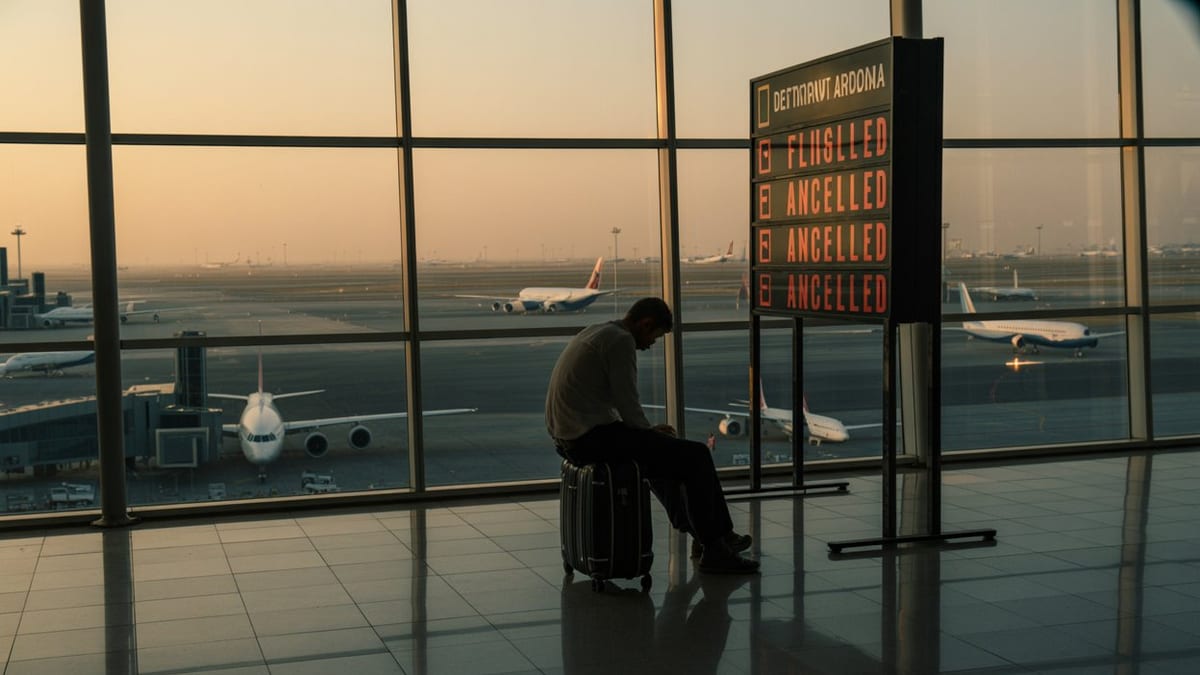
Image by Travel and Tour World – Tourism, Airline, Destination, MICE, Gobal Travel Market, Hotel news that you will find only over here.
Airspace Across the Gulf Falls Silent
Within days of the joint United States and Israeli strikes on Iran in late February 2026, aviation maps of the Middle East began to empty. Publicly available notices to air missions show that Bahrain, Iraq, Israel, Kuwait, Qatar, Syria, and the United Arab Emirates imposed wide-reaching airspace restrictions or outright closures as missile and drone exchanges intensified. Commercial traffic that once traced dense corridors over the Gulf is now rerouted in long arcs over the eastern Mediterranean, the Arabian Sea, or South Asia, adding hours to key intercontinental routes.
Major hubs that underpinned global connectivity have been especially hard hit. Coverage from Reuters and other outlets indicates that Dubai International, one of the busiest international airports in the world, suspended most operations for several days as regional airspace shut down, while other Gulf gateways in Doha, Abu Dhabi, and Kuwait City scaled back to emergency and evacuation traffic only. In Qatar, reports describe Hamad International Airport operating under constrained conditions after a closure of national airspace at the end of February, with limited humanitarian and repatriation flights gradually added under strict controls.
Knock-on effects extend well beyond the conflict zone. European and Asian carriers have cancelled or rerouted services linking Asia with Europe and North America, while cargo operators face longer flight times, higher fuel use, and congestion at substitute hubs in Turkey, Egypt, and India. Corporate travel managers and tour operators describe itineraries unraveling in real time as airlines adjust schedules day by day, leaving passengers stranded or forced into circuitous journeys that bypass the Gulf entirely.
Industry briefings shared with shippers and freight forwarders highlight the fragility of this new aviation map. With several states maintaining only partial access corridors for emergency use and others closing their skies outright at short notice, planners are treating the airspace from the Levant to the Strait of Hormuz as a single volatile theatre where conditions can change within hours.
Strait of Hormuz Under Effective Blockade
At sea, the crisis has crystallized around the Strait of Hormuz, the narrow waterway that typically carries roughly one fifth of the world’s crude oil exports. According to energy market analysis and maritime tracking cited in recent coverage, Iran’s response to the February strikes has included missile and drone attacks on merchant vessels, aggressive naval patrolling, and what regional observers describe as an evolving attempt to formalize control through de facto tolls, inspections, and threat of force.
Specialist shipping advisories issued in early March noted that there was initially no internationally recognized legal closure of the strait, yet radio warnings from Iranian forces and the risk of attack prompted most major carriers and tanker operators to suspend transits. By mid March, multiple security assessments and financial reports were describing the passage as effectively blocked to routine commercial traffic, with only a small number of state-affiliated or sanctioned vessels attempting the route.
This maritime lockdown has already been compared by analysts to the most severe supply disruptions of the 1970s energy crises. With exports from Saudi Arabia, Iraq, Kuwait, the United Arab Emirates, and Qatar constrained, oil and gas prices have spiked, and producers are racing to reconfigure flows via pipelines and Red Sea terminals. Reports on the Saudi Aramco network, for example, indicate accelerated use of Red Sea ports such as Yanbu as companies seek alternatives to the Gulf.
The strategic stakes extend far beyond hydrocarbons. Containerized goods, refined products, petrochemicals, and even food staples typically move through the Strait of Hormuz in large volumes. Trade papers and logistics bulletins describe insurers applying war-risk premiums, charter rates jumping, and some operators refusing bookings that involve the Gulf region at all. For global manufacturers and retailers, particularly those linking Asian production to European markets, the closure of Hormuz has become a central variable in supply chain planning for the rest of 2026.
Second Chokepoint Fears at the Red Sea and Bab el-Mandeb
While Hormuz remains the most visible flashpoint, attention is turning rapidly to the southern gateway between Asia and Europe. New missile launches claimed by Houthi forces in Yemen, including strikes aimed at targets in southern Israel, have revived memories of the 2023 and 2024 Red Sea disruptions. International reporting notes growing concern that the Bab el Mandeb strait and key lanes through the Red Sea could once again come under sustained attack.
The prospect of a dual chokepoint crisis is alarming shipping and trade experts. Analysis circulating among maritime risk consultancies warns that with Hormuz already largely closed in practice, any renewed campaign against vessels in the Red Sea would leave few efficient options for carriers linking East Asia, the Gulf, and Europe. Rerouting around the Cape of Good Hope adds up to two weeks to voyages between major ports, strains vessel and crew capacity, and significantly increases fuel consumption and emissions.
Food and fertilizer flows are a particular worry. Commentaries in regional and international media point out that bulk cargoes of grain, fertilizer, and cooking oil connecting producers in the Black Sea region and the Americas with markets in the Middle East, East Africa, and South Asia often rely on Red Sea passages. If shippers are forced away from both Hormuz and Bab el Mandeb, vulnerable importing states could face abrupt price surges and delays in essential supplies.
For now, the Red Sea remains partially open, but shipping lines are adjusting routes, hardening onboard security, and in some cases pausing port calls in Yemen and parts of the western Gulf of Aden. The sense among many industry analysts is that the maritime crisis is no longer confined to one strait, but evolving into a broader contest over the security of global trade corridors.
The Human Cost for Travelers, Migrant Workers, and Local Communities
Behind every closed airspace map and diverted shipping lane are millions of people whose lives depend on mobility. The Middle East is home to one of the world’s largest communities of migrant workers, many of whom travel frequently between jobs in the Gulf and families in South and Southeast Asia or East Africa. With flights grounded or rerouted, workers who had planned routine trips for medical care, family visits, or job changes now face open-ended delays and rising ticket costs.
Travel industry and humanitarian briefings describe families separated on opposite sides of newly hardened borders, as well as travelers who began journeys before the closures and found themselves stranded in transit hubs. Some states are facilitating limited evacuation and repatriation flights, but seat availability remains scarce and priority often goes to citizens, leaving foreign workers and residents with fewer options.
The impact is particularly acute in smaller Gulf states that rely heavily on imported food, fuel, and desalinated water. Public reporting on recent attacks against desalination plants in and around the Strait of Hormuz underscores the vulnerability of regional water supplies. Even when such facilities are not directly hit, elevated security risk complicates maintenance, fuel delivery, and staffing, adding another layer of uncertainty for local communities coping with power cuts, heat, and overcrowded shelters.
Tourism dependent economies around the region, from heritage sites in Jordan to coastal resorts in Oman and Egypt, are also feeling the strain as package tours are cancelled and cruise itineraries dropped. While some destinations located farther from active fronts remain physically untouched, the perception of a region-wide war is enough to deter many prospective visitors, threatening jobs in hospitality, transport, and small business sectors that had only recently recovered from the pandemic shock.
Global Industry Scrambles to Adapt
In boardrooms from London and Singapore to Dubai, logistics planners are racing to redraw global travel and shipping networks to cope with the new reality. Freight and supply chain updates circulated in mid March describe a cascade of tactical adjustments: container lines shifting capacity to alternative routes via the Cape of Good Hope, airlines rebalancing networks to strengthen hubs in Turkey, India, and Southern Europe, and express carriers warning of extended transit times on Asia Europe and Asia Middle East lanes.
Financial analysts increasingly frame the 2026 Middle East crisis as the most disruptive shock to global transport since the height of the COVID 19 pandemic. Market coverage highlights steep losses in airline and travel stocks, spikes in bunker fuel prices, and a wave of profit warnings from companies exposed to Gulf aviation hubs or reliant on just in time supply chains. Insurers are recalibrating risk models and raising premiums not only for ships transiting high-risk zones, but also for cargo stored in regional ports and warehouses.
Some policymakers and industry groups are calling for accelerated diversification of critical corridors, including expanded pipeline networks bypassing Hormuz, deeper investment in overland rail from Asia to Europe, and stronger multinational naval patrols to protect remaining open sea lanes. Commentaries in global business media suggest that even if a ceasefire around Iran were to hold later in 2026, risk perceptions may keep parts of the Gulf and adjacent waters designated as premium danger zones for years.
For travelers, exporters, and local communities across the Middle East, the immediate concern is more basic: when planes and ships will reliably move again. Until the skies reopen and merchant fleets return in volume to the Strait of Hormuz, the region remains locked in a crisis that is reshaping how people and goods move between continents, and redefining the cost of crossing some of the world’s most strategic waters.