

More news on this day
Switzerland is the latest advanced economy to feel the impact of a worsening crisis in the Middle East, as soaring oil prices, disrupted air corridors and mounting insurance costs drive up gasoline and airline fares, squeeze exporters and trigger emergency evacuations of expatriate workers across the region.
Get the latest news straight to your inbox!
Energy Shock Ripples From Gulf to Swiss Pumps
Published coverage on the unfolding conflict involving Iran, Israel and Gulf energy infrastructure indicates that repeated missile and drone strikes on refineries and export terminals have pushed benchmark crude prices sharply higher in March 2026. With a significant share of global oil and liquefied natural gas normally transiting the Strait of Hormuz, traders report that fears over supply security, rather than an immediate shortage, are now being rapidly priced into futures markets.
Gasoline prices in major importing countries, including the United States, Germany, Japan, Canada, Italy and Australia, have climbed in tandem with crude. Industry data cited in recent financial reporting show average U.S. pump prices rising by double digits since the latest wave of attacks, while similar increases are being recorded across Europe and parts of Asia. Analysts warn that if oil remains elevated for several months, the shock could feed through into broader consumer inflation just as central banks were preparing to loosen monetary policy.
Switzerland, which imports virtually all of its fossil fuels, is particularly sensitive to such swings. Publicly available information from market monitors shows Swiss wholesale fuel suppliers having to pay higher premiums for deliveries rerouted around high-risk Gulf waters and the Red Sea. Those additional costs are now reaching service stations, adding to already elevated living expenses in one of Europe’s most expensive countries and eroding disposable income for both residents and visiting travelers.
Economists quoted across European business media note that the simultaneous rise in fuel and imported goods prices risks acting as a tax on consumption in advanced economies. For Switzerland, the combination of a strong franc and higher energy costs could sap export competitiveness in precision manufacturing, pharmaceuticals and tourism, creating conditions for a sharp but uneven slowdown rather than a broad-based collapse.
Airlines Face Soaring Jet Fuel Bills and Route Disruptions
Aviation has emerged as one of the sectors most exposed to the latest Middle East turmoil. Trade and travel publications report that jet fuel prices have risen even faster than crude as refineries and shipping routes that normally supply Europe and Asia are disrupted or reinsured at higher war-risk premiums. Contemporary airline disclosures show that fuel, typically about a quarter of operating costs, is suddenly consuming a far larger share of budgets.
Carriers in the United States, Germany, Japan, Canada, Italy and Australia are all grappling with escalating expenses. Several have publicly warned that unhedged fuel exposure and longer flight times around closed or restricted airspace will weigh on earnings throughout 2026. Financial news outlets describe a pattern of route cancellations, reduced frequencies and the introduction of temporary fuel surcharges on long-haul services, particularly those touching the Gulf and Eastern Mediterranean.
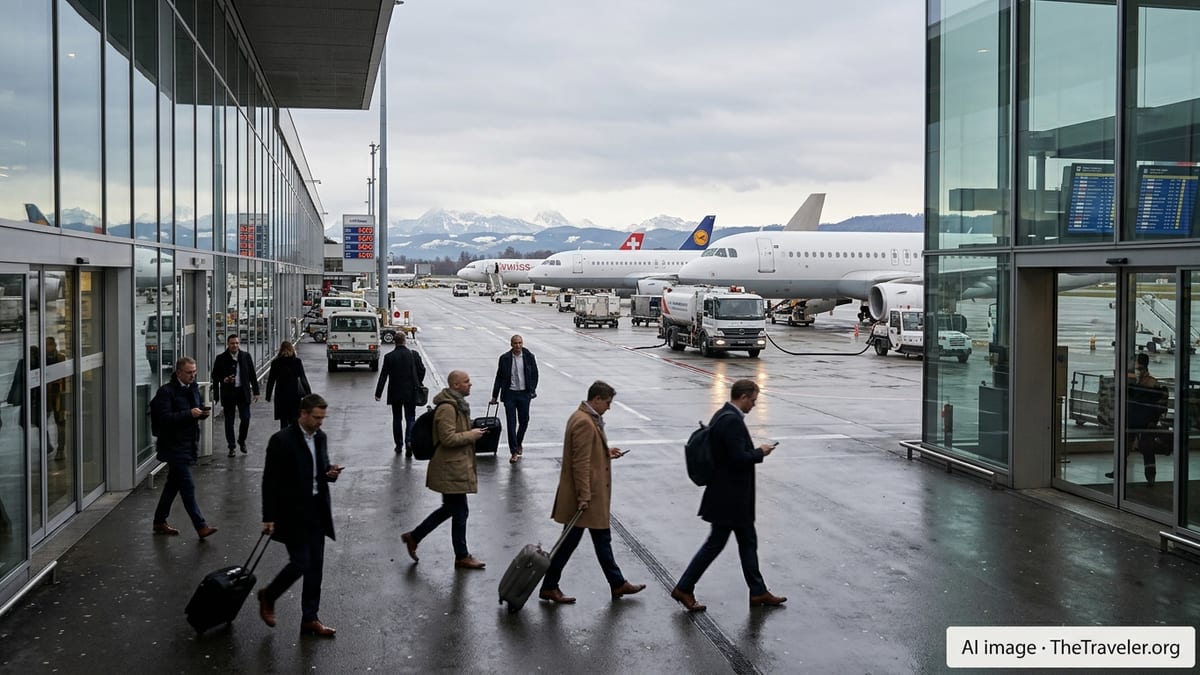
Switzerland’s connectivity is also under strain. Zurich and Geneva, important hubs for both European and intercontinental travel, rely on traffic flows to and from the Middle East and South Asia. Research from aviation analysts indicates that a meaningful share of passenger volumes at major European airports is linked to connecting traffic routed via Gulf carriers. With flights curtailed and insurers raising premiums on aircraft overflying conflict-adjacent airspace, airlines serving Swiss airports are adjusting schedules, trimming capacity and warning of higher fares for the foreseeable future.
For travelers, the combination of expensive jet fuel, rerouted paths and limited seat availability is translating into noticeable price jumps on popular corridors. Recent fare trackers cited by travel industry outlets show economy tickets between major European cities and South Asian destinations nearly doubling from typical averages, while last-minute long-haul bookings via Switzerland are facing sharp surcharges, squeezing leisure tourism and corporate travel budgets alike.
Jobs at Risk as Trade, Tourism and Logistics Slow
The economic shock is not limited to energy and aviation. Global research desks and credit insurers monitoring the situation point to early signs of stress in export-dependent sectors, logistics and tourism, all of which are critical employers in advanced economies. Manufacturing hubs in Germany, Italy and Japan that rely on timely deliveries of petrochemicals and intermediate goods from the Gulf are facing delayed shipments and higher freight costs, which could prompt production cuts if disruptions persist.
In the United States and Canada, publicly reported layoff notices in trucking, warehousing and cruise operations have begun to reference higher fuel costs and itineraries altered away from the Eastern Mediterranean. Financial analysts suggest that travel and hospitality companies with heavy exposure to Middle Eastern routes or cruise ports may pare back seasonal hiring, limiting job opportunities in what has been a robust post-pandemic recovery sector.
Swiss firms are not immune. The country’s large travel and tourism industry, which includes tour operators, hotel groups and specialized logistics providers, is closely tied to global demand for leisure and business travel. Company statements collected in business press coverage indicate that some operators are freezing new recruitment, postponing investment decisions and consolidating roles as bookings soften and insurance, fuel and security costs climb.
While comprehensive employment data will take time to capture the full impact, labor economists cited in European media warn that a prolonged energy and transport shock could lead to targeted job losses in aviation, travel agencies, freight forwarding and export-oriented manufacturing. The pattern is emerging across advanced markets from Australia to Italy, raising concerns about a stop-and-go recovery punctuated by sector-specific downturns.
Forced Evacuations and Expats on the Move
Alongside the economic tremors, the security dimension of the crisis is reshaping mobility across the Middle East. International news organizations report that thousands of foreign workers and residents have been evacuated or encouraged to leave high-risk areas as airspace closures, missile alerts and strikes on energy infrastructure intensify. Governments in Europe, North America and Asia have organized special flights and chartered services to extract citizens from affected cities and energy hubs.
Published accounts detail large groups of expatriate engineers, construction workers and service staff leaving Gulf states, as well as personnel rotations being accelerated at oil facilities, ports and logistics centers. These movements are disrupting local labor markets and placing sudden pressure on housing and job markets in home countries that must now absorb returning nationals and their families.
Switzerland, like the United States, Germany, Japan, Canada, Italy and Australia, maintains a sizable expatriate community in the wider Middle East, particularly in finance, hospitality, engineering and development work. Consular updates summarized in Swiss and international media describe a surge in inquiries about travel options, insurance coverage and repatriation procedures. Travel agents and airlines serving Swiss cities report heavy demand for seats on remaining commercial routes out of the region, even at elevated prices.
The return of skilled expatriates could ultimately benefit advanced economies if they reintegrate smoothly into domestic labor markets. In the short term, however, the abrupt shift is adding to pressures on public services, social insurance systems and housing in high-cost destinations such as Zurich, Geneva, New York, Toronto, Tokyo, Sydney and major European capitals.
Uncertain Outlook for Global Travel and Switzerland’s Role
Looking ahead, macroeconomic research notes that much will depend on the duration and intensity of the conflict and how quickly energy flows and flight paths can be normalized. If Gulf infrastructure is repaired and shipping lanes in and around the Strait of Hormuz and the Red Sea stabilize, some of the current price spikes could ease over the second half of 2026. Yet many analysts caution that insurance costs, risk premiums and altered supply chains may keep a portion of today’s higher costs embedded in global trade and travel for years.
For Switzerland, the current turmoil underscores its dual role as both a high-cost destination and a critical node in global finance, trade and aviation. Swiss-based commodity traders, insurers and banks are deeply involved in pricing and financing energy flows, while Zurich and Geneva function as gateways for international visitors and business travelers. As a result, the country is more exposed than its geographic size might suggest to the type of external shock now radiating outward from the Middle East.
Travel industry specialists argue in recent commentary that destinations capable of offering stability, reliable flight connections and high-quality infrastructure may ultimately regain visitor numbers even in a higher-cost environment. Switzerland’s strong public finances, robust transport network and established tourism brand could help cushion the blow, but only if global travelers and businesses are willing to absorb higher prices for flights and everyday expenses.
Until there is greater clarity on energy markets and regional security, however, households and companies across the United States, Germany, Japan, Canada, Italy, Australia, Switzerland and other advanced economies are being forced to adjust. From higher gas and airline bills to fragile job prospects and sudden returns of expatriate workers, the Middle East crisis has evolved into a broad economic shockwave reshaping how and where the world travels.