

More news on this day
Air travelers in Egypt are facing severe disruption on February 28, 2026, as Emirates, EgyptAir, Qatar Airways and flydubai cancel or suspend scores of flights linking Cairo and other cities with key regional hubs including Dubai, Abu Dhabi, Istanbul, Riyadh, Jeddah, Doha, Kuwait, Bahrain and Sharjah, following sweeping airspace closures across the Middle East after US-Israeli strikes on Iran.
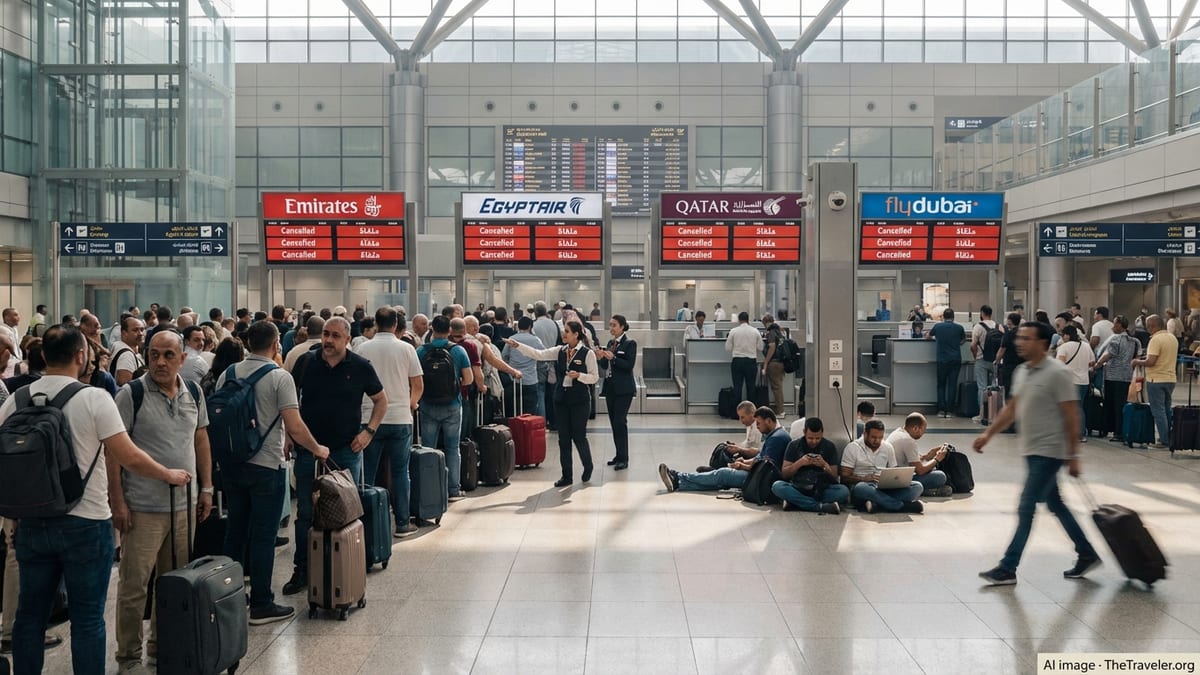
Airspace Closures Ripple Across Egypt’s Key Routes
The wave of cancellations comes after Iran, Iraq, Kuwait, Qatar, Bahrain and parts of the United Arab Emirates moved to close or restrict their airspace in response to coordinated US and Israeli strikes on Iranian targets in the early hours of Saturday. The closures have effectively severed several of the main east west corridors that airlines use to link Europe, Africa and Asia, forcing carriers either to ground aircraft or attempt lengthy diversions around the affected zones.
Although Egypt’s own airspace remains open, routes in and out of the country that rely on neighboring flight information regions have been thrown into disarray. Cairo International Airport, a major regional hub and diversion point, is now handling additional traffic from flights rerouted away from Gulf and Levant skies, compounding congestion just as local departures are being cut back. Aviation authorities in Cairo say operations teams are on heightened alert and coordinating around the clock to manage the disruption.
Industry analysts warn that if airspace closures persist beyond a few days, airlines serving Egypt will face sharply higher operating costs due to longer flight times and fuel burn, with knock on effects for fares and capacity. For now, the immediate impact is being felt most sharply by passengers booked on popular point to point services between Egypt and Gulf states, many of whom have been left stranded with little clarity on when normal schedules will resume.
EgyptAir Suspends Flights to 13 Regional Cities
EgyptAir, the national carrier, has enacted one of the most sweeping measures so far, suspending flights from Cairo to 13 Middle Eastern destinations until further notice. The airline confirmed that services to Kuwait, Dubai, Doha, Bahrain, Abu Dhabi, Sharjah, Al Qassim, Dammam, Erbil, Baghdad, Amman, Beirut and Muscat have been halted as a direct result of the neighboring airspace closures and fast evolving security situation.
Company leadership is operating from a crisis room at the Integrated Operations Center, where teams are tracking military and aviation developments and liaising with civil aviation authorities and airport operators. EgyptAir has urged passengers to monitor their bookings closely through official channels and has indicated that change fees and penalties may be waived for affected tickets, although detailed policies vary by fare type and point of sale.
The Ministry of Civil Aviation has raised the alert level across Egypt’s airports, with the Cairo Air Navigation Center, the Egyptian Airports Company and EgyptAir’s own operations units all working under an emergency posture. Officials say Egypt is preparing to receive additional diverted flights while simultaneously coping with its own outbound cancellations, a balancing act that is testing the resilience of ground operations and air traffic control.
Gulf Carriers Halt Services as Dubai and Doha Go Quiet
For travelers from Egypt heading to or transiting through the Gulf, the most visible shock has been the sudden quiet at normally bustling mega hubs. Emirates has temporarily suspended all operations to and from Dubai International Airport, a decision that has effectively removed one of the world’s most important connecting points for passengers traveling between Egypt and destinations in Asia, Australia and the Americas. Qatar Airways has likewise halted flights to and from Doha as Qatari authorities close national airspace.
Flydubai, a key low cost option for Egyptian travelers, has confirmed that it has cancelled a significant number of flights and temporarily suspended operations on Saturday while it assesses the evolving situation. The carrier is working with authorities in the UAE and across the region to redesign its schedule, but has advised passengers not to travel to the airport without a confirmed rebooking and to check for real time updates before leaving home.
The Gulf wide shutdown is also disrupting onward connections from Egypt to cities such as Riyadh, Jeddah, Dammam and Manama, which are typically served either directly or via hubs in Dubai and Doha. With multiple Gulf states now closed to civilian overflights, even airlines still technically operating some services are being forced into circuitous routings that add hours to journeys and stretch crew and aircraft utilization plans to their limits.
Turkey and Other Regional Operators Add to the Cancellations
The shockwaves are not limited to Gulf based carriers. Regional airlines that link Egypt with Turkey, the Levant and beyond have also announced significant schedule cuts. Turkish low cost carrier Pegasus, which operates multiple daily services between Istanbul Sabiha Gökçen and Gulf and Levant destinations, has cancelled a raft of flights touching Abu Dhabi, Dubai, Doha, Kuwait, Muscat, Dammam, Sharjah, Beirut and Riyadh, with knock on effects for passengers traveling to and from Egypt via Istanbul.
Flag carrier Turkish Airlines has similarly suspended flights from Istanbul to several Middle Eastern capitals, including some routes that feed traffic into Egypt. With airspace over Iran, Iraq and Jordan either closed or heavily restricted, the traditional north south and east west corridors through the eastern Mediterranean and Gulf are being reconfigured in real time, leaving little slack in the system for rebooking stranded travelers on alternative routings.
Other international airlines that carry Egypt bound passengers via Gulf and Levant hubs including European and Asian carriers have either suspended operations into the region or are avoiding the affected airspace entirely. The cumulative effect is a complex web of cancellations and diversions that can be hard for individual passengers to decipher, particularly when separate tickets on different airlines are involved.
What Affected Travelers in Egypt Should Do Now
With more than 49 flights involving Egypt and nearby hubs cancelled or suspended on Saturday alone, passenger advocates are urging travelers to take a proactive approach. Those with imminent departures are advised to check their flight status directly with their airline’s website or mobile app and to ensure that contact details on bookings are up to date so that automated notifications can be delivered quickly if schedules change.
Airlines operating in Egypt, including EgyptAir, Emirates, Qatar Airways and flydubai, are generally offering a mix of free date changes, rerouting where possible, or refunds for flights cancelled due to the airspace closures. However, call centers and airport ticket desks are experiencing heavy demand, and travelers report long wait times both on the phone and at service counters. Passengers are being encouraged to use digital self service tools where available.
Travel agents say that where journeys involve tight connections through Dubai, Abu Dhabi, Doha or other affected hubs, it may be prudent to postpone nonessential trips for several days until the regional security picture and airspace status become clearer. For essential travel, flexibility on dates, routing and even destination airport may be necessary, with some itineraries being rebooked via alternative hubs in Europe or North Africa rather than the Gulf.
Egypt’s aviation authorities emphasize that safety remains the overriding priority as military tensions remain high. While there is cautious optimism that at least some airspace restrictions could be eased once immediate security assessments are completed, there is no firm timeline for a full return to normal operations. For now, Egypt’s role as both an origin market and an emergency diversion point places it squarely at the center of one of the most significant air travel disruptions the region has seen in recent years.