

More news on this day
Surging tensions and open conflict across the Middle East are rapidly feeding through to airline ticket prices and fuel surcharges, raising the cost of long-haul travel and putting the global tourism industry’s much-anticipated 2026 growth spurt at risk.
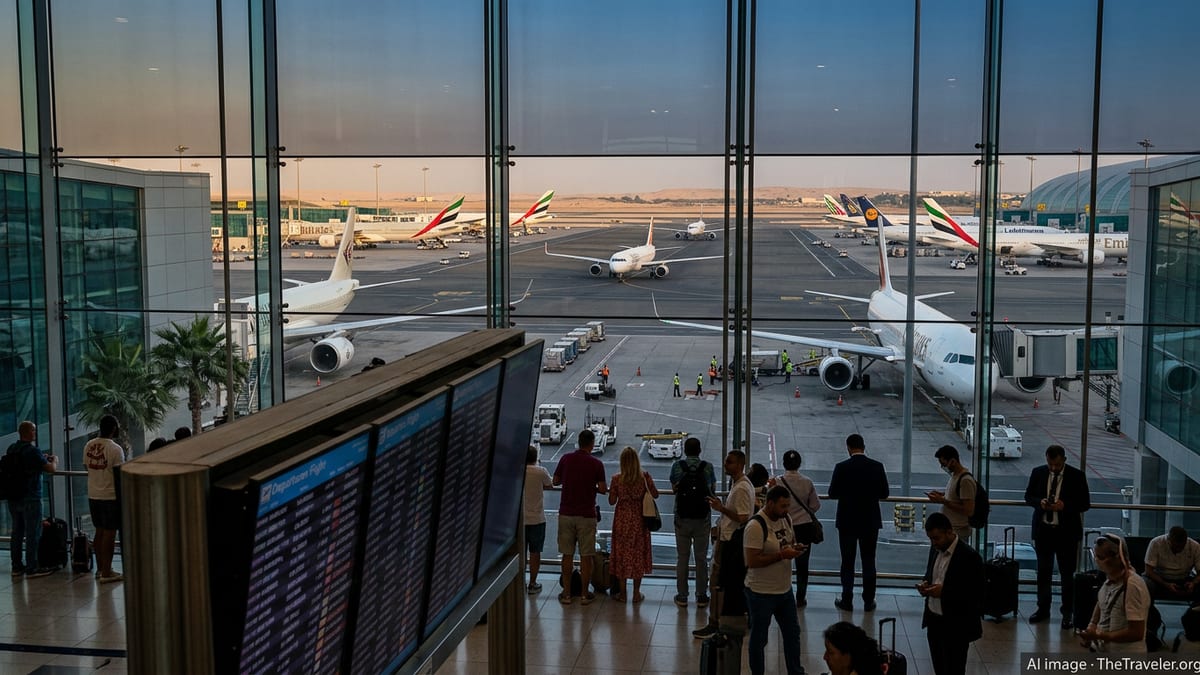
War Disruptions Hit a Critical Global Aviation Hub
The latest escalation involving the United States, Israel and Iran has transformed much of the Middle East from a fast-growing tourism and transit magnet into a high-risk zone almost overnight. Gulf hubs such as Dubai, Abu Dhabi and Doha, which connect Europe, Africa and Asia, have seen waves of cancellations, diversions and capacity cuts as airlines respond to airspace closures and changing security assessments.
Analysis by industry outlets and aviation consultancies in early March 2026 points to tens of thousands of flight cancellations and schedule changes in just over a week of hostilities, stranding travelers and stretching airline operations. Flights that once took efficient great-circle routes across Iran or the Gulf are now being pushed north over Turkey and the Caucasus or south over the Arabian Sea, adding hours to journey times and complexity to crew and fleet planning.
Travelers are feeling the effects in real time. Airlines are dynamically repricing itineraries that rely on Middle East connections, while some carriers are withholding their lowest fare classes until the operational picture stabilizes. For leisure travelers who book months in advance, the sudden jump in prices on popular Europe–Asia and Europe–Australasia routings is reshaping holiday budgets just as peak summer planning gets underway.
Regional tourism hotspots, from Dubai’s beach resorts to Red Sea developments in Saudi Arabia and Egypt, are facing a sharp downturn in arrivals after several years of rapid growth. Tour operators in Europe and Asia report a surge in cancellations and deferrals for 2026 trips, reflecting not only immediate security concerns but also anxiety about trip affordability as airfares climb.
Fuel, Insurance and Rerouting Costs Drive Airfare Surge
The conflict is amplifying underlying cost pressures that airlines were already battling as they entered 2026. Aviation fuel prices have spiked alongside oil benchmarks following attacks on energy infrastructure and concerns about the stability of supplies through key Gulf export terminals and the Strait of Hormuz. Each dollar increase in the price of jet fuel adds millions to global airline operating costs, much of which is ultimately recouped from passengers.
Security-related expenses are also rising. War-risk insurance premiums for aircraft operating anywhere near conflict-adjacent airspace have climbed, reflecting heightened perceived risk. Even airlines that avoid the region entirely are exposed indirectly, as tighter global insurance and financing conditions for aviation feed into higher overheads across the industry.
Rerouting is proving especially costly. Long-haul flights that once relied on efficient Middle Eastern corridors now face detours that can add 30 to 90 minutes of flying time, increasing fuel burn, crew duty costs and maintenance needs. Aviation analysts estimate that the cumulative impact of extra track miles across hundreds of daily services could translate into billions of dollars in additional expenditure if disruptions persist throughout 2026.
Passenger fares are reacting quickly. Dynamic pricing tools used by airlines are incorporating higher operating costs and constrained capacity, pushing up average ticket prices on affected city pairs even when base demand remains strong. Fuel surcharges, a tool heavily used during previous oil shocks, are reappearing on fare breakdowns in key markets from Europe to Asia-Pacific, further inflating the total price paid by travelers.
Global Tourism Outlook for 2026 Darkens
Until the recent escalation, 2026 was widely expected to mark a full return to pre-pandemic tourism growth, with international arrivals climbing and air passenger numbers setting new records. Forecasts from aviation and tourism bodies released in late 2025 pointed to robust demand across all regions, with the Middle East among the star performers thanks to aggressive investment in airports, airlines and destination marketing.
That narrative is shifting fast. Tourism economists now warn that the conflict could erase much of the region’s expected growth in visitor arrivals, replacing it with a double-digit decline under prolonged-war scenarios. Revised outlooks suggest that millions fewer tourists than planned could travel to Middle Eastern destinations in 2026, with regional visitor spending losses potentially running into tens of billions of dollars.
The knock-on effects extend well beyond the region. With the Middle East acting as a bridge between Europe, Asia and Africa, widespread rerouting and higher costs reverberate through global travel flows. Destinations in Southern Europe, North Africa and Southeast Asia may capture some demand from travelers who rule out Middle Eastern stopovers, but higher long-haul fares threaten to dampen overall trip volumes, particularly from price-sensitive segments.
Industry bodies such as IATA and airport associations have stressed that, while underlying demand for travel remains resilient, geopolitical risks now rank among the biggest threats to the sector’s recovery path. Their latest security and economic updates flag the possibility that 2026 growth could undershoot earlier projections if energy markets remain volatile and conflict-related disruptions persist into the peak summer and end-of-year holiday seasons.
Airlines Adjust Networks as Travelers Rethink Plans
Airlines are racing to reconfigure networks, capacity and pricing strategies to navigate the new landscape. Gulf carriers that previously relied on extensive connecting traffic between Europe and Asia are cutting frequencies on some routes, shifting widebody jets to alternative markets, and promoting point-to-point services perceived as safer. Carriers in Europe and Asia are accelerating contingency plans that route more traffic through non-Gulf hubs, from Istanbul and Athens to Singapore and Bangkok.
The adjustments are happening alongside a still-fragile financial recovery for many airlines after the pandemic. Analysts note that, while global profitability improved through 2024 and 2025, margins remained thin and vulnerable to shocks. The Middle East conflict is testing that resilience, as higher operating costs collide with a consumer base increasingly sensitive to price after several years of inflation in household expenses.
Travelers, meanwhile, are rethinking itineraries. Corporate travel managers are revising risk assessments and duty-of-care policies, in some cases directing employees to avoid routings through conflict-adjacent hubs even when flights remain available. Leisure travelers are gravitating toward destinations reachable via direct flights or alternative corridors, and many are building greater flexibility into plans through refundable tickets and comprehensive insurance, even at higher upfront cost.
Online search data and booking trends monitored by travel analysts indicate early signs of a shift toward closer-to-home holidays and short-haul breaks in several major markets. If sustained, this could further depress long-haul demand, compounding the impact of higher fares and limiting the ability of destinations that depend heavily on intercontinental visitors to meet their 2026 revenue targets.
Risks Ahead as Industry Bets on Conflict Containment
Much now hinges on how long the conflict lasts and whether it spreads to additional air corridors or major energy-producing states. A short, contained confrontation could still leave a noticeable dent in 2026 tourism growth, but analysts say the sector has shown the ability to rebound quickly from localized shocks when routes reopen and confidence returns.
A more protracted war, or further attacks affecting Gulf energy infrastructure and maritime chokepoints, would pose a far greater challenge. Extended oil price spikes would feed into not only aviation costs but also broader inflation that erodes travelers’ disposable income, while repeated scares over airspace safety could structurally alter preferred global travel corridors for years to come.
Governments and tourism boards are intensifying efforts to reassure potential visitors and support their national carriers, from targeted marketing campaigns to temporary fee relief at airports. However, with airlines already passing higher costs on to customers, there are limits to how much policy support can offset the fundamental economics of flying in a riskier, more expensive operating environment.
For now, the global travel industry enters 2026 caught between strong pent-up demand and a fresh wave of geopolitical uncertainty centered on one of its most strategic regions. Whether the year is remembered as a new high point for international tourism or another lost opportunity may depend on how quickly tensions in the Middle East cool and how far airfares ultimately climb.