

More news on this day
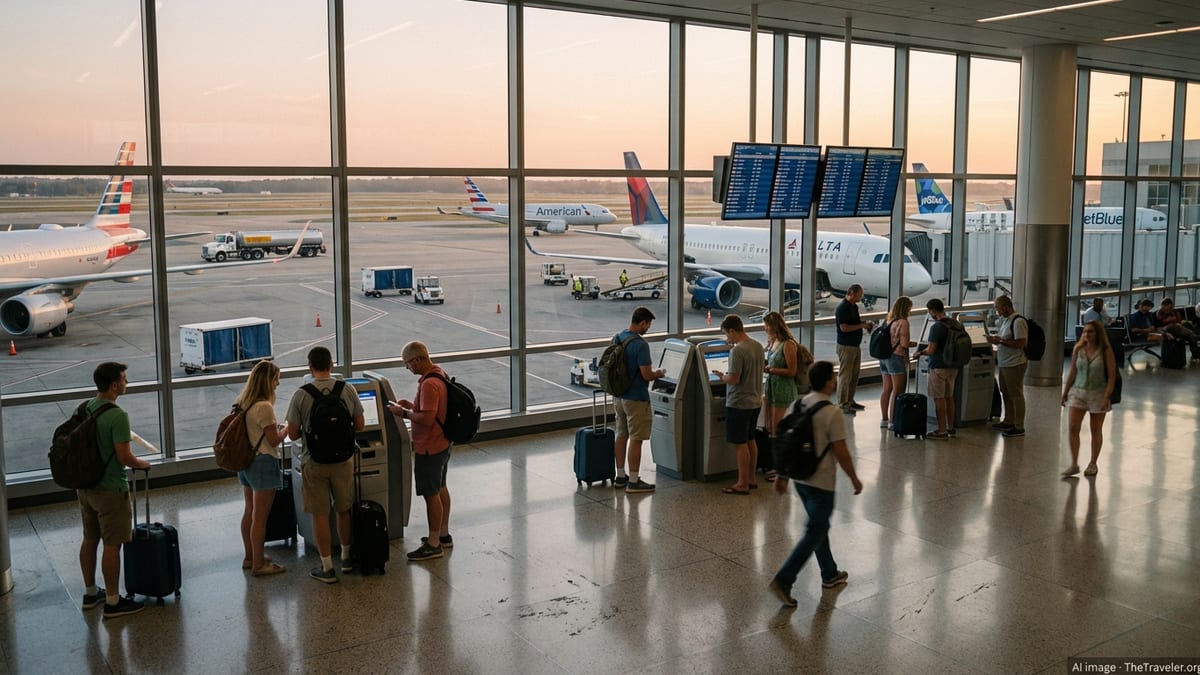
Fresh tensions between the United States and Iran are reverberating through global energy markets, driving oil prices higher and pushing major U.S. airlines including American Airlines, Delta Air Lines, and JetBlue to quietly ratchet up fares just as Americans map out their spring and summer travel.
Oil Spikes as Middle East Crisis Escalates
Oil markets have lurched back into crisis mode in recent days as a sharp escalation in the U.S.–Iran standoff raises the risk of disruption in the Strait of Hormuz, the narrow chokepoint through which a significant share of the world’s seaborne crude flows. On February 19, Brent crude climbed above 71 dollars a barrel, its highest level in months, while U.S. benchmark West Texas Intermediate traded in the mid-60s, signaling a renewed geopolitical risk premium pricing into every barrel.
The jump marks a rapid reversal from early February, when an unexpected bout of diplomatic progress and OPEC Plus production restraint briefly knocked more than 5 percent off crude prices and offered fuel-intensive industries a temporary reprieve. That respite has evaporated as rhetoric has hardened on both sides and U.S. military deployments in the region have expanded, stoking traders’ fears that even a limited strike or miscalculation could threaten tanker traffic or energy infrastructure.
For the airline industry, the shift from falling to rising fuel prices in the span of weeks illustrates just how volatile the operating environment has become. While energy companies and commodity traders may thrive on price swings, carriers that buy millions of barrels of jet fuel each year see their cost base yo-yo in real time, forcing rapid adjustments to pricing and capacity strategies.
Fuel Costs Slam American, Delta and JetBlue
Higher oil prices feed almost directly into jet fuel costs, which typically account for roughly a quarter to a third of an airline’s operating expenses and can spike to closer to 40 percent when crude surges. In the current flare-up, U.S. legacy and low-cost carriers alike are feeling the pressure. Market reports this week note that American Airlines and Delta have come under renewed investor scrutiny as crude has climbed, with American’s stock slipping on concerns about thin financial buffers and Delta’s strong recent performance suddenly at the mercy of its fuel bill.
Analysts tracking major airlines say that each sustained one dollar increase in the price of a barrel of oil can translate into hundreds of millions of dollars in additional annual fuel costs for the biggest carriers. When prices jump several dollars in a matter of days, it can swiftly erode margins and force management teams to decide whether to absorb the hit or pass it through to passengers via higher fares and surcharges.
JetBlue, which relies heavily on competitive pricing to draw leisure travelers in crowded East Coast and Caribbean markets, is particularly exposed to swings in input costs. Previous bouts of oil volatility have already weighed on its share price and prompted investors to question how much room the airline has to raise fares without losing price-sensitive customers to rivals or alternative modes of transport.
From Trading Floor to Ticket Price: How Oil Becomes Your Fare
The link between a barrel of crude trading in London or New York and the price of a ticket from Atlanta to Los Angeles can seem abstract, but the transmission mechanism is remarkably direct. Refineries turn crude into jet fuel, whose prices generally move in tandem with oil benchmarks. Airlines buy that fuel on contracts or in spot markets and feed the cost into their revenue models. When the cost of flying each seat one mile rises, carriers can either accept lower profitability or attempt to recoup the difference by charging more per seat.
Many airlines use fuel hedging strategies, locking in future fuel purchases at predetermined prices in an effort to smooth out sudden spikes. These hedges can buy time, but they are rarely complete or long lasting. When a geopolitical shock keeps prices elevated for weeks or months instead of days, hedges roll off and carriers are left increasingly exposed to the new, higher cost environment. Recent analyst commentary has highlighted that some U.S. airlines entered 2026 with limited hedging in place, leaving them more vulnerable as Brent prices pushed back above 70 dollars.
On the revenue side, modern airlines rely on dynamic pricing algorithms that constantly adjust fares in response to demand, competition, and costs. Fuel is one of the most sensitive inputs. When oil rises and forward fuel costs are revised higher, those algorithms typically nudge base fares up and shrink the number of the very cheapest seats made available on a given route. The result for travelers is less about a visible new surcharge and more about a slow, steady ratcheting of average ticket prices.
Evidence of Fares Creeping Higher Across U.S. Routes
While airlines rarely announce fare hikes tied explicitly to geopolitics, there are clear signs that prices on key domestic and international routes have been drifting higher as oil has climbed. Booking data and traveler anecdotes over the past year already showed a structural rise in fares compared with the pre-pandemic era, reflecting a combination of strong demand, constrained capacity, higher labor costs, and elevated fuel prices. The latest Middle East shock is adding another layer of upward pressure.
Travelers monitoring routes heavily served by American, Delta, and JetBlue report a pattern of narrow promotional windows and fewer ultra-low deals even during shoulder seasons. On competitive East Coast shuttles, where JetBlue and American once routinely dangled sub-200 dollar round trips when booked in advance, the floor has in many cases moved higher, with three-digit fares now clustering in the upper range and spiking quickly around weekends and holidays.
Industry analysts say that as long as Brent crude remains in the high 60s to low 70s or higher, most U.S. carriers will prioritize preserving margins rather than chasing volume with aggressive discounting. That means flash sales may still appear, but the baseline traveler experience is one of higher average prices, more fare segmentation, and tighter restrictions on the lowest buckets.
Peak Travel Season Could Coincide With a Prolonged Oil Shock
The timing of the latest oil surge is especially tricky for American travelers because it collides with the buildup to the spring break and summer vacation rush. Carriers typically finalize their seasonal capacity and pricing strategies in late winter, calibrating how many seats to fly and at what price to maximize revenue. Now, with jet fuel suddenly more expensive again and the geopolitical outlook uncertain, airlines are likely to err on the side of caution.
If crude prices remain elevated into March and April, or if tensions escalate further, consumers can expect less last-minute discounting and more aggressive yield management on popular leisure routes. Flights to Florida, the Caribbean, Hawaii, and European gateways are all particularly sensitive, as airlines know demand is robust and have limited incentive to cut prices to fill planes.
Conversely, if a diplomatic breakthrough were to cool the crisis and send oil lower again, some of that pressure would ease. But such moves typically take time to filter through to ticket prices, and airlines often seize on periods of strong demand to repair balance sheets battered by previous downturns. For travelers planning summer trips, banking on a sudden fare relief tied to geopolitics is a risky strategy.
What Higher Fares Mean for Different Types of Travelers
The impact of rising fares will not be evenly distributed across the American flying public. Business travelers, particularly those whose companies still maintain generous travel budgets, are likely to see less day-to-day change, as they often book closer to departure and in higher fare classes that airlines protect even in volatile times. Premium cabins and extra-legroom seats remain key profit drivers, and airlines may prioritize keeping those price points stable while adjusting economy pricing more aggressively.
Leisure travelers, by contrast, are far more exposed. Families trying to coordinate school holidays or college students piecing together trips on limited budgets are the first to feel the pinch when baseline economy fares rise by 30 or 50 dollars each way and previously free inclusions like checked bags or seat selection are pushed into fee-based extras. On routes dominated by one or two carriers, where competition is limited, that squeeze can be especially intense.
Frequent flyer program members may find some partial relief through miles redemptions, but award availability is also subject to the same revenue management logic that governs cash fares. When demand is strong and fuel costs are high, airlines tend to restrict saver-level award seats or require more miles for popular flights, further blunting this traditional escape valve for cost-conscious travelers.
How Consumers Can Prepare for the Price Hike
Travel experts say that in a volatile fuel environment, timing and flexibility become even more valuable tools for managing costs. Travelers who can lock in tickets several months ahead, particularly for peak periods, are more likely to avoid the sharpest price spikes that occur when capacity tightens close to departure. Monitoring fares consistently and setting alerts can help identify brief dips when airlines adjust algorithms or launch targeted promotions, even if the broader trend is upward.
Flexibility on dates, departure times, and even nearby airports can also yield meaningful savings. Flying midweek instead of over a weekend, choosing early morning or late-night departures, or considering secondary airports where competition is more intense can help offset the premium that higher fuel costs build into headline fares. Some passengers may also find value in co-branded credit cards that offer free bags or companion tickets, cushioning the blow of elevated base prices.
For those with more discretionary plans, delaying complex long-haul itineraries until the geopolitical picture and fuel prices stabilize remains an option. However, pent-up demand and structural changes in the airline industry mean that a return to the rock-bottom fares of the late 2010s is unlikely in the near term, even if oil retraces from its current highs.
What to Watch Next in the Oil and Airline Story
As winter gives way to spring, travelers, airlines, and investors alike will be watching several key indicators. The first is the trajectory of the U.S.–Iran crisis itself: any sign of direct conflict, attacks on energy infrastructure, or disruption of shipping lanes could send oil sharply higher, magnifying the pressure on carriers. Conversely, credible diplomatic steps, confidence-building measures, or international mediation could help cap the risk premium currently embedded in crude benchmarks.
The second is how airlines respond in their upcoming earnings updates and capacity plans. Management commentary from American, Delta, JetBlue, and their peers will offer clues about fuel hedging positions, planned fare strategies, and potential route adjustments if the cost environment remains adverse. Investors are already probing whether airlines will be able to pass higher fuel costs through to customers without denting demand, or whether price resistance will force them to absorb some of the hit.
For travelers, the bottom line is that airfares in 2026 were already elevated by a mix of strong demand, tight capacity, and higher labor and operating costs. The latest spike in oil prices tied to Middle East tensions adds another potent ingredient to that inflationary mix. Whether booking a short domestic hop or a long-haul getaway, Americans should be prepared for higher sticker prices, fewer deep discounts, and a premium on planning ahead.