

More news on this day
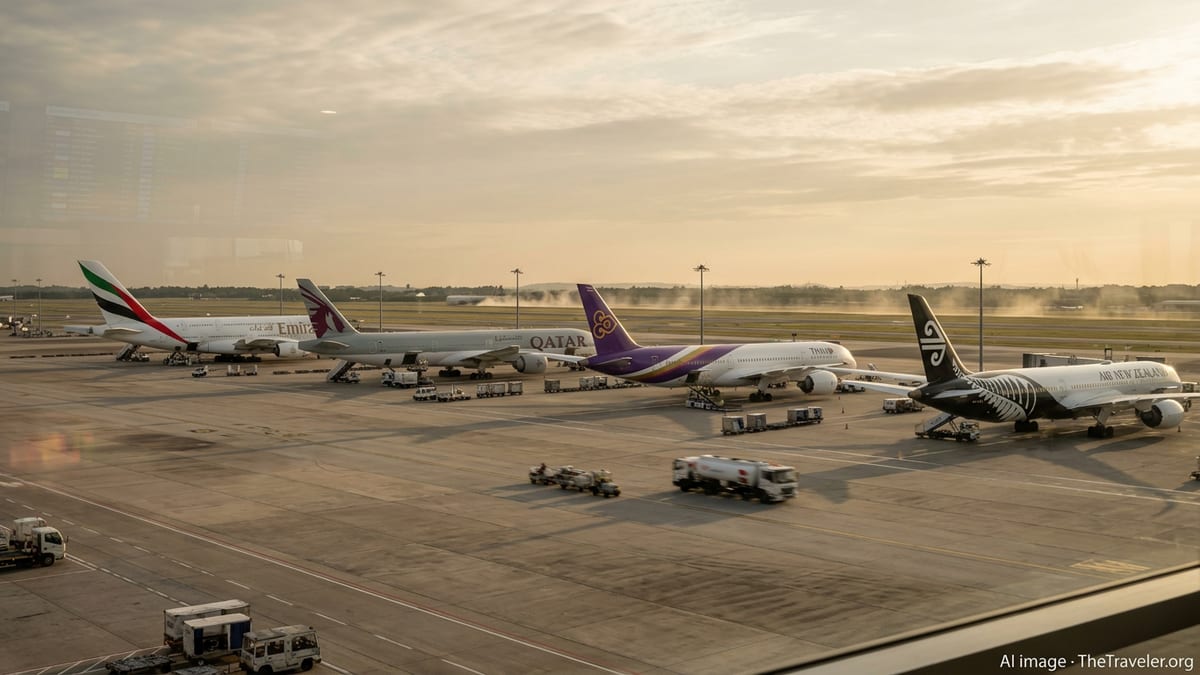
Airlines across Asia-Pacific and the Gulf are scrambling to contain soaring fuel costs and severe airspace disruptions as the latest surge in Middle East tensions pushes long-haul airfares to new highs, hitting carriers such as Air New Zealand, Qatar Airways, Emirates and Thai Airways and squeezing travelers on key routes between Europe, Asia and the Pacific.
Get the latest news straight to your inbox!
Conflict, Closures and a New Shock to Global Aviation
The latest escalation in the Middle East, including Iranian strikes that have prompted temporary airspace closures in Qatar, the United Arab Emirates and other Gulf states, is rippling quickly through the global aviation system. Publicly available information shows that restrictions over Iran and in parts of the Gulf are forcing hundreds of daily cancellations and diversions, particularly on routes linking Europe and Asia.
According to published coverage of the conflict’s economic fallout, airspace closures and security concerns in the region’s key hubs have led to thousands of grounded or rerouted flights. The Gulf’s role as a crossroads for long-haul traffic means that even airlines based far from the region are now exposed to longer routings, higher fuel burn and congested alternative corridors over Central Asia and the Caucasus.
At the same time, the crisis around the Strait of Hormuz has jolted global oil markets, driving up jet fuel prices at a pace many carriers describe in public remarks as difficult to absorb in the short term. The combination of more expensive fuel and reduced capacity on some of the world’s busiest long-haul sectors is flowing rapidly into ticket prices.
Emirates and Qatar Airways Face Hub Disruptions
For Gulf mega-carriers Emirates and Qatar Airways, the volatility strikes at the heart of their hub-and-spoke business models. Reports indicate that temporary airspace closures affecting Dubai and Doha, along with missile and drone incidents in the wider region, have caused delays, diversions and selective cancellations across their networks.
Coverage of the conflict’s economic impact notes that closures in Qatar, the UAE and neighboring states have contributed to several thousand daily flight cancellations across the region, affecting not only point-to-point services but also long-haul connections that rely on smooth transfers through Dubai International Airport and Hamad International Airport. With a large share of Europe–Asia and Europe–Australasia itineraries built around Gulf transits, any reduction in frequencies or rerouting can quickly tighten seat availability.
As aircraft are reassigned to more secure corridors and flight times lengthen on some sectors, capacity on popular Europe–Asia routes is becoming scarcer. Analysts cited in recent business coverage suggest that premium cabins and higher-yield economy seats are seeing particularly sharp price moves as travelers compete for alternative routings that avoid perceived hotspots.
Thai Airways Sees Europe Fares Nearly Double
Thai Airways is emerging as one of the clearest examples of how Middle East turbulence is reshaping prices. Data released by Thailand’s Civil Aviation Authority and reported by local media show that economy-class fares between Bangkok and major European cities have climbed dramatically as passengers shift away from Middle Eastern hubs.
One Thai outlet reported that one-way economy fares on the Bangkok–London route have surged from around 30,000 baht to more than 70,000 baht, an increase of over 100 percent compared with typical pre-crisis levels. Regulators in Thailand have noted that eight Middle Eastern airlines serving the country have suspended flights, sharply reducing capacity on Europe-bound routes and pushing more demand onto Thai Airways and other Asian carriers.
Separate business reports from regional media indicate that Thai Airways is planning or already implementing fare increases in the range of 10 to 15 percent to offset higher fuel costs, while also adjusting routings to skirt conflict zones and avoid Iranian airspace. Those longer routings add flying time and fuel burn, compounding the pressure that elevated oil prices are placing on the flag carrier’s balance sheet.
Air New Zealand Cuts Flights and Raises Prices
The shock from the Middle East is reaching as far as the South Pacific. Air New Zealand has announced schedule cutbacks and fare rises linked directly to the surge in jet fuel prices traced to the conflict and disruptions around the Strait of Hormuz. New Zealand media report that the airline will cancel about 1,100 flights between mid-March and early May, affecting roughly 44,000 passengers across its domestic and international network.
Publicly available reports on the airline’s adjustments indicate that most of the cuts fall on off-peak services, while core long-haul routes to North America remain in operation. However, the carrier has introduced network-wide fare increases, with consumer advisories citing typical rises in the range of about 10 to 90 New Zealand dollars per ticket, depending on route and cabin.
Analysts observing the New Zealand market note that, although local demand remains resilient, prolonged elevated fuel prices could force the airline to choose between further fare hikes and deeper capacity reductions. Either scenario would likely keep pressure on travelers, particularly those planning long-haul itineraries that already involve higher base fares and limited competition.
Passengers Confront Higher Costs and Fewer Options
Across Asia and the Pacific, travelers heading to Europe or North America are encountering a very different pricing environment than just a few months ago. Travel and business media in multiple markets report that fares on routes which traditionally connect via the Gulf have risen the fastest, reflecting both higher operating costs for carriers such as Emirates and Qatar Airways and the sudden loss of capacity from suspended Middle Eastern services.
Alternative hubs in Asia, including Bangkok and other Southeast Asian gateways, are seeing a surge in connecting traffic as travelers seek to bypass the Middle East. That shift is feeding into higher load factors for airlines such as Thai Airways and contributing to steeper prices on already busy routes to London, Paris, Frankfurt and other European cities. In some markets, regulators and consumer groups are monitoring the situation but acknowledge that there is limited short-term relief while fuel prices remain elevated and key air corridors stay restricted.
For now, publicly accessible commentary from aviation analysts suggests that airfares are unlikely to retreat quickly unless tensions ease, oil prices stabilize and airspace in and around the Middle East fully reopens. Until then, passengers flying with Air New Zealand, Qatar Airways, Emirates, Thai Airways and their competitors can expect higher prices, longer journeys and a more crowded race for the remaining seats on the world’s major long-haul routes.