

More news on this day
Vietnam Airlines is increasing capacity on select Europe-bound services by around 1,000 seats as carriers across Asia and Europe adjust flight plans and schedules in response to heightened tensions and airspace risks in parts of the Middle East.
Get the latest news straight to your inbox!
Reroutings Push Demand Onto Alternative Corridors
Geopolitical tensions and safety concerns in sections of Middle Eastern airspace have prompted widespread rerouting of long-haul services linking Asia and Europe. Publicly available flight-tracking data and recent industry coverage indicate that some airlines have shifted away from traditional corridors over or near conflict zones, choosing longer northerly or southerly paths that add distance, time and cost to intercontinental journeys.
These changes have tightened capacity on certain alternative corridors, particularly over Central Asia and Eastern Europe, and have led carriers to refine their schedules to maintain connectivity between key hubs. For Vietnam Airlines, Europe is one of the most strategically important long-haul markets, connecting Hanoi and Ho Chi Minh City with major cities such as Paris, Frankfurt and London. The carrier’s latest capacity adjustment reflects both a need to keep routes commercially viable amid detours and an effort to capture demand from travelers seeking options that avoid higher-risk airspace.
Industry analysis shows that while global passenger demand remains resilient, geopolitical friction has added complexity to route planning and fuel management. Airlines must factor in extended flight times, revised alternates and additional crew requirements, all of which influence how much capacity can be offered on a given sector. In this context, selectively adding seats on aircraft that can operate efficient alternative routings has become a pragmatic way to preserve seat supply between Southeast Asia and Europe.
Vietnam Airlines Adds Around 1,000 Seats to Europe Services
According to recent Vietnamese and international aviation coverage, Vietnam Airlines has responded to the evolving situation by adding roughly 1,000 seats on new or adjusted Europe-bound flights, focusing on routes where demand is strongest and rerouting is most manageable. The capacity increase is being implemented through a combination of aircraft upgauging on certain days, optimized cabin configurations, and additional frequencies on select city pairs.
The move targets core gateways in Europe that can support consolidated passenger flows, including major hubs with strong onward connections across the continent. By concentrating extra seats on these trunk routes, Vietnam’s flag carrier is aiming to provide travelers with more options at a time when some itineraries via the Middle East have become less attractive or more operationally constrained.
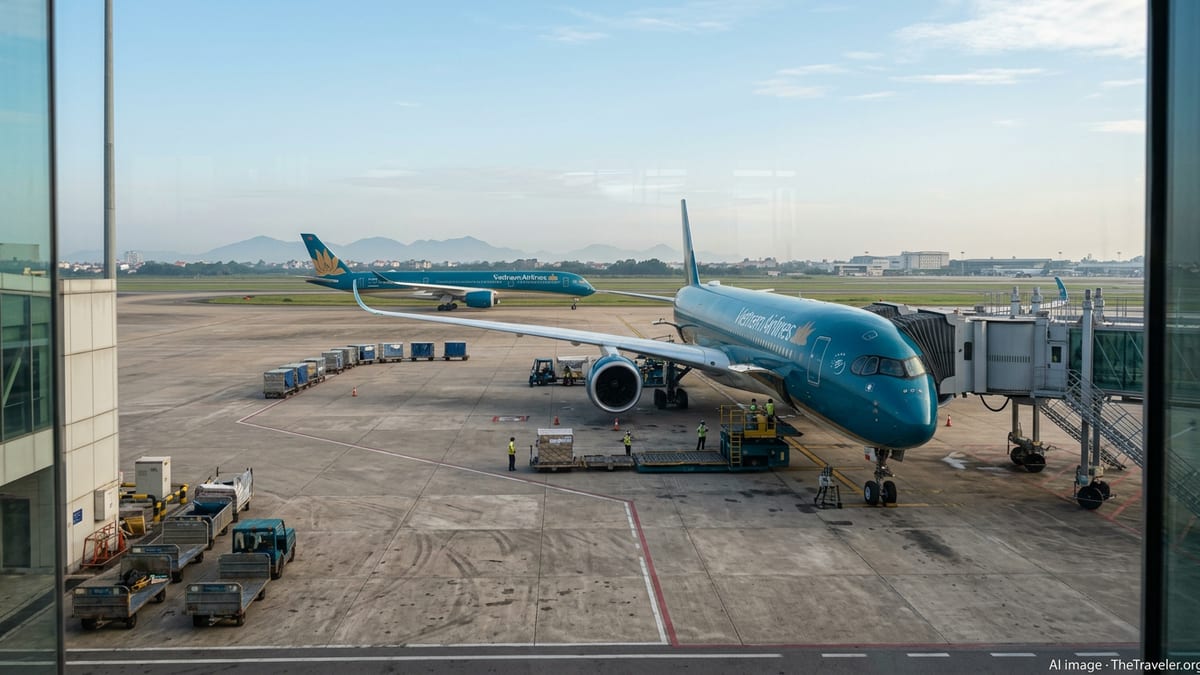
Publicly available fleet data shows that Vietnam Airlines relies heavily on wide-body aircraft such as the Airbus A350 and Boeing 787 for its Europe network. These jets offer flexible cabin layouts that can be adjusted over time, including modest shifts between premium and economy seating to reflect changing demand. The addition of around 1,000 seats is understood to be spread across multiple rotations rather than a single one-off capacity surge, allowing the airline to monitor bookings and adapt as conditions evolve.
Industry observers note that the airline’s decision aligns with a broader trend among Asia-Pacific carriers to reinforce direct links to Europe that avoid congested or restricted Middle Eastern airspace. While not all passengers will reroute away from traditional Gulf or Levant connections, Vietnam Airlines appears to be positioning itself as an alternative for travelers prioritizing routings that steer clear of active flashpoints.
Operational Challenges from Longer Routes and Higher Costs
The decision to add seats comes against a backdrop of mounting operational challenges for airlines navigating around sensitive airspace. Reports from aviation data providers indicate that rerouted flights between Asia and Europe can face extended block times, sometimes adding up to an hour or more depending on the exact detour and prevailing winds. Longer journeys typically mean higher fuel burn, potential crew duty complications, and tighter aircraft utilization margins.
For Vietnam Airlines, any additional capacity must be weighed carefully against these constraints. The airline is seeking to maintain schedule reliability while offering more seats, a balancing act that depends on aircraft availability, crew rosters and airport slot timings in both Vietnam and Europe. Publicly available timetable updates suggest that the carrier is refining departure and arrival times on some routes to accommodate revised flight paths and ensure sufficient turnaround windows.
Higher operating costs linked to rerouting are another factor. Though fuel prices and navigation charges vary by region, longer routings generally increase expenses per flight. Adding seats can help offset some of this pressure by spreading costs across more passengers, particularly in economy cabins where demand has remained robust. However, airlines must avoid overcapacity that could suppress yields, especially during shoulder seasons on Europe routes.
Aviation analysts point out that carriers in similar situations have experimented with tactical capacity shifts, such as deploying larger aircraft on peak days while trimming or consolidating weaker rotations. Vietnam Airlines’ move to add about 1,000 seats appears consistent with this flexible approach, rather than a wholesale schedule overhaul.
Passenger Demand Holds Up Despite Geopolitical Uncertainty
Despite the backdrop of Middle East tensions, publicly available travel and tourism figures suggest that demand between Southeast Asia and Europe remains relatively resilient. Leisure travelers from Vietnam and neighboring countries continue to view European destinations as aspirational, while business links between the regions have recovered alongside broader economic activity.
For Vietnam Airlines, this demand underpins the case for targeted capacity growth. The added seats on Europe-bound flights are expected to cater to both outbound Vietnamese travelers and inbound visitors using Hanoi or Ho Chi Minh City as gateways to the country’s coastal resorts and cultural centers. Additional capacity can also benefit transit passengers connecting from other parts of Southeast Asia on the airline’s regional network.
Travel agencies and booking platforms have been highlighting routings that avoid conflict-affected corridors, and some consumers appear increasingly attentive to flight paths shown on ticketing interfaces and mapping tools. Vietnam Airlines’ Europe services, routed via safer corridors identified by regulators and navigation authorities, may appeal to passengers seeking reassurance without significantly extending total journey times.
The airline’s capacity move also coincides with ongoing efforts by Vietnam’s tourism authorities to attract more European visitors. Expanded seat availability on non-stop or one-stop services from key European cities can support tour operators planning packages for the upcoming travel seasons, particularly during traditional peaks in spring and summer.
Outlook: Flexible Capacity Amid Shifting Geopolitics
Looking ahead, Vietnam Airlines is expected to keep a close watch on both geopolitical developments and booking trends as it manages its Europe network. The addition of around 1,000 seats is being viewed by industry commentators as a tactical adjustment rather than a permanent expansion, leaving room for further changes if tensions ease or new constraints emerge.
Airspace advisories, risk assessments and government guidance will continue to shape how carriers chart routes between Asia and Europe. Should conditions in the Middle East stabilize and more direct corridors reopen without restrictions, airlines may gradually recalibrate their networks. Until then, airlines like Vietnam Airlines are likely to maintain alternative routings while fine-tuning capacity to match demand.
For travelers, the near-term result is a mixed picture: some longer flight times and altered routings, but also new options and additional seats on select services as carriers reconfigure their schedules. Vietnam Airlines’ decision to bolster Europe-bound capacity highlights how airlines are using their fleets and route planning tools to navigate a complex landscape, sustaining international connectivity even as traditional pathways are disrupted.
Industry observers anticipate that further adjustments across the Asia Europe market are possible in the months ahead, particularly if geopolitical risks shift to new regions or if demand patterns change in response to economic conditions. For now, Vietnam Airlines’ move underscores the role of Southeast Asian carriers in providing alternative long-haul links between the two regions during a period of heightened uncertainty.