

More news on this day
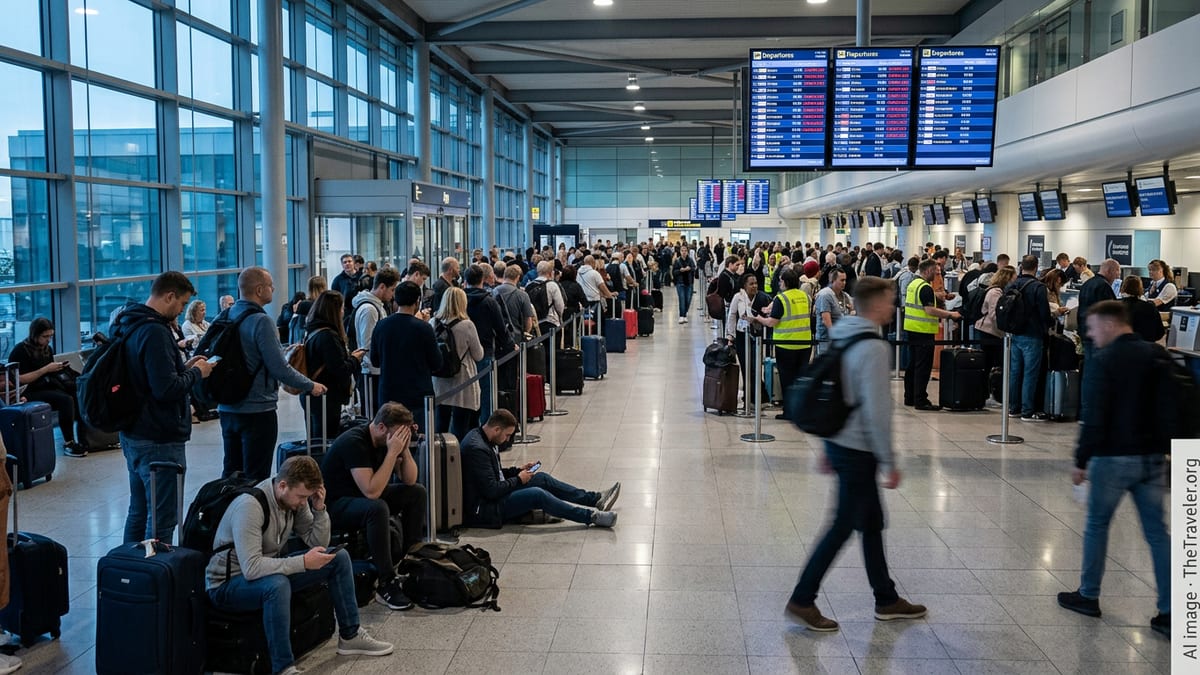
Thousands of passengers at Manchester Airport are facing severe disruption after flights to Doha and Bahrain were cancelled amid escalating tensions in the Middle East, cutting key connections to Asia, Africa and Australia and leaving many travellers scrambling for alternative routes home.
Get the latest news straight to your inbox!
Middle East Crisis Spills Over Into UK Flight Schedules
Published coverage of the widening conflict involving Iran and several Gulf states indicates that airspace restrictions and security concerns across Qatar and Bahrain are now feeding directly into UK travel disruption. Manchester Airport, a major northern hub for long-haul services, has seen multiple departures and arrivals linked to Doha and Bahrain removed from schedules at short notice.
According to publicly available flight-tracking data and airline updates, services operated via Doha and Bahrain have been particularly affected because they rely on overflight permissions and safe operating corridors through some of the most sensitive airspace in the current crisis. When Gulf airports scale back operations or close temporarily, knock-on effects are quickly felt at outstations such as Manchester.
Reports from aviation forums and passenger accounts suggest that the latest wave of cancellations has intensified over recent days, coinciding with missile and drone activity reported around major Gulf hubs and the closure or partial closure of airspace in several countries. This has left previously routine overnight and early-morning services in and out of Manchester subject to last-minute changes, with many flights listed as cancelled or showing significant delays.
While some airlines have begun operating limited repatriation and diversion flights into alternative European hubs, Manchester-based travellers who were due to connect via Doha or Bahrain remain among the hardest hit, as those routes often serve as vital links to onward destinations across Asia, Oceania and East Africa.
Passengers Stranded as Key Transit Hubs Go Offline
Doha and Bahrain function as major transit points for UK travellers heading beyond the Middle East, and their disruption has created an outsized impact at Manchester. Qatar Airways and Gulf Air typically funnel passengers from northern England through their Gulf hubs before dispersing them across extensive global networks. When those hubs are constrained by security incidents or airspace closures, passengers can be left with no straightforward way to continue their journeys.
Publicly available information from traveller message boards shows that some passengers connecting through Doha to destinations such as Bangkok, Hong Kong and various cities in South Asia have been stranded either at Manchester or mid-journey in other airports. Others report being rebooked repeatedly onto the same route via Doha, only to see each new flight cancelled as the regional situation changes.
In parallel, the situation in Bahrain has further tightened capacity. Reports on the security environment there describe damage to civilian infrastructure and disruption at Bahrain International Airport, which has constrained the ability of Bahrain-based carriers to operate normal schedules. With aircraft repositioned to safe locations and crews subject to revised duty plans, the usual pattern of overnight Gulf connections from the UK has been severely interrupted.
The result at Manchester is a growing backlog of travellers attempting to secure seats on alternative carriers, often at short notice and at higher prices. Airport terminals have seen long queues at airline service desks, with passengers seeking refunds, rerouting options and emergency accommodation when overnight stays become unavoidable.
What Travellers From Manchester Need To Check Right Now
For anyone due to fly from Manchester to Doha or Bahrain, or to connect via those hubs onward to another destination, the most urgent step is to verify the current status of their booking directly through their airline or booking platform. Published airline advisories indicate that schedules are being revised frequently, sometimes only hours before departure, as carriers respond to new security assessments and government instructions.
Passengers are being encouraged through public statements and online channels to avoid travelling to the airport until they have a confirmed, operating flight. In practice, this means monitoring airline mobile apps and official social media feeds closely on the day of travel, as these are often updated more quickly than general airport information screens.
Travellers whose flights have already been cancelled may be entitled to rebooking, vouchers or refunds, depending on the carrier’s policies and the type of ticket purchased. Several airlines serving Doha and Bahrain have published temporary “travel waiver” programmes that relax change fees and allow itinerary changes within a specified time window, particularly for passengers originally scheduled to travel during the most intense phase of the disruptions.
However, passengers using third-party travel agents or online booking sites may find that processing changes takes longer, as those intermediaries must coordinate with the airline. In these cases, travellers are advised by publicly accessible guidance to document all communications, keep boarding passes or e-tickets, and retain receipts for any out-of-pocket expenses such as hotels or meals that might later be claimed under travel insurance.
Alternative Routes and Limited Relief Options
With direct access to Doha and Bahrain constrained, Manchester travellers are increasingly turning to alternative routings through other European or Middle Eastern hubs that remain open. Major carriers based in cities such as London, Paris, Amsterdam and Frankfurt continue to offer long-haul services that bypass the most affected airspace, and some passengers have reported success in rerouting via these gateways, albeit with longer total journey times.
Some Gulf-based airlines have also begun operating limited relief and repatriation flights from their home hubs to selected European airports. Publicly available notices describe these as specially authorised services designed to clear backlogs of stranded passengers, often operating on a one-off basis and with priority for those who have been stuck the longest or who are travelling for urgent reasons.
For Manchester-based travellers, accessing those relief flights may require repositioning to another European airport first, sometimes at personal expense if the original ticket does not cover the new routing. Travel insurance policies that include disruption or war-risk cover may help offset those costs in some cases, but coverage terms vary widely and many standard policies exclude events related to armed conflict.
In addition, the sudden spike in demand for seats on unaffected routes has pushed up fares on some long-haul services, making last-minute alternatives costly. Travel industry analysts quoted in recent financial and aviation coverage suggest that prices are likely to remain volatile as long as airspace closures and security concerns continue to restrict capacity in the Gulf region.
How Long Could Disruption at Manchester Last?
The duration of the current travel chaos at Manchester Airport will largely depend on developments in the broader Middle East crisis. Background reporting on the conflict highlights that missile and drone activity around key Gulf hubs, combined with temporary airspace closures and higher war-risk insurance costs, continues to shape airline decision-making day by day.
Industry commentary suggests that airlines are balancing the need to maintain global connectivity with the obligation to safeguard passengers, crew and aircraft. Carriers operating through Doha and Bahrain are likely to keep reviewing their schedules frequently, restoring flights only when secure corridors and airport operations are deemed sufficiently stable and commercially viable.
Even once more normal operations resume in the Gulf, travellers from Manchester may see lingering effects. Aircraft and crew displaced during the crisis must be repositioned, and complex global schedules need to be rebuilt. This process can take days or even weeks, meaning that short-notice cancellations and timetable changes may continue for some time after headline tensions begin to ease.
For now, passengers planning to use Manchester Airport for long-haul journeys that usually transit Doha or Bahrain are being urged, in publicly available travel advisories, to build extra flexibility into their plans. Booking fully changeable tickets where possible, allowing longer connection times, and closely monitoring official updates will be key strategies for navigating an uncertain and fast-moving situation.