

More news on this day
Once among the world’s fastest-growing tourism hubs, cities such as Dubai, Doha and Riyadh are now grappling with a sudden collapse in visitor numbers and billions in lost revenue as the escalating Middle East conflict shuts airspace, diverts global routes and sends nervous travelers in search of alternative destinations.
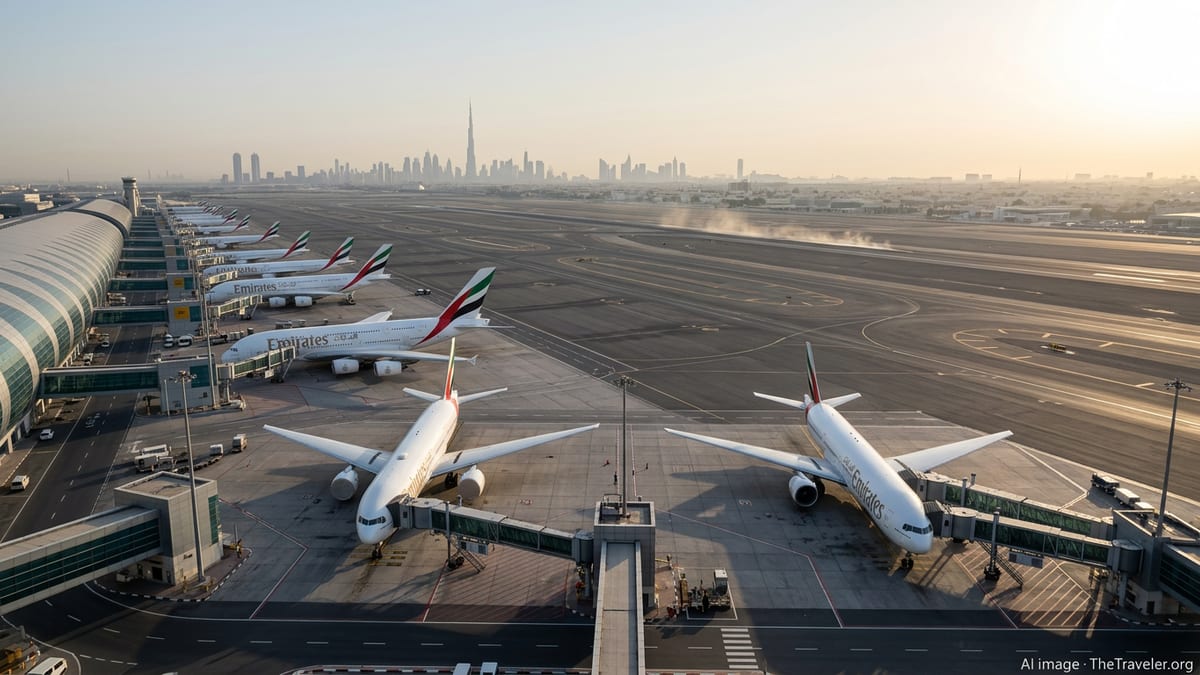
Sharp Drop in Arrivals Hits Gulf Flagship Cities
New forecasts from tourism analysts suggest that international arrivals to the Middle East could fall by 11 to 27 percent in 2026 compared with last year, wiping out several years of post-pandemic growth. That swing comes after projections made at the end of 2025 had anticipated a 13 percent increase in inbound tourism, underscoring how abruptly sentiment has turned since the latest phase of the conflict erupted.
The collapse is particularly painful for Gulf heavyweights that had built their economic diversification strategies around tourism. Dubai welcomed nearly 20 million international visitors in 2025, a record that cemented its status as one of the world’s most visited cities. Riyadh, meanwhile, had been rapidly expanding its visitor base as part of Saudi Arabia’s Vision 2030 agenda, with officials reporting more than 120 million domestic and international visits last year. Both markets are now facing steep declines as airlines cut capacity and foreign ministries advise citizens to leave or avoid the region.
In Qatar, which only recently leveraged the 2022 World Cup to reposition Doha as a global stopover and leisure destination, the closure of Hamad International Airport to most commercial traffic has led to a near standstill in new arrivals. Hoteliers and tour operators across these hubs report occupancy plunging and forward bookings drying up within days of airspace closures and fresh travel advisories.
Analysts at Tourism Economics and other consultancies estimate that the region’s tourism industry could forfeit between 34 billion and 56 billion dollars in visitor spending in 2026 alone. For economies where travel and hospitality accounted for around 10 percent of gross domestic product as recently as 2024, that represents a systemic shock rather than a short-term setback.
Conflict and Airspace Closures Cripple Hub Connectivity
The immediate cause of the tourism downturn is the severe disruption to the air networks that underpin the Gulf’s role as a global crossroads. Following strikes on Iranian targets and retaliatory attacks that hit infrastructure near major Gulf cities, airspace over parts of Iran, Iraq, Kuwait and segments of the United Arab Emirates has become a patchwork of closures and military control. Safety concerns have pushed aviation authorities and airlines to divert or suspend flights across large swathes of the region.
Key hub airports in Dubai, Abu Dhabi and Doha have endured rolling shutdowns or heavy restrictions, triggering thousands of flight cancellations and leaving hundreds of thousands of passengers stranded across Europe, Asia and Africa. Even when terminals reopen, operations remain severely curtailed, with carrier schedules slashed and transit connections unreliable. In some cases, aircraft are forced into wide detours that add hours of flying time and sharply raise fuel and insurance costs.
Saudi Arabia’s main gateways, including Riyadh and Jeddah, have not been spared. National carrier Saudia has suspended a string of regional routes, and foreign airlines have scaled back services into the kingdom following government warnings about deteriorating security conditions. Travel advisories from the United States, United Kingdom and other major outbound markets now urge citizens to leave or avoid the United Arab Emirates, Qatar, Bahrain and Saudi Arabia, creating another powerful deterrent for potential visitors.
Aviation analysts warn that the longer these closures and reroutes persist, the more difficult it will be for the region’s hub-and-spoke model to bounce back. Gulf carriers have previously weathered crises ranging from the pandemic to Red Sea shipping attacks, but executives say the current combination of direct military risk to airports and widespread airspace instability is uniquely challenging.
Economic Toll Reaches Far Beyond Hotels and Airlines
The sharp fall in arrivals is reverberating across sectors that had grown dependent on a steady stream of international visitors. Luxury malls in Dubai report a marked decline in footfall from high-spending tourists from Europe, Russia and Asia, while ride-hailing drivers and small tour operators describe an abrupt loss of income. In Doha and Riyadh, destination management companies that had invested heavily in new desert camps, city tours and cultural experiences for international guests are now shelving expansion plans and cutting staff.
For governments, the timing is particularly damaging. Gulf states have spent heavily in recent years on marquee tourism and entertainment projects, betting that visitor spending would help offset volatile oil revenues. Saudi Arabia’s Vision 2030 blueprint, which depends in part on transforming the kingdom into a global leisure and pilgrimage destination, is facing a sudden revenue gap. One recent estimate suggests that at current spending levels, each month of conflict could cost Saudi Arabia’s tourism sector well over six billion dollars.
Knock-on effects are also being felt in real estate and construction, especially in districts packed with hotels and holiday homes. Developers that rushed to bring new capacity online following the tourism rebound of 2023 to 2025 are now confronting lower occupancy and pressure on room rates. International investors, who had increasingly viewed Gulf tourism assets as a safe play, are reassessing risk as headlines focus on evacuations and missile alerts rather than new attractions and resort openings.
Regional supply chains are under strain as well. With both aviation and maritime routes near the Strait of Hormuz exposed to the conflict, the cost of importing food, construction materials and consumer goods has jumped. That, in turn, raises operating expenses for hotels and restaurants at the very moment revenues are dwindling, forcing managers into difficult decisions on pricing, staffing and service levels.
New Pathways Redirect Global Travel Flows
As Gulf hubs grapple with closures, global airlines are redrawing their route maps. Carriers flying between Europe and Asia are shifting long-haul flights away from the congested skies of the Gulf and northern Middle East, instead routing through Central Asia, the Indian Ocean or Southern Europe. Some European airlines have revived or expanded direct services to destinations such as Bangkok, Singapore and Kuala Lumpur that previously relied heavily on connections via Dubai or Doha.
This re-bundling of global traffic is already boosting alternative gateways. Istanbul, which sits to the northwest of the main conflict zone, is capturing additional transfer traffic as Turkish carriers add capacity. Athens and Rome are seeing more stopover passengers on split itineraries between Europe and Asia. In South and Southeast Asia, airports in Mumbai, Delhi and Colombo are positioning themselves as safer midpoints for travelers wary of routing via the Gulf.
Within the Middle East, secondary destinations perceived as lower risk are emerging as modest beneficiaries. Oman’s Muscat, which has remained open with comparatively fewer disruptions, has become an important overland escape valve for travelers stranded in the United Arab Emirates, and its airport is handling increased traffic from repositioned services. Further west, some leisure travelers who had been weighing Dubai or Doha for winter holidays are instead opting for destinations on the Mediterranean and in North Africa that, while not entirely insulated from regional tensions, are seen as less directly exposed.
Industry experts caution that such shifts could outlast the conflict itself. Once airlines have invested in new routings and passengers have grown comfortable with alternative hubs, the traditional dominance of Gulf super-connectors as the default bridge between continents may no longer be guaranteed.
Uncertain Recovery Timeline for Flagship Tourism Strategies
For tourism boards in Dubai, Doha, Riyadh and other Middle Eastern capitals, the central question is how quickly confidence can be rebuilt once the guns fall silent. Past crises in the region, from the 1990 to 1991 Gulf War to more recent periods of unrest, suggest that recovery in visitor numbers can take several years, especially when safety fears have been magnified by images of missiles near airports and last-minute evacuation flights.
Officials are already discussing incentives to draw back airlines and travelers, including reduced airport charges, marketing partnerships with major carriers and discounted packages with hotel groups. However, analysts point out that such tools have limited impact if foreign ministries maintain strict travel advisories or if insurance premiums for aircraft operating in the region remain elevated.
Longer term, the disruption raises deeper questions about the viability of tourism-led diversification strategies that assume an open skies environment. Policymakers in Saudi Arabia, the United Arab Emirates and Qatar are likely to revisit risk models for flagship projects, including mega-resorts and entertainment districts, and to consider broader insurance and contingency frameworks for both investors and travelers.
For now, most industry players agree that the Middle East’s leading destinations retain powerful fundamentals, from modern infrastructure to globally recognized hospitality brands and a strong events calendar. The challenge will be convincing airlines and visitors that the region can once again offer the stability and reliability that underpinned its rapid rise as a tourism powerhouse.