

More news on this day
Coordinated US and Israeli strikes on Iran and a flurry of airspace closures have injected fresh uncertainty into Middle East travel, even as Saudi Arabia and neighboring destinations ride a powerful tourism boom that shows little sign of slowing.
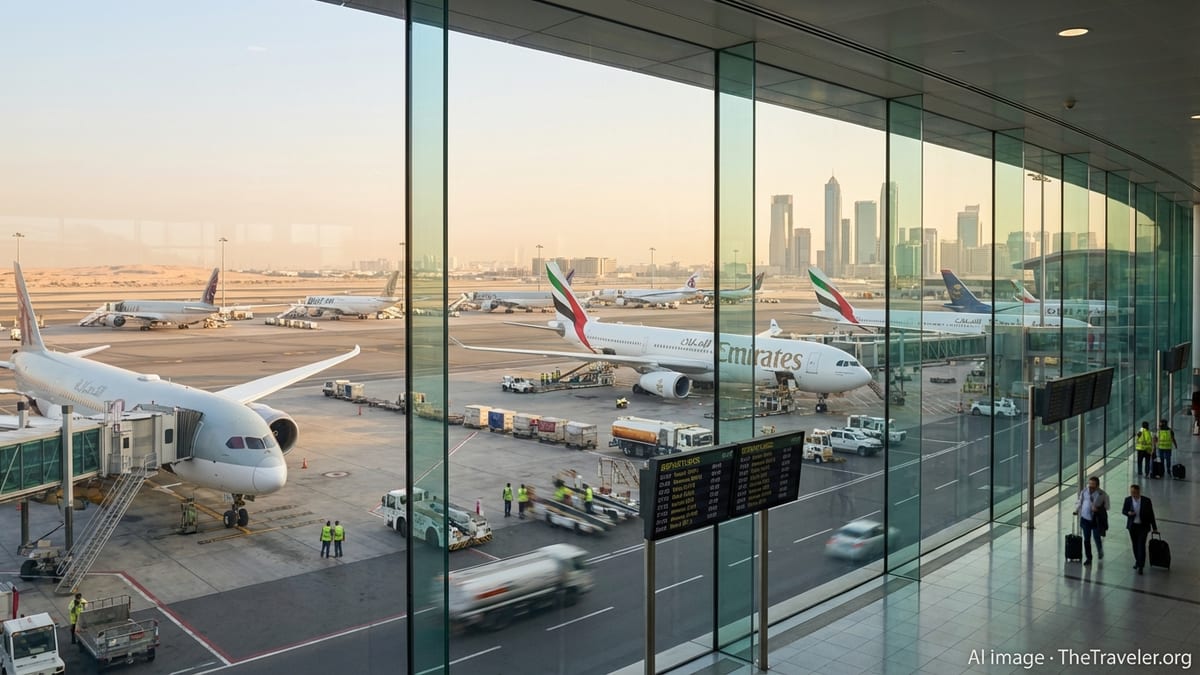
Airspace Closures Test a Region on the Move
Civil aviation across parts of the Middle East entered a fresh period of disruption on February 28, 2026, as Iran temporarily closed its airspace and Israel halted all takeoffs and landings following joint US–Israeli strikes on targets in Tehran and other cities. Notices to airmen signaled a six hour shutdown of Iranian skies, while Israeli authorities froze commercial operations as sirens and emergency protocols were activated nationwide.
The closures come on top of repeated route suspensions and diversions since the wider regional crisis intensified in 2023. Airlines have already adjusted schedules around previous missile strikes, drone attacks and temporary no fly zones, adding time and cost to east west travel corridors that traditionally overfly Iran and its neighbors. For travelers, that has translated into longer journeys, last minute cancellations and mounting uncertainty about itineraries involving the Gulf, Levant and wider Middle East.
Diplomats and travel security agencies are now warning of the potential for rolling disruptions as military operations continue and governments respond with short notice airspace restrictions. Some carriers have indicated that they may route more long haul services over Central Asia or the Mediterranean while the situation evolves, bypassing the most sensitive air corridors even after formal closures are lifted.
Despite the renewed turbulence in the sky, the underlying demand that has powered a historic tourism recovery across the Middle East remains intact for now. Bookings platforms and regional tourism boards report that while some passengers are postponing or rerouting trips that transit Iran and Israel, core leisure flows into Gulf hubs and key holiday destinations have not yet collapsed.
Saudi Arabia Extends Its Lead as Regional Engine
At the heart of the region’s tourism surge is Saudi Arabia, which has transformed itself from a largely closed market for religious pilgrims into one of the fastest growing leisure destinations worldwide. Building on its Vision 2030 reforms and a pipeline of giga projects from the Red Sea to NEOM, the kingdom welcomed a record 30 million international visitors in 2024, with total tourist trips including domestic travel reaching roughly 116 million.
Preliminary market estimates suggest Saudi tourism receipts reached more than 50 billion dollars in 2024 and are forecast to more than double over the coming decade as new coastal resorts, cultural festivals and sports events come online. Even as geopolitical tensions spike, industry analysts say the kingdom’s combination of deep pocketed domestic travelers, regional weekend visitors and a rising share of long haul tourists from Europe and Asia gives it a degree of resilience that many legacy destinations lack.
For now, most Saudi airports and carriers remain operational despite the Iran crisis, and inbound flights from Europe, Asia and the Americas continue, albeit sometimes on more southerly or northerly routings. Travel agents in Riyadh and Jeddah report a wave of customer inquiries about connection times and alternate routings rather than outright cancellations, suggesting that confidence in the kingdom as a destination remains strong.
At the same time, officials are quietly stress testing contingency plans for more prolonged airspace fragmentation. National carrier Saudia and new entrant Riyadh Air are modeling alternative flight paths and schedule adjustments should overflight permissions tighten further, mindful that maintaining reliable access is critical to sustaining investor confidence in Saudi Arabia’s high stakes tourism build out.
Neighbors From Bahrain to Turkey Bank on Resilient Demand
Saudi Arabia is not alone in betting that tourism momentum can withstand the latest security shock. Bahrain has emerged as one of the region’s stand out recovery stories, welcoming more than 15 million visitors in 2025 according to its tourism authority, a record fueled in large part by Saudis driving across the King Fahd Causeway for short breaks, shopping and major events. Saudi nationals are expected to account for close to two thirds of arrivals, underlining how intra Gulf travel has become the backbone of the island kingdom’s visitor economy.
Farther north, Turkey continues to parlay its combination of Mediterranean beaches, historic cities and competitive pricing into robust tourism inflows from Europe, Russia and the Middle East. Airlines and tour operators serving Istanbul, Antalya and Bodrum have diversified their source markets since earlier waves of regional tension, leaving the country less exposed to any single origin market. While carriers may need to adjust flight paths around temporary no fly zones, demand indicators for the coming summer season remain broadly positive.
Qatar and the United Arab Emirates, both home to major global aviation hubs, have repeatedly demonstrated their ability to navigate regional airspace crises. During earlier flare ups, the two states temporarily restricted portions of their skies while ensuring that flagship airlines could continue operating via alternative corridors. With infrastructure honed by mega events such as the FIFA World Cup and Expo 2020, both Doha and Dubai are positioning themselves as safe, well regulated transit and stopover hubs even as tensions simmer.
Jordan and Lebanon, meanwhile, present a more mixed picture. Jordanian tourism has surprised on the upside over the past two years, with revenues climbing and arrivals hitting new highs despite concerns about proximity to the conflict in Gaza. Lebanon, by contrast, continues to struggle with security warnings and political paralysis that deter many Western visitors, though a resilient diaspora and regional weekend travelers still underpin demand for Beirut’s food, nightlife and cultural scene.
Travelers Weigh Risk Against Opportunity
The latest airstrikes and closures are sharpening a dynamic that has defined Middle East travel since 2023: a constant recalibration of risk rather than outright retreat. Governments including the United States and Australia have refreshed their travel advisories in recent days, warning of the possibility of further escalation, missile fire and cyberattacks that could affect aviation systems and critical infrastructure.
Corporate travel managers are scrutinizing itineraries that involve overnight stays in high risk locations or connections through airports deemed more vulnerable to disruption. Some multinationals have temporarily paused nonessential trips to Lebanon, Iraq and parts of the Gulf while allowing essential staff to continue operating in more stable hubs such as Riyadh, Doha, Dubai and Manama. Insurance providers are also reassessing war risk premiums for airlines serving the region.
For leisure travelers, however, the calculus is often more nuanced. Many visitors from Europe and Asia remain willing to holiday in Dubai, the Red Sea coast or coastal Turkey as long as airlines are operating and on the ground conditions appear calm. Package operators are responding by offering more flexible booking policies, including free date changes if flights are rerouted or delayed due to sudden airspace measures.
Travel advisors stress the importance of monitoring official guidance, registering with consular services where available and building in additional buffer time for connections. They also note that some destinations benefit from a perception of being insulated from frontline tensions, even when located within the broader conflict theater, a gap between map and mindset that has long shaped tourism flows in the region.
A Region Pushing Ahead Despite Volatility
Behind the short term turbulence, tourism has become a pillar of economic strategy across the Middle East, a reality that is likely to shape how governments respond to the current crisis. From Saudi Arabia’s giga projects to Bahrain’s events driven calendar and Jordan’s heritage focused campaigns, policymakers have invested heavily in branding the region as a place to visit, not just a source of oil and geopolitical headlines.
Gulf states in particular see tourism as a hedge against commodity cycles and a tool for job creation among youthful populations. This long term imperative helps explain why, even as they impose temporary airspace restrictions for security reasons, they move quickly to restore connectivity and reassure airlines once immediate threats subside. The result is a stop start rhythm of travel disruptions followed by rapid rebounds.
Looking ahead, much will depend on whether the latest round of strikes between Iran, Israel and the United States remains contained or spills into a broader confrontation that threatens key aviation hubs. For now, the picture is one of heightened caution layered over enduring demand, with travelers, airlines and tourism boards all learning to operate in a climate where flight paths can change overnight but the allure of the region’s beaches, deserts and historic cities remains undimmed.
In that sense, Saudi Arabia’s emergence as a tourism powerhouse alongside Bahrain, Turkey, Qatar, the UAE, Jordan, Lebanon and other neighbors tells a larger story. Even as airspace closures and missile alerts dominate the news cycle, the Middle East’s long transition from conflict narrative to travel destination continues, powered by millions of visitors unwilling to let geopolitics write the final word on where they choose to explore.