

More news on this day
Tourism across Cyprus and key Middle Eastern destinations is suffering sharp losses as mass booking cancellations, airline suspensions and disrupted conferences follow the joint United States and Israeli strike on Iran and Tehran’s retaliatory attacks, prompting sweeping airspace closures and fresh travel warnings.
Cyprus Caught in Regional Shockwave of Cancellations
Although outside the immediate conflict zone, Cyprus is being pulled into the turbulence engulfing Middle Eastern travel. Industry sources on the island report a sudden spike in cancellations from core markets in the Gulf, as corporate clients and leisure travelers alike pull back amid concerns over transit via the region’s hubs and the possibility of wider escalation.
Cypriot hoteliers say group reservations linked to meetings and incentive travel from the United Arab Emirates, Saudi Arabia and Kuwait have been postponed or cancelled since the strikes on Iran and subsequent missile barrages across the Gulf. Several DMCs handling multi-country itineraries that combine Cyprus with Dubai or Doha report that entire programs are now “on hold” until airlines clarify their schedules and corporate travel departments reassess risk.
The island’s dependence on Middle Eastern air connectivity is amplifying the shock. With major Gulf carriers curtailing services and key hub airports effectively shuttered, passengers who would normally route into Larnaca or Paphos via Dubai, Doha or Abu Dhabi are struggling to find alternatives. Travel advisors say even clients willing to continue with their Cyprus plans are facing longer routings, higher fares and last-minute schedule changes.
Travel trade representatives in Nicosia warn that if the current disruption extends beyond the coming weeks, 2026 first-quarter arrivals from the Middle East could fall sharply compared with last year, wiping out much of the post-pandemic recovery Cyprus has enjoyed from high-spend Gulf visitors.
Gulf Hubs Shut Down as Airlines Suspend Operations
The most immediate blow to regional tourism has come from sweeping airspace closures and flight suspensions following the US‑Israel operation and Iran’s retaliation. Authorities in Iran, Israel, Iraq, Jordan, Qatar, Bahrain, Kuwait and the United Arab Emirates have announced at least partial closures of their skies, forcing airlines to cancel or divert thousands of flights and pushing global aviation networks into disarray.
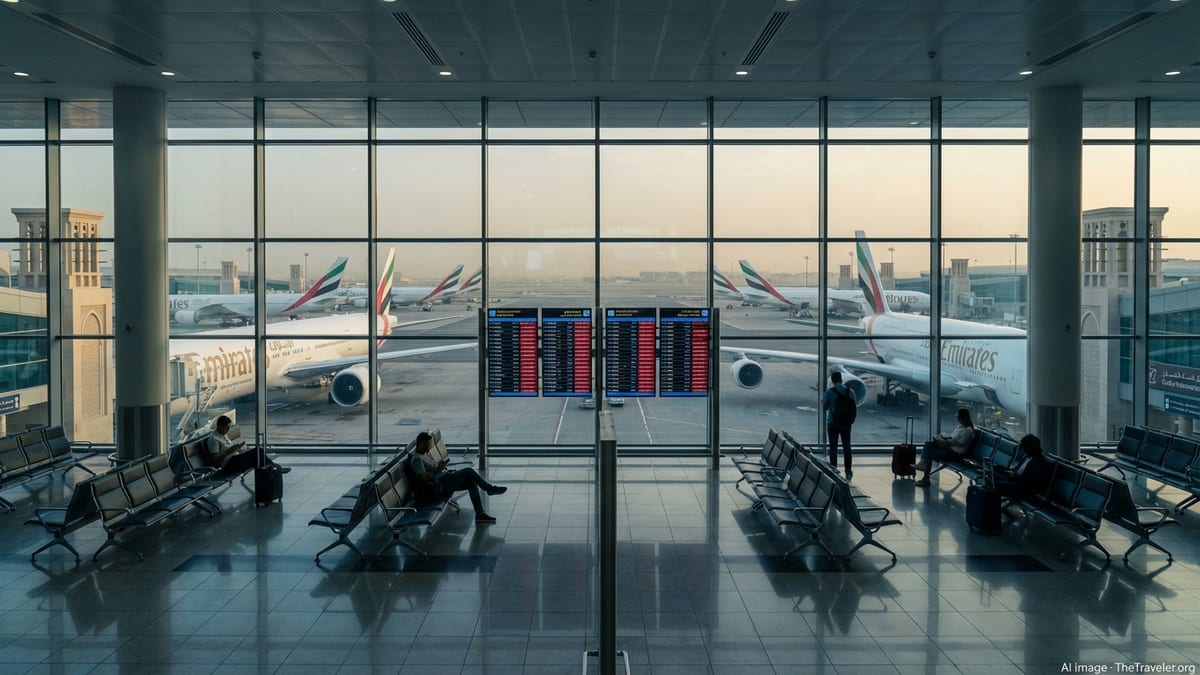
Key hub airports including Dubai International, Abu Dhabi’s Zayed International and Doha’s Hamad International have seen large portions of their schedules wiped out as carriers suspend operations or await safety clearances. Emirates, Etihad and Qatar Airways have all halted or severely reduced flights to and from their bases, while low-cost operators such as flydubai and Air Arabia have also pulled services on affected routes.
Regionally, Gulf states such as Saudi Arabia, Bahrain, Kuwait and Oman are experiencing severe connectivity losses as international airlines, from European network carriers to Asian and Indian operators, cancel direct services or avoid routes that traverse now-closed airspace. Aviation analytics firms estimate that thousands of flights to and from the Middle East have been canceled or delayed since the strikes, with hundreds of thousands of passengers stranded or rerouted via longer, more costly paths.
For tourism-dependent economies that rely on seamless air links through these hubs, the knock-on effect is immediate: visitors are postponing trips, tour operators are reworking itineraries, and travel insurance queries are surging as travelers reassess plans for spring and early summer.
Tourism Boards and Hotels Brace for Revenue Hit
Across the UAE, Saudi Arabia, Bahrain, Jordan, Kuwait and Oman, tourism boards and hotel groups are moving from growth planning to crisis management as forward bookings weaken. Destinations that have spent the last several years positioning themselves as safe, convenient hubs for both leisure and business travel now face a wave of nervous inquiries and refund requests.
In the Gulf’s major cities, large city hotels that depend heavily on airline crews, transit passengers and short-stay corporate visitors report a sudden drop in occupancy as carriers pare back schedules. Beach resorts in the Emirates and Oman, which had been approaching high-season occupancy, are grappling with same-week cancellations from European and Asian markets now reluctant to travel through the region.
Jordan and Bahrain, both of which have cultivated niche tourism segments ranging from history and wellness to Formula 1 and luxury shopping, are also seeing itineraries unravel. Local agents say multi-stop tours combining Petra, the Dead Sea, Manama and Gulf city breaks are being rebooked into Mediterranean or North African alternatives, with some clients opting for domestic holidays instead of international travel entirely.
Tourism officials publicly stress that visitor attractions and hotels remain open and that security measures have been heightened. Nonetheless, the combination of airspace closures, images of missile strikes and evolving government advisories in source markets is eroding traveler confidence at the start of what many destinations had hoped would be a strong year.
MICE and Corporate Travel Plans Upended
The meetings, incentives, conferences and exhibitions segment, a major revenue driver for both Cyprus and Gulf destinations, is among the hardest hit. Organizers of regional conferences, trade fairs and incentive trips report widespread postponements as companies implement precautionary travel freezes for staff bound for the Middle East or connecting via its hubs.
In Nicosia and Limassol, hotels that had secured regional banking, technology and pharmaceutical meetings tied to Gulf corporate networks say several events scheduled for March and April are being pushed into late 2026 or converted into hybrid formats. Delegates who would have traveled via Dubai or Doha are now either joining remotely or waiting for risk assessments to be updated before rebooking.
Major exhibition centres in Dubai, Riyadh and Doha, which have built their calendars around large international trade shows, are renegotiating dates with organizers or preparing for significantly lower international attendance. Global corporations with headquarters in Europe and North America are instructing regional teams to avoid non-essential travel, forcing last-minute program changes, speaker cancellations and reduced sponsorship activity.
Specialist MICE agencies say the uncertainty over airspace access and flight reliability is particularly damaging. Unlike leisure trips, which can be rebooked individually, large-scale corporate events involve complex logistics, long lead times and sizeable financial commitments, making many planners reluctant to proceed until conditions stabilize.
Advisories, Risk Perception and the Road Ahead
As the situation evolves, travel advisories from the United States, United Kingdom and other key source markets are playing a central role in shaping demand. Governments have urged citizens to avoid non-essential travel to several countries in the region and to exercise heightened caution elsewhere, with particular emphasis on transiting through major Gulf hubs.
Tour operators and travel advisors say the psychological impact of official warnings and dramatic images from Iran and the Gulf is magnifying the practical disruption caused by flight suspensions. Even destinations geographically removed from direct military activity, such as Cyprus, are being affected by a generalized perception of regional instability that is difficult to counter in the short term.
Industry analysts note that tourism in the Middle East has shown resilience to past crises, often rebounding quickly once security conditions improve and air connectivity is restored. However, this latest shock comes on top of existing pressures, including higher operating costs, constrained routings due to other geopolitical conflicts and lingering economic uncertainty in key source markets.
For now, tourism stakeholders across Cyprus and the wider region are focused on supporting stranded travelers, honoring flexible rebooking and refund policies, and maintaining a visible presence in key markets. Much will depend on how long airspace restrictions and heightened tensions persist, and how quickly confidence can be rebuilt among leisure tourists, corporate travelers and event planners considering the Middle East for their 2026 and 2027 calendars.