

More news on this day
The sudden eruption of open warfare between the United States, Israel and Iran is rapidly draining the life out of Middle East tourism, as mass flight cancellations, sealed airspace and crippled cruise itineraries turn one of the world’s fastest growing travel regions into a patchwork of no‑go zones and emergency corridors.
Get the latest news straight to your inbox!
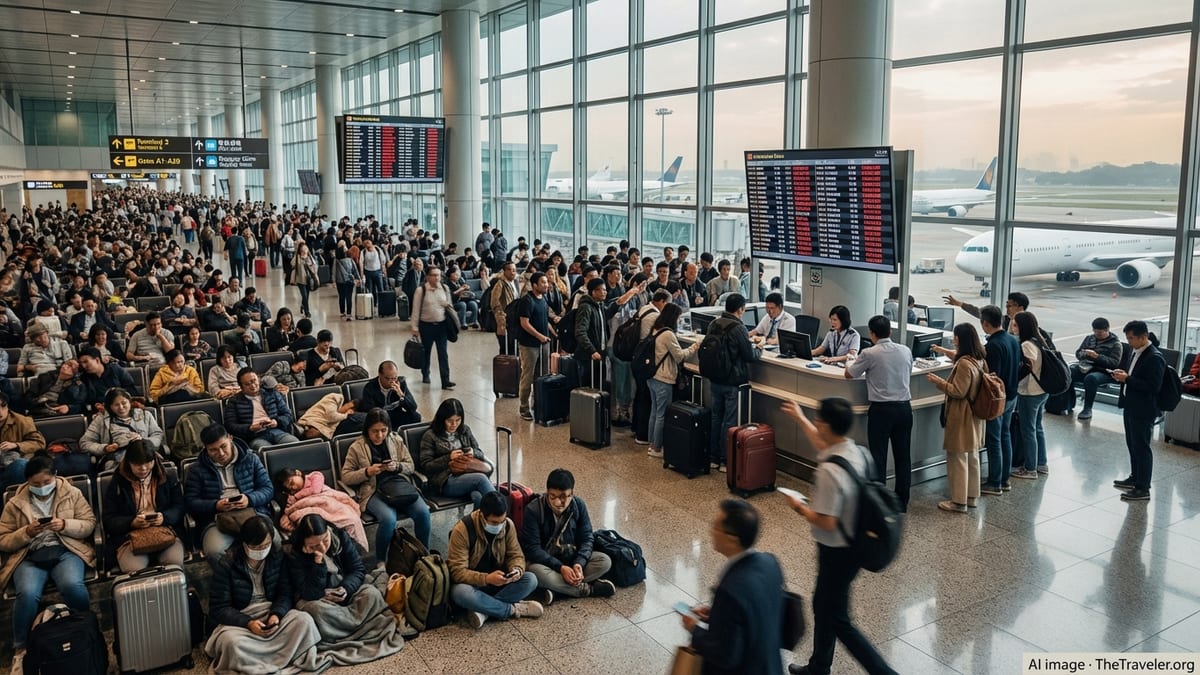
Airspace Closures Push Regional Aviation to Breaking Point
Since late February 2026, large parts of Middle Eastern airspace have been restricted or closed to civilian traffic, forcing airlines to cancel or reroute tens of thousands of flights. Publicly available aviation tracking and advisory notices indicate that Iran, Iraq, Israel, Jordan, Kuwait, Qatar, Bahrain and Syria have all implemented full or near full suspensions of normal commercial operations, while the United Arab Emirates and Saudi Arabia have imposed partial curbs.
Analyses reported by international media and consultancy briefings suggest that more than half of all scheduled flights to and from the Middle East since the war began have been scrapped, with some estimates placing total cancellations above 50,000 services in less than a month. Gulf hubs that once served as seamless bridges between Europe, Asia and Africa now face rolling disruption as long haul carriers detour around conflict zones, extending flight times and sharply increasing fuel costs.
Travel industry research from Tourism Economics and other forecasting groups indicates that international visitor arrivals to the wider Middle East could fall by 11 to 27 percent in 2026, reversing a previously expected double digit expansion. The combination of grounded aircraft, nervous travelers and strained airline finances is described in several industry assessments as the sector’s most severe shock since the Covid 19 pandemic.
For passengers, the practical consequences are immediate and painful. Travelers on routes touching Dubai, Doha, Abu Dhabi, Istanbul and Jeddah face abrupt cancellations or lengthy diversions via Europe, Central Asia or East Africa. Rebooking bottlenecks and limited spare capacity mean many are stranded or forced into complex multi stop journeys, with carriers struggling to provide clear timelines amid a fast moving security environment.
Tourism Revenues Vanish as Conflict Ripples Across the Region
Before the current crisis, Middle Eastern destinations were projecting record tourism receipts in 2026, driven by aggressive marketing campaigns, major events and new hospitality investments. That trajectory has been abruptly reversed. Recent modeling by Tourism Economics and other research groups, cited in international business coverage, projects that the conflict could erase between 34 billion and 56 billion dollars in regional tourism revenue this year, depending on how long hostilities and airspace restrictions persist.
Separate assessments focused on day to day losses estimate that the Middle East travel economy is shedding around 600 million in visitor spending every 24 hours. This figure reflects not only the collapse in leisure travel to frontline countries such as Iran and Israel, but also a broader pullback affecting Gulf states, Egypt, Jordan, Turkey and even parts of the eastern Mediterranean that rely on Middle Eastern air corridors and feeder markets.
Flagship tourism strategies, including Saudi Arabia’s Vision 2030 initiatives and high profile destination development in the UAE and Qatar, are now stalled or operating far below capacity. Hotel operators report sharp drops in occupancy, conferences and large events are being postponed or moved, and cultural attractions that had just begun to recover from earlier regional tensions are once again facing empty visitor halls.
Analysts warn that beyond the immediate revenue shock, there is a growing risk of structural damage to the Middle East’s position in global travel networks. Extended insecurity could prompt airlines and tour operators to build more permanent alternatives that bypass traditional Gulf and Levant hubs, potentially diluting the region’s role as a crossroads even after the guns fall silent.
Cruise Lines Confront Bottlenecks in the Gulf and Red Sea
The war’s impact is not limited to the skies. The effective closure of the Strait of Hormuz to routine commercial shipping, alongside heightened risk perceptions in the Gulf of Oman and northern Arabian Sea, has plunged the region’s winter cruise season into disarray. Specialist maritime and cruise industry outlets report that at least six large cruise ships remain stuck in Gulf ports, unable to execute planned repositioning voyages toward the Mediterranean.
Major operators such as MSC Cruises and TUI Cruises have cancelled remaining Arabian Gulf sailings for the season, according to published coverage, while several spring repositioning cruises that were due to move vessels to Europe now face uncertain alternatives. Rerouting around southern Africa would add weeks and significant fuel costs, undermining schedules and profitability at the start of the lucrative summer season.
Travel advisories from security consultancies note that while the Strait of Hormuz has not been formally declared closed in legal terms, a mix of military deployments, insurance restrictions and company level risk policies has sharply reduced traffic. As a result, cruise brands are concentrating on evacuating guests from embarkation ports using limited charter and commercial flight options, a process that has proven slow amid the broader aviation disruption.
The turmoil extends into the Red Sea and eastern Mediterranean, where fears of potential spillover have prompted itinerary changes for ships homeporting in Egypt, Jordan and Turkey. Port calls at Israeli destinations, which had been slowly rebuilding after earlier conflicts, have largely disappeared from near term schedules, further cutting passenger flows to local tourism businesses.
Global Travel Networks Brace for a Long Crisis
For airlines and tourism boards outside the immediate conflict zone, the Middle East crisis is emerging as a global shock to connectivity and pricing. With Russian airspace still restricted for many Western carriers, the loss or severe curtailment of key Middle Eastern corridors has removed another major set of options for Europe Asia travel. Aviation analysts quoted in international media describe a cascading effect on fares, with long haul ticket prices to parts of Asia and Africa already moving higher as routes lengthen and capacity tightens.
Travel demand data cited by sector research firms indicates that booking inquiries to Middle Eastern destinations have dropped sharply across North America, Europe and Asia, even for countries not directly involved in hostilities. Outbound tourism from the region is also affected, as residents in Gulf and Levant states struggle to secure flights out or face sharply higher costs.
Some destinations beyond the conflict zone appear to be benefiting in the short term. Southern European, Indian Ocean and Southeast Asian resorts are being promoted as alternatives for travelers who had originally planned Gulf city breaks or pilgrimages and cultural trips in Iran and the Levant. However, industry forecasters caution that any gains in those markets may be offset by a wider softening in global demand if economic uncertainty and higher oil prices continue.
The corporate travel segment is similarly unsettled. Multinational companies are revising duty of care policies, shifting meetings and incentive trips away from the region, and tightening travel approval processes worldwide. Insurance briefings suggest that war and terrorism exclusions are being examined more closely, with some travelers discovering that standard policies offer limited recourse for disruptions directly tied to the conflict.
What Comes Next for a Shaken Tourism Heartland
Looking ahead from early April 2026, most publicly available forecasts frame several potential paths, none of them painless for Middle East tourism. In a relatively optimistic scenario where a ceasefire takes hold within weeks and airspace gradually reopens, analysts still expect double digit declines in arrivals this year and a slow, confidence driven recovery extending into 2027.
In more pessimistic models, where hostilities continue or flare intermittently and the Strait of Hormuz remains heavily constrained, the region could lose tens of millions of visitors and tens of billions of dollars in cumulative tourism spending. Under such conditions, research from firms like Oxford Economics suggests that network changes made by airlines, cruise companies and tour operators might become semi permanent, locking in reduced capacity and fewer direct connections.
Governments and tourism boards are exploring ways to limit the damage, including targeted support for airlines and hospitality businesses, domestic tourism campaigns and enhanced security communication. Some states are also looking at diversifying source markets and developing niche segments such as medical, sports or religious tourism that may prove more resilient once basic safety concerns are addressed.
For now, however, the immediate reality is one of suspended growth and pervasive uncertainty. As long as missiles continue to fly and key air and sea corridors remain compromised, Middle East tourism appears less on the brink of a temporary downturn than caught in an open ended crisis, with the eventual scale of the collapse hinging on decisions made far from hotel lobbies and departure gates.