

More news on this day
As air raid sirens echo from Tel Aviv to Dubai and airspace closures ripple across the Gulf, the experience of traveling in the Middle East in 2026 is being rewritten in real time, forcing visitors, airlines and governments to redefine what it means to move safely through one of the world’s most important tourism and transit regions.
War, Sirens and the New Normal for Travelers
The joint United States and Israeli campaign against Iran that began on February 28 has turned the broader Middle East into a live backdrop for international tourism. Air raid alerts, missile interceptions and rolling security updates have become part of the soundscape for both residents and visitors, particularly in Israel and Gulf aviation hubs. Travelers who once associated the region with fast connections and luxury city stays are now weighing the risk of sudden sirens and shelter orders as seriously as they would weather disruptions.
In Israel, where siren systems and reinforced safe rooms have long been part of daily life, current guidance to tourists emphasizes routine and readiness. Official emergency briefings tell visitors exactly what to do if a siren sounds, whether they are in a hotel, on a bus or walking through a historic district. For many first-time travelers, the idea of counting seconds to reach a shelter, or learning the radius of a blast-safe stairwell in a boutique hotel, is now as essential as memorizing a metro map.
The psychological impact is spreading beyond recognized front lines. Travelers in Gulf cities describe being jolted awake at night by alerts and hearing the distant thud of interceptions, even in neighborhoods marketed as insulated from regional tensions. The notion that a Middle East holiday exists in a bubble, far from geopolitical fault lines, is rapidly eroding.
Gulf Hubs Go Quiet as Airspace Closes
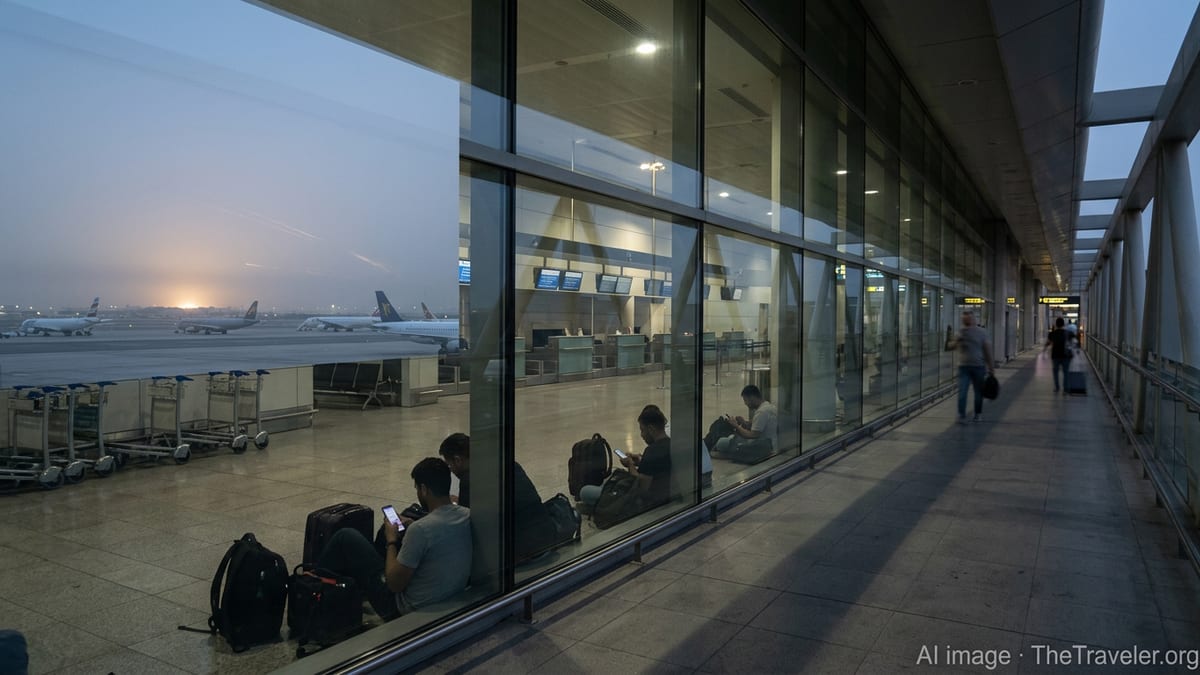
Nowhere are the travel consequences more visible than in the skies. Within hours of the first strikes on Iran, airspace across key Gulf states was shut or heavily restricted, forcing the closure of major hubs in Dubai, Abu Dhabi and Doha and cancelling thousands of flights. Airlines that had built their brands around seamless long-haul connections between Europe, Asia and Africa suddenly found their flagship terminals reduced to holding areas for stranded passengers and crew.
Authorities in the United Arab Emirates, Qatar and neighboring states have since begun cautiously reopening controlled corridors, but normal commercial schedules remain a distant prospect. Evacuation flights, limited emergency routes and ad hoc charters are taking precedence over tourism and business itineraries. As one evacuation phase begins, another wave of cancellations often follows when new missile launches or attempted strikes are reported near airports and energy facilities.
Hotels in Gulf capitals are simultaneously full and empty. They are full of displaced travelers waiting for onward connections and airline staff on extended layovers, but empty of the high-spending leisure visitors and conference delegates that powered record tourism revenues only a year earlier. Front-desk staff who once fielded questions about desert safaris and fine dining are spending their shifts explaining airspace updates, shelter procedures and how to reach consular hotlines.
Israel’s Tourism Sector Balances Routine and Risk
Inside Israel, the tension is more nuanced. While some foreign ministries now advise against all but essential travel, parts of the country continue to function with an air of practiced resilience. Domestic tourism in relatively quieter areas is still moving, religious groups are arriving on pre-booked pilgrimages, and tour operators are marketing 2026 packages that build emergency briefings and security coordination into their itineraries.
Government agencies and private operators alike stress that sirens, interceptions and security cordons, while alarming, are designed to protect. Visitors are urged to treat safety instructions as a normal part of travel preparation, not as evidence of imminent catastrophe. Hotels are mapping out safe rooms at check-in, guides are adding detours to avoid sensitive zones, and transport providers are rehearsing what happens if a siren sounds mid-journey.
Yet even in cities that remain open to tourism, perception is shifting. For many travelers, particularly from North America and Europe, the idea of hearing a missile warning or seeing interceptor trails over a beach resort is a line they are not prepared to cross. As security alerts from foreign embassies multiply, bookings for alternative destinations in Europe, North Africa and Asia are rising, reflecting a new calculus of acceptable risk.
Travel Advisories and a Patchwork of Risk
The travel map of the Middle East in 2026 is increasingly defined by advisories rather than borders. The United States, Australia, South Africa and several European countries have issued high-level warnings covering Israel, the West Bank and Gaza, as well as much of the Gulf, including the United Arab Emirates, Saudi Arabia, Qatar, Bahrain and Kuwait. These notices do not just discourage leisure travel; they also have practical implications for insurance coverage, corporate duty-of-care policies and the viability of tour operations.
For travelers still choosing to go, this has created a patchwork of obligations and exclusions. Some insurers now explicitly rule out claims related to missile or drone strikes in named countries, while others insist on travelers registering with embassies and following official SMS alert systems. Travel companies are reviewing their own thresholds, with some halting operations entirely in high-risk areas and others continuing to run reduced programs under enhanced security protocols.
Regional tourism boards, which spent the past decade branding Gulf and Eastern Mediterranean cities as havens of stability, are having to pivot their messaging. Instead of glossy campaigns centered purely on luxury and entertainment, officials are foregrounding crisis-management capabilities, integrated air defense systems and rapid recovery plans, arguing that robust security infrastructure can coexist with tourism. It is an unfamiliar sales pitch, but one that reflects the realities on the ground.
How Travelers Are Rethinking Safety
All of this is reshaping how travelers define a “safe” trip. For some, safety in 2026 is no longer simply the absence of conflict, but the presence of clear contingency plans. They are looking at how quickly airports can reopen after strikes, how reliable air defense systems have been, and whether local authorities communicate clearly in multiple languages when sirens sound. The capacity of hotels to shelter guests, and of tour operators to adjust routes on the fly, is becoming part of destination research.
Others are voting with their feet, diverting planned holidays in Israel or the Gulf toward alternative destinations in southern Europe, North Africa or Southeast Asia. Data from travel intelligence firms already show a shift in demand away from Gulf cities that, until recently, ranked among the world’s top growth destinations for international travel. For these travelers, even the possibility of hearing an air raid siren during a vacation is enough to tip the balance.
What emerges is a more complex, conditional relationship between travelers and the Middle East. The region’s tourism economies have demonstrated their ability to rebound from shocks in the past, from pandemics to previous rounds of conflict. But as sirens, missile interceptions and rolling advisories become part of the lived experience of visitors as well as residents, the question of what it means to travel “safely” in Israel, the Gulf and beyond is being renegotiated, one itinerary at a time.