

More news on this day
The Middle East’s travel boom has gone into reverse, with fresh conflict involving Iran, the United States and Israel triggering what analysts describe as a systemic collapse in regional tourism and wiping out an estimated 600 million dollars in visitor spending every single day.
Get the latest news straight to your inbox!
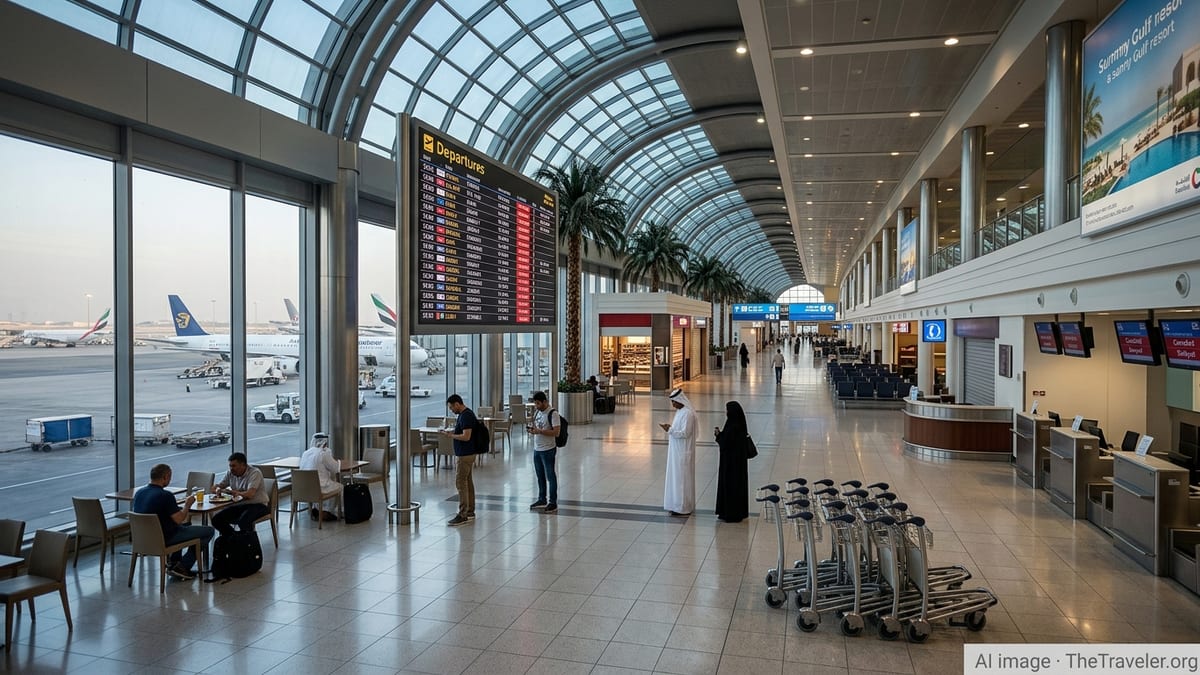
War Jitters Turn Record Tourism Outlook Into Sudden Freefall
Only months ago, the Middle East was being held up as one of global tourism’s most dynamic growth regions, buoyed by record 2025 arrivals and vast investment in airports, resorts and cultural attractions. Publicly available data from the World Travel & Tourism Council indicated that international visitors were expected to spend around 207 billion dollars across the region in 2026, reinforcing tourism’s role as a major pillar of Gulf and Levant economies.
That outlook has been overtaken by events. New hostilities involving Iran, Israel and the United States, which escalated in late February 2026, have triggered airspace closures, missile strikes and heightened security alerts across key corridors between Europe, Asia and Africa. Industry modelling cited in recent coverage now suggests the region is losing roughly 600 million dollars in tourism receipts every day as bookings are cancelled, trips postponed and airlines rewrite their schedules around the conflict zone.
Tourism analysts note that this reversal comes just as the global industry had recovered from the pandemic-era downturn and energy price shocks. With many Middle Eastern destinations relying heavily on long-haul air connectivity and transit traffic, even a short-lived war risk can have an outsized impact on hotel occupancy, tour operations and ancillary sectors from restaurants to retail.
The timing is particularly damaging for ambitious tourism diversification programmes in countries such as Saudi Arabia, the United Arab Emirates and Qatar, where multi-billion-dollar “vision” strategies had been built on rapid growth in international arrivals through 2030. Those plans now face a near-term stress test as travellers look for alternatives perceived as safer and more predictable.
Airspace Closures and Flight Cancellations Paralyse Key Hubs
The most immediate impact of the Iran-centred conflict has been on aviation. Reports from industry trackers and airline statements show that waves of airspace closures and reroutings have disrupted routes crossing Iranian, Iraqi and eastern Mediterranean skies, some of the world’s busiest corridors for connecting Europe with the Gulf, South Asia and East Africa.
In recent weeks, multiple carriers have temporarily suspended flights to destinations including Tehran, Tel Aviv and Damascus, while others have re-routed services to avoid Iranian and neighboring airspace altogether. Coverage from outlets such as Al Jazeera and business media has highlighted how sudden missile exchanges and strikes prompted brief shutdowns of airspace over parts of Iran, Israel and the Gulf, forcing diversions, missed connections and lengthy delays.
Major hubs that normally pride themselves on seamless connectivity, including Dubai, Abu Dhabi, Doha and Bahrain, have been forced to juggle rolling cancellations and schedule changes. Aviation data cited in recent reports indicates tens of thousands of flights disrupted since the latest escalation, with some airlines concentrating resources on core markets and suspending thinner regional routes until conditions stabilize.
For travellers, these shifts translate into higher fares, longer routes and persistent uncertainty. Insurers and travel advisers are warning that many policies exclude war-related disruption, leaving passengers dependent on airline goodwill and flexible booking policies. For the hubs themselves, reduced transfer traffic means lower spending at airports, empty hotel rooms and declining demand for associated services from taxis to tour guides.
Regional Tourism Hotspots See Bookings Vanish Overnight
The conflict’s shockwaves are being felt far beyond the immediate battlefront. Destinations that had built their brands on stability and accessibility, such as the United Arab Emirates, Oman, Qatar, Jordan and parts of Turkey and Egypt, are now confronting abrupt drops in both leisure and business travel.
Recent industry commentary describes mass cancellations of hotel and short-term rental bookings, particularly in city break and winter-sun favourites across the Gulf. In Dubai alone, coverage referencing international trade body analysis has pointed to tens of thousands of reservations being scrapped within days of the first strikes, with conference organisers and incentive groups among the first to pull back.
Kuwait, Bahrain and coastal Saudi destinations are also reported to be facing sharp declines in inbound demand as tour operators pause group departures and large cruise lines adjust itineraries away from ports seen as vulnerable to further escalation. Travel sellers in source markets from Europe to Asia are advising clients to review government travel advisories closely and, in many cases, are steering them toward alternative destinations in the Mediterranean, Indian Ocean or Southeast Asia.
Even countries that remain technically open and operational are grappling with the perception of regional instability. Tourism boards that only recently ramped up campaigns promoting culture, heritage and nature experiences now find themselves shifting messaging toward reassurance, flexibility and shorter booking windows, while monitoring how long-haul markets respond to evolving headlines.
Economic Shock Threatens Jobs and Long-Term Investment
The daily figure of 600 million dollars in lost tourism spending is more than a headline-grabbing statistic. For economies where travel and tourism account for a double-digit share of gross domestic product, prolonged disruption could translate into job losses, delayed projects and weakened investor confidence.
Analysts at research firms such as Oxford Economics and Tourism Economics, cited in recent trade and business media, have moved their regional outlook from a growth scenario to what they describe as a crisis footing. The concern is that if conflict persists, operators ranging from family-run guesthouses to international hotel chains will face cashflow pressures, particularly in markets where occupancy had only recently climbed back above pre-pandemic levels.
Large-scale destination developments are also at risk. Flagship giga-projects on Saudi Arabia’s Red Sea coast, new resort corridors in Oman, and cultural restoration initiatives in Iraq and Jordan all depend on a steady pipeline of international visitors. Developers now have to reassess phasing, marketing and financing assumptions in light of a potentially slower demand ramp-up.
There are wider spillovers beyond tourism. Conference organisers, events companies and airlines that once relied on Middle Eastern hubs as neutral, well-connected meeting points are exploring alternative locations. This rebalancing may benefit competitors in Southern Europe or South and Southeast Asia, but it erodes the Middle East’s hard-won position at the centre of global travel networks.
Resilience Plans, Domestic Travel and the Uncertain Road Ahead
Despite the severity of the shock, there are early signs that governments and private-sector players are moving to cushion the blow. Publicly available reports suggest that tourism authorities across the Gulf and wider region are revisiting crisis playbooks developed during the pandemic period, including targeted marketing for nearby source markets, incentives for airlines to restore routes and support measures for small tourism businesses.
Some destinations are placing greater emphasis on domestic and regional travel to help keep hotels and attractions operating while long-haul demand remains fragile. This includes campaigns encouraging residents and expatriates to explore lesser-known coastal and desert regions, as well as discounted offers for staycations in major cities whose usual influx of international visitors has thinned.
Industry observers caution, however, that confidence-sensitive sectors such as tourism can recover only as quickly as security conditions and air connectivity allow. Even if ceasefires hold and airspace restrictions ease, it may take months for travellers to fully return, especially to destinations closest to Iranian and Israeli territory. Travel companies are therefore advising flexible booking policies, robust crisis communication strategies and close monitoring of route economics.
For now, the daily losses underline how exposed the Middle East’s tourism renaissance is to geopolitical risk. The same geography that enabled the region to become a global crossroads has made it acutely vulnerable to conflict. Whether 2026 ultimately becomes a temporary setback or a turning point for Middle Eastern travel ambitions will depend on how swiftly stability returns and how effectively destinations can reassure a nervous travelling public.