

More news on this day
Coordinated United States and Israeli strikes on Iran have plunged the Middle East into a fast-moving aviation and trade crisis, as governments shut airspace, airlines cancel or reroute hundreds of flights, and shippers brace for wider disruption across one of the world’s most important travel and cargo corridors.
Airspace Across the Gulf and Levant Falls Quiet
On February 28, 2026, Iran, Iraq, Kuwait, Qatar, the United Arab Emirates and Israel moved to close or heavily restrict their airspace following the first wave of US-Israeli strikes on Iranian territory and Tehran’s rapid missile and drone retaliation. Flight tracking data showed skies that are usually thick with east–west traffic suddenly almost empty as civilian aircraft diverted around the region.
Iran’s Civil Aviation Organisation issued a notice effectively suspending most civilian overflights, while Israel barred public access to its skies and placed the country under heightened emergency measures. Authorities in several Gulf states followed with temporary suspensions or tight restrictions, creating a near-continuous no-fly belt from the eastern Mediterranean to the Strait of Hormuz.
The closures have immediate knock-on effects for global aviation. With Russian and Ukrainian airspace already closed to many carriers, the Middle East had become a critical bridge between Europe and Asia. The loss of these routes forces airlines to adopt longer, more southerly paths that increase fuel burn, crew hours and operational strain.
Regional aviation regulators stress the measures are precautionary, citing the need to protect aircraft, crews and civilians while the security situation remains volatile. They have given no clear timeline for full reopening, describing the crisis as fluid and subject to military developments.
Airlines Cancel, Reroute and Ground Aircraft
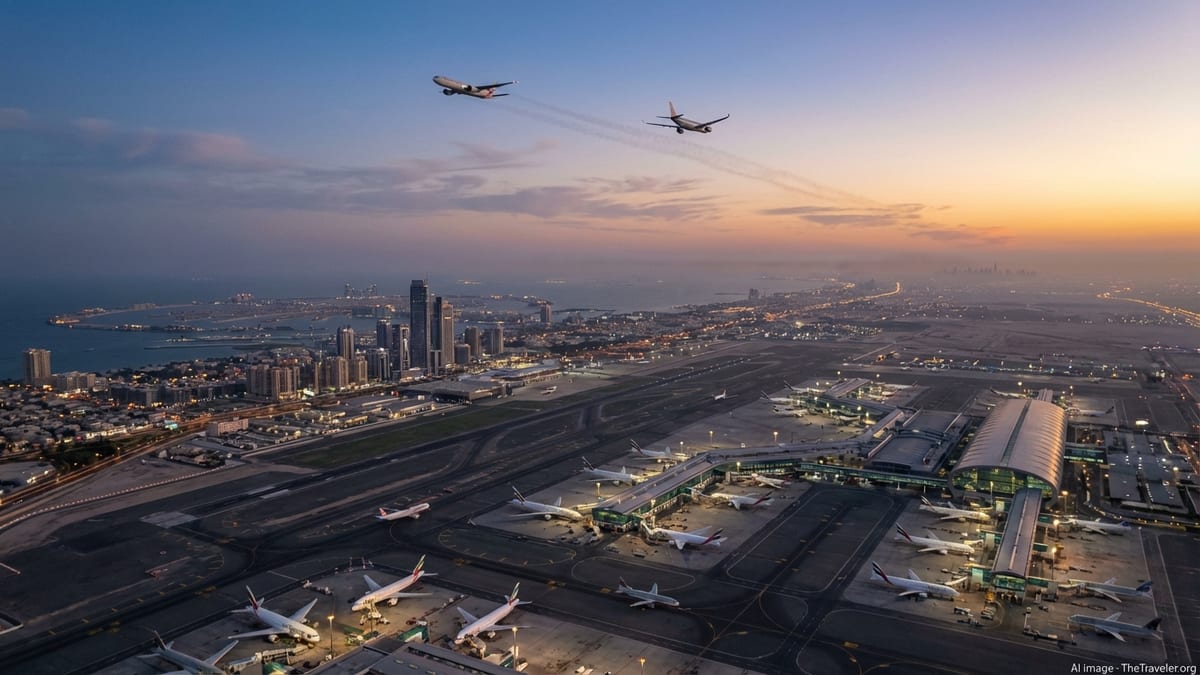
Major Gulf carriers, including Emirates, flydubai and Qatar Airways, have cancelled or suspended wide swaths of their schedules, particularly services touching Iran, Iraq and Israel, along with many flights that would typically overfly their airspace. Dubai International and Al Maktoum International, two of the world’s busiest hubs, temporarily halted operations as aircraft were grounded and terminals filled with stranded passengers.
European and Asian airlines are also reacting defensively. KLM has already announced the suspension of its Amsterdam–Tel Aviv route, while other European carriers, from legacy names such as Lufthansa and Air France to low-cost operators, are cancelling flights into the region and diverting overflights to avoid conflict zones. Some Asian and Indian carriers have indicated they will bypass the Middle East entirely for now, adding hours to journeys between Europe and South Asia.
The European Union Aviation Safety Agency has advised airlines to avoid Iranian airspace at least through late March, cementing a shift in traffic patterns that could last well beyond the initial strikes. For travelers, that means longer flight times, technical fuel stops in out-of-the-way airports, missed connections and a growing backlog of rebookings as airlines struggle to restore even partial schedules.
Industry analysts warn that if the disruptions persist for weeks rather than days, airlines with heavy exposure to Middle Eastern hubs could face material financial hits. The region is home to some of the most profitable long-haul routes in the world, and sudden suspensions risk stranding aircraft and crew far from their usual operating bases.
Trade Routes and Tourism Brace for Economic Shock
The aviation turmoil coincides with mounting concern over maritime security in the Persian Gulf and the Strait of Hormuz, through which a significant share of the world’s oil and container traffic passes. Past incidents, including Iran’s 2024 seizure of a commercial container vessel linked to Israeli interests, have underscored how quickly shipping lanes can become entangled in geopolitical confrontation.
Although ports and sea lanes remain open for now, insurers are already reassessing risk premiums for vessels transiting near Iranian waters or calling at Israeli ports. Higher war-risk surcharges could raise costs for energy and consumer goods, while any sign of missile or drone activity near shipping lanes would likely prompt rerouting around the Arabian Peninsula, adding days and expense to key Asia–Europe services.
The travel and tourism sector, a vital pillar for Gulf economies and key destinations such as Dubai, Doha and Abu Dhabi, is also under pressure. Hotel operators report rising cancellations from leisure and business travelers wary of transiting through regional hubs, even in countries not directly involved in the fighting. Conference organizers and tour operators are drawing up contingency plans or postponing events scheduled for the coming months.
Economists note that while the region has weathered past crises, the overlap of airspace shutdowns, potential threats to shipping and sustained military operations could deliver a broader shock to Middle Eastern economies that have spent years diversifying away from oil through investment in tourism and global transport.
Travelers Face Cancellations, Confusion and Shifting Advice
For individual travelers, the crisis is most visible in packed terminals, sudden flight cancellations and fast-changing advisories. Airports in Dubai, Doha, Tel Aviv and other regional hubs have urged passengers not to come to the airport unless instructed by their airline, as check-in counters close and departures boards fill with delayed or suspended services.
Airlines are advising passengers to monitor official channels, offering rebooking and, in some cases, refunds, but options are limited while so many airspace segments remain closed. Some travelers have found themselves on so-called flights to nowhere as aircraft depart but are forced to return to their origin when conditions deteriorate en route.
Foreign ministries across Europe, Asia and North America have updated travel advisories, warning against nonessential travel to Israel, Iran and some neighboring countries, and urging citizens already in the region to register with consular services. Travelers are being encouraged to maintain flexible plans, keep sufficient medication and essentials on hand, and be prepared for extended stays if outbound routes remain constrained.
Specialists in travel risk management emphasize that even destinations far from the immediate conflict zone can be affected when their primary air corridors intersect with closed skies. They recommend that travelers heading between Europe, Africa and Asia check whether their itineraries rely on Middle Eastern hubs and, if possible, consider alternative routings via southern Africa or North Atlantic gateways.
Uncertain Outlook as Military Operations Continue
The airspace crisis is rooted in a rapidly escalating military confrontation. US and Israeli forces say the objective of their coordinated strikes is to degrade Iran’s missile and naval capabilities and curb its nuclear ambitions. Iran has responded with salvos of missiles and drones targeting Israel and United States bases across the Gulf, while allied armed groups elsewhere in the region threaten further action.
Diplomatic efforts for de-escalation are under way at the United Nations and in key capitals, but officials concede that the risk of miscalculation remains high. Aviation authorities will be reluctant to reopen critical air corridors fully while there is any prospect of renewed strikes or errant projectiles in the vicinity of civilian routes.
For now, the best-case scenario for travelers and the wider travel industry is a phased reopening of national airspaces once immediate hostilities subside, followed by a period of heightened caution with narrower flight corridors and continued military no-go zones. The worst case would involve a prolonged standoff spilling into maritime disruption and further regional instability.
Until there is clarity on the military trajectory, airlines, airports, cruise operators and freight forwarders are effectively managing operations day by day. For millions of potential passengers and for the tourism-dependent economies of the Middle East, the coming weeks will determine whether this is a short, sharp shock or the start of a more enduring crisis in regional mobility.