

More news on this day
As conflict spreads across the Middle East and key airspaces close, South Africans planning trips to regional hubs such as Dubai, Cairo and Jeddah are being forced to reassess not only safety risks but also rapidly changing flight options and budgets.
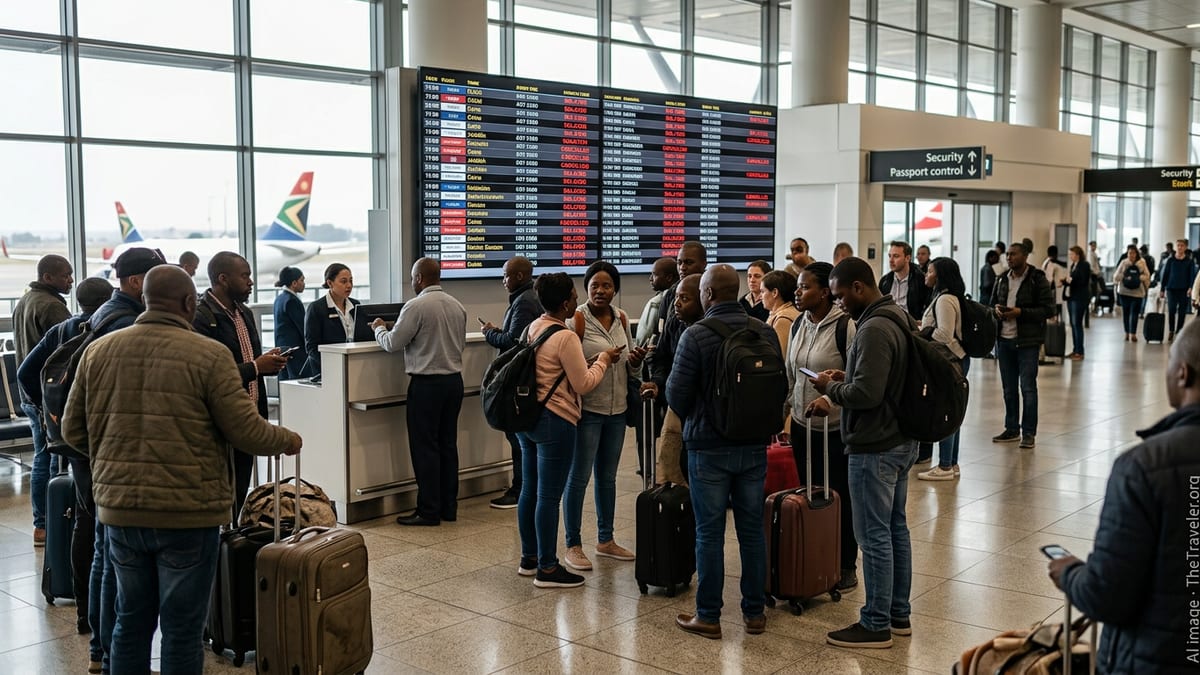
Escalating Conflict Redraws the Middle East Travel Map
Renewed military confrontation involving Israel, Iran and their allies has turned the Middle East from a through-route for global aviation into the centre of a widening no fly zone, with thousands of flights cancelled or rerouted in recent days. Airlines serving major hubs in the United Arab Emirates, Qatar and Saudi Arabia have sharply reduced schedules as airspace closures ripple across the region, creating one of the worst global travel disruptions since the height of the Covid 19 pandemic.
For South African travellers, the impact is immediate. Gulf hubs that long functioned as convenient stepping stones between Johannesburg, Cape Town and Europe or Asia are now operating on skeleton schedules or restricted corridors, pushing up fares on remaining routes and lengthening journey times. Limited special flights are being laid on to move stranded passengers, but seats are scarce and heavily oversubscribed.
The crisis comes on top of an already complicated picture following the Gaza war and ongoing tensions along Israel’s northern borders. Governments outside the region, including the United States and several European states, have issued stark calls for their citizens to leave multiple Middle Eastern countries, underscoring the scale of concern over potential spillover attacks and further escalation.
While South Africa has not issued a blanket ban on travel to the region, its diplomats have moved to update security advisories and evacuation readiness for citizens in high risk areas such as Israel and the occupied Palestinian territories, signalling that conditions on the ground can change with little warning.
Official Warnings: How South African Travellers Should Read the Risk
The South African Department of International Relations and Cooperation has urged citizens already in Israel to register their details and closely monitor official advisories as tensions rise. Guidance published on 2 March 2026 emphasises that travellers should have contingency plans for rapidly changing security and aviation conditions, including the possibility of sudden border closures or suspension of commercial flights.
Regional travel advice is uneven. Some destinations frequently visited by South Africans, such as the United Arab Emirates, have been rated by foreign governments as environments where day to day life for visitors is generally safe, yet subject to an elevated risk of missile or drone attacks linked to wider regional tensions. Tourist infrastructure in cities such as Dubai and Abu Dhabi continues to operate, but authorities warn that threat levels can shift quickly in response to events.
Elsewhere the guidance is far more severe. Multiple Western governments now advise against all travel to active conflict zones including Israel, Gaza, parts of Lebanon, Syria, Iraq and Yemen, citing the danger of air strikes, rocket fire, kidnapping and civil unrest. Insurance policies typically exclude coverage for travel into areas under a formal “do not travel” warning, leaving visitors financially exposed if they choose to proceed.
Travel security analysts say South Africans should interpret the layered system of advisories as a sliding scale of risk rather than a green or red light. Even destinations technically open to tourism may experience sudden protests, cyber disruptions, or symbolic attacks on Western branded hotels and shopping centres. They recommend that South Africans check both South African and key foreign advisories before departure, and avoid mixing tourism with travel into active political flashpoints such as border regions or contested holy sites.
Costs Spike as Air Routes Close and Demand Shifts
The conflict has also scrambled the economics of getting from South Africa to the Middle East. In late 2025 and early 2026, published round trip economy fares from Johannesburg or Cape Town to Dubai could be found from roughly 450 to 900 US dollars depending on season and stopovers. Those benchmark prices are now less reliable as widespread cancellations and diversions squeeze capacity on remaining services.
With key Gulf airlines cutting back schedules or prioritising evacuation and essential traffic, analysts say South African leisure travellers should expect fewer discounted seats and more volatile pricing in the months ahead. Journeys that once involved a straightforward overnight direct flight may now require circuitous routings via secondary hubs in Europe or North Africa, adding both cost and travel time.
The picture is complicated further by currency movements. A stronger rand at the end of 2025 briefly gave South Africans improved purchasing power abroad, but spikes in global oil prices following disruptions to shipping routes in the Gulf have pushed up aviation fuel costs, blunting some of that benefit. Carriers are increasingly adding surcharges or dynamic pricing to reflect the higher risk environment and longer detours around closed airspace.
The net effect for holidaymakers is that what looked like an affordable stopover in Dubai or a budget friendly historical tour of Egypt at the start of the year may now require significantly higher budgets and more flexible timing. Travel agents in South Africa report a rise in enquiries about postponement options, rebooking fees and the fine print on cancellation policies linked specifically to war and civil unrest.
Popular Destinations Under the Microscope: Egypt, Gulf States and Beyond
Not all Middle Eastern destinations face the same level of disruption. Egypt, which has long marketed itself to South Africans as both affordable and culturally rich, remains open to tourism in key centres such as Cairo, Luxor and the Red Sea resorts. Foreign governments continue to describe these areas as generally safe, while urging heightened vigilance and advising against travel to border regions near Libya and Gaza as well as parts of the Sinai Peninsula where security forces are active against insurgent groups.
Gulf states such as the United Arab Emirates, Qatar and Saudi Arabia are grappling with their role as aviation and logistics hubs at a time of war. Major airports in Dubai, Abu Dhabi and Doha have experienced waves of cancellations and delays, but have so far avoided direct attacks. Authorities have stepped up visible security around terminals, metro systems and popular tourist districts to reassure visitors and maintain a semblance of normality where flights still operate.
For South Africans, these hubs are often transit points rather than final holiday destinations. Industry experts warn that even if a city like Dubai remains relatively calm, travellers transiting to or from Europe and Asia may be affected by knock on disruptions from neighbouring airspace closures. Those connecting to higher risk countries such as Lebanon or Jordan could find onward segments cancelled at short notice, leaving them stranded in expensive hotels while they scramble for alternatives.
Some South African tour operators report redirecting clients from the Middle East to alternative destinations in North Africa, Southern Europe and Asia, highlighting that the perception of risk can be as influential as formal advisories. Packages to Turkey, for instance, remain available but are being marketed cautiously given its proximity to the conflict zone and its own domestic security challenges.
Practical Advice for South Africans Still Planning to Travel
Despite the heightened risks, some South Africans will still need or choose to travel to the Middle East for business, family commitments or religious reasons. Travel risk consultants say preparation and flexibility are now more important than ever. They recommend booking with airlines and agencies that offer clear, written rebooking and refund options linked to conflict related disruption, and avoiding multi ticket itineraries involving separate low cost carriers which can leave passengers without recourse if one leg is cancelled.
Comprehensive travel insurance remains critical, but policy wording requires close scrutiny. Many standard plans exclude war, terrorism or travel to areas under an official “do not travel” warning, so South Africans may need to seek specialist cover that explicitly includes political violence and emergency evacuation. Travellers are also urged to carry sufficient funds or credit to cover unexpected hotel stays if routes are suddenly cut.
Security experts advise that visitors keep a low profile, avoid demonstrations and political gatherings, and register their presence with South African diplomatic missions where possible. Basic measures such as sharing itineraries with family, tracking airline notifications in real time, and maintaining copies of key documents in the cloud can make a substantial difference if events take a turn for the worse.
For now, the Middle East remains a region of both enduring attraction and extraordinary volatility for South African travellers. Those still considering trips are being told to balance bucket list ambitions against a clear eyed assessment of the security landscape and the financial risks of being caught in the next wave of travel turmoil.