

More news on this day
Ongoing instability across the Middle East is continuing to reshape cruise itineraries, with Celestyal scrapping additional Gulf and Eastern Mediterranean voyages as operators prioritize safe repositioning and longer-term recovery strategies.
Get the latest news straight to your inbox!
Celestyal Extends Cancellations Across Arabian Gulf Program
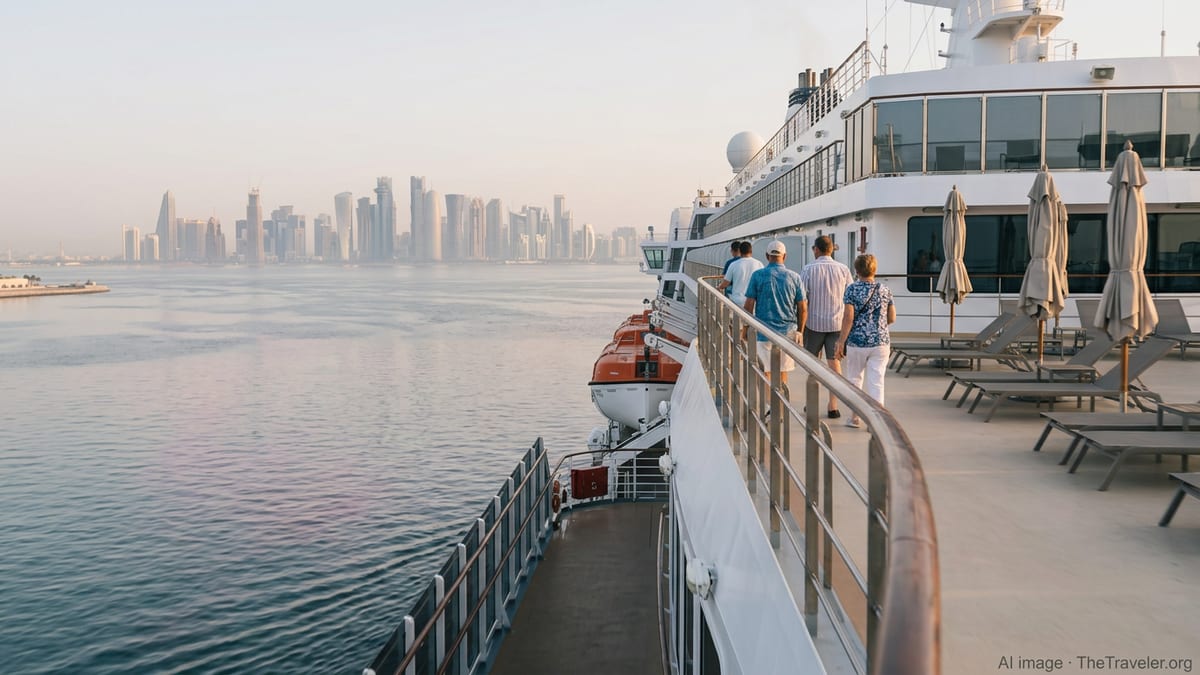
Celestyal has deepened its retreat from the Middle East for the current season, cancelling further departures in the Arabian Gulf and accelerating the wind-down of its winter program. Recent industry coverage indicates that Celestyal Journey’s remaining Gulf sailings from Doha in March 2026 have been withdrawn, cutting short what was intended to be an expanded regional deployment following a strong debut season.
Reports from cruise trade outlets show that four additional Celestyal Journey departures from Doha, including sailings originally scheduled for early and mid-March, have been cancelled. Guests on affected itineraries are being offered either full refunds or future cruise credits, reflecting a broader industry pattern of prioritizing flexibility amid fast-changing risk assessments.
According to published coverage, Celestyal also requested that passengers currently onboard Celestyal Journey disembark by early March, effectively closing the ship’s Arabian winter season ahead of schedule. The line had previously positioned its two-ship fleet to capitalize on growing demand for Gulf sailings, but the deteriorating security backdrop has forced a rapid rethink.
Specialist cruise media in the Gulf region have additionally highlighted the quiet removal of Celestyal’s Dubai–Mediterranean repositioning voyages, scheduled for late 2025 and early 2026, from online booking channels. While formal statements remain limited, the absence of these longer repositioning cruises reinforces expectations that the company is unwinding its near-term exposure to high-risk routes that would normally transit the Red Sea and Suez.
Regional Conflict and Red Sea Risk Undermine Cruise Confidence
The latest cancellations come against a broader backdrop of instability spanning the Eastern Mediterranean, Red Sea, and Arabian Gulf. Since late 2023, missile and drone attacks on commercial shipping linked to Yemen’s Houthi movement have turned key chokepoints near the Bab el-Mandeb strait into a high-risk corridor. Publicly available analyses from international bodies describe the disruption as one of the most significant shocks to global sea trade since the pandemic, with many cargo and tanker operators diverting around the Cape of Good Hope.
For cruise lines, the implications are particularly acute. Unlike container vessels, cruise ships carry thousands of passengers whose itineraries rely on perceptions of safety as much as on formal risk calculations. Coverage from mainstream and trade media over the past two seasons shows multiple lines avoiding the Red Sea entirely, cancelling repositioning voyages that would typically connect Europe and Asia via Suez and skipping calls in Egypt, Jordan, and Saudi Arabia.
In parallel, the prolonged conflict in Gaza and more recent escalations involving Iran have weighed on demand for Eastern Mediterranean and Gulf sailings. Travel and tourism reports note a softening of bookings for itineraries perceived as “region-adjacent,” even when ports themselves remain open and operational. Industry observers point out that travellers frequently conflate security situations across a wide geographic area, prompting cruise brands to re-evaluate not only routes but also marketing language and deployment timing.
United Nations and maritime security briefings underscore that the Red Sea crisis has had a ripple effect on ports that depend on Suez-linked traffic, contributing to reduced cruise calls and wider tourism losses. The same dynamics now appear to be pushing dedicated cruise operators, including Celestyal, to strip back complex itineraries that cross multiple flashpoints, in favor of contained regional seasons and alternative repositioning paths.
Other Cruise Lines Redeploy as Safety and Logistics Take Priority
Celestyal is not alone in its recalibration. Recent reporting from international travel media highlights a wider pullback by cruise brands active in the Gulf and Eastern Mediterranean. MSC Cruises has cancelled remaining Middle East sailings for the current season, while other operators have withdrawn or modified Dubai and Doha departures in response to the shifting security outlook.
River and ocean cruise programs in Egypt have also been disrupted. Coverage from business and travel outlets in early March 2026 indicates that Viking has cancelled several Nile-focused itineraries through the end of the month, citing updated security guidance and the need to shield guests and crew from heightened risk. Advisors interviewed in that coverage describe a pattern of last-minute changes, as lines attempt to preserve viable parts of their schedules while staying ahead of new advisories.
Elsewhere, major global brands have chosen to route repositioning cruises without passengers around southern Africa rather than through the Red Sea, adding significant time and cost but reducing exposure to contested waters. Earlier industry updates documented how some lines removed Middle East segments entirely from world voyages, replacing them with extended stays in Southern Africa, the Canary Islands, or Western Mediterranean ports.
This combination of cancellations and quiet redeployments reflects a broader strategic pivot. Operators appear increasingly willing to sacrifice short-term revenue and complex itineraries in favor of simplified deployments that avoid multiple high-risk chokepoints, even when that means leaving popular emerging cruise destinations in the Gulf, Red Sea, and Eastern Mediterranean underserved for consecutive seasons.
Safe Repositioning Becomes the Central Operational Challenge
With itineraries already on sale well into 2026, safe repositioning has become a core operational challenge for cruise planners. Traditionally, lines would move ships between Europe, Asia, and the Gulf via the Suez Canal, using Red Sea segments as revenue-generating voyages that combined transit days with marquee ports such as Safaga, Jeddah, or Aqaba. The current security environment has upended that model.
Industry coverage shows that many operators are treating repositioning as a technical, non-revenue voyage, routing ships either around the Cape of Good Hope or adjusting seasonal patterns to reduce the need for long transits across volatile areas. For a mid-sized player such as Celestyal, with limited fleet flexibility, this increases operational complexity and costs, particularly when repositioning plans have to be revised repeatedly as conditions evolve.
Analysts also note that uncertainty over the duration and intensity of the Red Sea and wider Middle East crises complicates deployment decisions for 2026 and 2027. If attacks on shipping continue intermittently, lines may be reluctant to restore through-Suez programs even after a period of relative calm. Conversely, a sustained easing of tensions could quickly reopen the corridor, but planning cycles and consumer confidence might lag behind political and security developments.
Port stakeholders from the Gulf to the Eastern Mediterranean are watching these choices closely. Reduced cruise calls affect not only local tourism businesses but also investments in new terminals and destination infrastructure that were built on expectations of growing traffic. As Celestyal and its peers focus on moving ships safely to alternative regions, many of these ports face at least a short-term setback in their ambitions to become staple features on global cruise maps.
Path to Recovery Hinges on Confidence, Communication and Flexibility
Looking beyond the immediate wave of cancellations, commentators suggest that the cruise industry’s recovery in the Middle East will depend on a phased rebuilding of confidence among both passengers and travel advisors. Historical patterns from other regions show that once security improves and advisories ease, demand can rebound, particularly for culturally rich itineraries that offer a sense of discovery. The Gulf, Red Sea, and Eastern Mediterranean collectively fit that profile, but only if operators can demonstrate consistent, reliable operations over multiple seasons.
Celestyal’s future strategy is likely to combine its established strength in Greek and Eastern Mediterranean cruising with cautiously timed returns to Gulf hubs, provided risk levels stabilize. Observers expect lines to emphasize flexible booking policies, transparent itinerary contingency plans, and closer alignment with global security guidance as they seek to reassure guests who may be hesitant to commit to cruises that traverse politically sensitive waters.
In the nearer term, cruise brands are anticipated to lean on more traditional strongholds in the Western Mediterranean, Northern Europe, and the Caribbean to offset revenue lost from Middle East deployments. Ships initially intended for Gulf or Red Sea programs are already appearing in revised schedules for these regions, giving companies room to preserve capacity while they wait for clearer signals on the trajectory of regional tensions.
For now, the pattern is clear: Celestyal’s expanded cancellations and the industry-wide shift away from risk-exposed routes illustrate how deeply the current Middle East instability is reshaping cruise planning. The focus has moved from ambitious growth in emerging markets to protecting guests, crews, and assets, with safe repositioning and incremental recovery taking precedence over rapid expansion.