

More news on this day
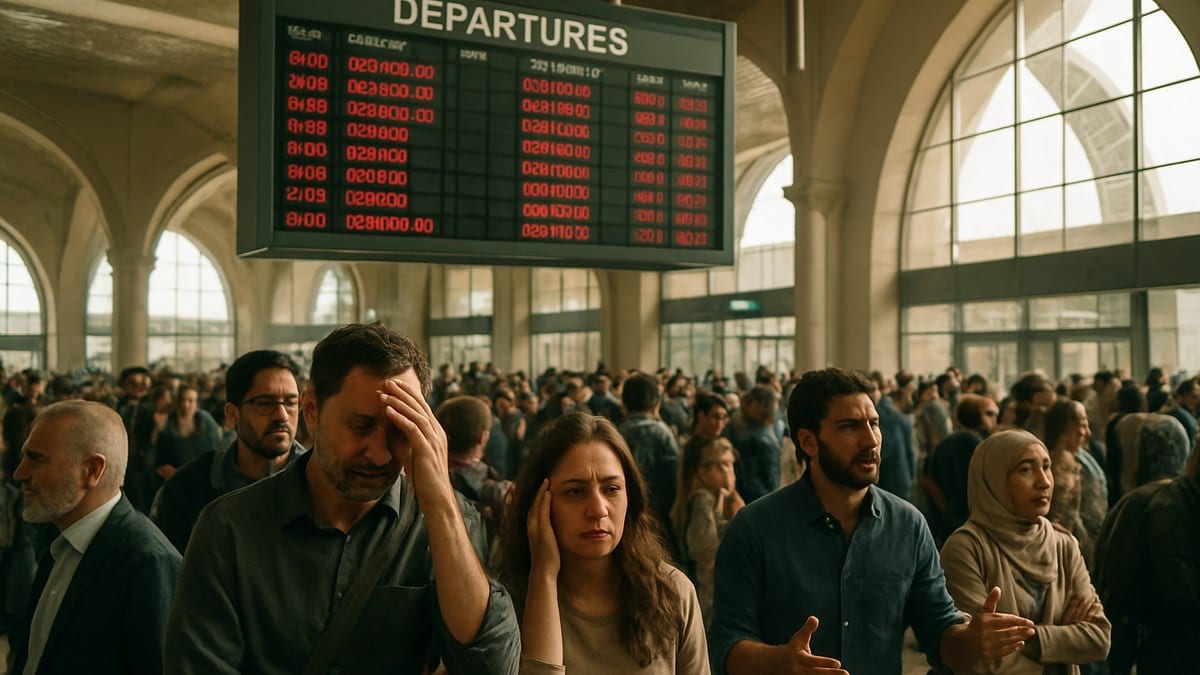
Escalating conflict and shifting airspace restrictions across the Middle East have grounded at least 29 commercial flights in the first week of April 2026, leaving hundreds of passengers stranded from Dubai and Cairo to Riyadh and Kuwait City.
Get the latest news straight to your inbox!
New Wave of Cancellations Hits Key Regional Hubs
Operational data compiled from aviation industry trackers and regional media reports indicates that 29 scheduled flights were either cancelled outright or forced into extended ground holds between April 4 and April 7, 2026, at major Middle East gateways. The disruptions, clustered around Dubai, Cairo, Riyadh, Kuwait City and Istanbul, reflect how fragile regional connectivity remains more than a month into the Iran war.
Recent coverage by specialist travel outlets describes a pattern of scattered but accumulating disruption, with delays running into the hundreds and cancellation tallies now in the dozens on some days. At Cairo International Airport, for example, more than 150 delayed departures and a handful of cancellations on April 6 rippled through connecting banks serving Europe, Africa and the Gulf, compounding the impact of earlier schedule cuts tied to airspace closures.
In the Gulf, reports from travel trade publications describe hundreds of passengers stranded on April 5 as airports in the United Arab Emirates, Saudi Arabia, Türkiye, Egypt and Kuwait logged almost 600 delays combined alongside more than 20 cancellations. Against that backdrop, a narrower but still significant tranche of 29 grounded flights over several days underscores how even partial outages can derail travel plans for entire planeloads of passengers.
While the raw numbers fall far short of the thousands of cancellations seen at the start of the crisis in late February, analysts note that these April disruptions are hitting travelers who had assumed schedules were stabilizing and who often have fewer easy rebooking options available.
War-Damaged Infrastructure and Closed Airspace Continue to Bite
The April flight disruptions are rooted in a conflict that has steadily reshaped the region’s airspace since late February 2026. International reporting highlights how missile and drone strikes, particularly around Iran and the Gulf, led multiple states to close or heavily restrict their skies, severing traditional corridors between Asia, Africa and Europe. Aviation-focused analysis points to an estimated one third reduction in seat capacity across the Middle East since the early days of the war.
Damage and intermittent closures at key hubs remain central to the problem. Dubai International and Abu Dhabi have both faced temporary shutdowns and operational slowdowns following debris falls and strikes linked to Iranian attacks, constraining the ability of major Gulf carriers to run dense shuttle schedules that previously absorbed delays with relative ease. Even when runways and terminals are open, restrictions on overflying Iran and Iraq have forced longer routings that tighten aircraft and crew availability.
Further north, travel advisories summarizing the situation as of early March list continuing airspace restrictions over Iran, Iraq, Israel, Syria, Bahrain, Kuwait and Qatar. Those constraints have prompted many airlines to cancel or reroute services into alternative hubs, sometimes at short notice. The result in early April is a patchwork of partial resumptions, skeleton schedules and one-off repatriation flights that can quickly unravel when any new incident occurs.
Industry observers note that the current pattern of 29 grounded flights in a handful of days should be viewed against this broader backdrop of systemic strain, where every missed rotation can cascade into cancelled evening departures or lost early-morning connections.
Stranded Passengers Face Long Waits and Limited Alternatives
For passengers caught up in the April disruptions, the experience has often meant overnight airport stays, missed onward connections and long queues at rebooking desks. Publicly available accounts from travel forums and local media describe crowded terminals in Dubai and Cairo as travelers waited for updates on flights that shifted from delayed to cancelled status throughout the day.
Regional carriers have in some cases added extra sections or upgauged aircraft to clear backlogs, but those measures remain constrained by airspace closures and government-imposed passenger caps on certain routes. One Israeli carrier, for example, has extended a full suspension of scheduled flights until mid-April, limiting options for travelers trying to enter or leave the country and pushing additional demand onto already stretched foreign airlines.
In secondary markets such as Chattogram in Bangladesh, where many flights feed Gulf labor routes, cancellations linked to Middle East instability have also left workers and their families in limbo. Coverage from South Asian outlets in early April highlights dozens of scrapped departures over just a few days, often on services bound for Dubai, Abu Dhabi and other Gulf hubs that normally provide onward access to Saudi Arabia and beyond.
Travel agents in affected markets are advising customers to budget extra time for connections and to anticipate last-minute aircraft swaps or rerouting via less direct paths. However, for those already stranded when a departure is scrubbed, the guidance offers little comfort compared with the practical challenge of securing an alternative seat out of an overburdened hub.
Airlines Adjust Networks as Conflict Drags On
Airline network planners are continuing to recalibrate schedules around the conflict, which has now entered its second month. Industry analysis suggests that more than 14,000 flights have been cancelled across the region since late February, with some carriers choosing to suspend entire route families while others pursue selective resumptions under tight security and operational constraints.
In early April, one major South Asian flag carrier announced suspensions across several West Asia routes after airspace closures over Iran and Iraq rendered previous routings unviable. At the same time, it has redeployed capacity into higher-demand Gulf markets deemed safer or more reliable, while adding extra flights to the United Arab Emirates and Saudi Arabia to partially offset lost connectivity.
Gulf-based megacarriers, whose networks depend heavily on overflight access across Iran and its neighbors, have pursued a mix of scaled-back schedules and targeted recovery. Aviation data services report that one leading airline has gradually restored more than half of its prewar capacity but remains constrained by ongoing airspace restrictions and the need to keep aircraft clear of potential strike zones.
For smaller regional operators and low cost carriers, thinner margins and smaller fleets leave less room to maneuver. A series of cancellations involving carriers in the United Arab Emirates, Kuwait and Türkiye in early April illustrates how a single grounded aircraft or disrupted rotation can eliminate multiple flights in quick succession, contributing to the tally of 29 grounded departures highlighted in recent reporting.
What April’s Disruptions Mean for Travelers Now
For travelers planning trips through the Middle East in April 2026, the latest disruptions serve as a warning that the situation remains highly dynamic, even as some airlines attempt to present a picture of gradual normalization. Travel advisories and specialist coverage consistently recommend building in longer connection windows, particularly for itineraries connecting via Dubai, Doha, Abu Dhabi, Cairo or Istanbul onto long haul services.
Publicly available guidance from aviation analysts also stresses the importance of monitoring bookings daily through airline apps or online tools, since small schedule adjustments and creeping delays can be early indicators of a later cancellation. The pattern seen in the first week of April, where delays at Cairo and Dubai fed into outright cancellations elsewhere in the network, reinforces the value of catching such changes as early as possible.
Travelers are further advised to consider flexible tickets or itineraries that allow rerouting via alternative hubs, including those outside the immediate conflict zone. While these options can involve longer journeys and higher fares, they may offer more reliability than itineraries threading through heavily restricted airspace.
With at least 29 flights grounded and hundreds of passengers stranded in just a few early April days, the message from current disruption patterns is that Middle East aviation remains vulnerable to sudden shocks. Until regional airspace fully reopens and war-related risks recede, even modest incident counts can translate into significant upheaval for anyone whose journey depends on the region’s pivotal hubs.