

More news on this day
Escalating tensions and shifting airspace restrictions across the Gulf region in early April 2026 have triggered a fresh wave of aviation disruption, with 29 flights grounded across multiple Middle Eastern hubs and hundreds of passengers stranded as airlines again recalibrate already fragile schedules.
Get the latest news straight to your inbox!
Patchwork Disruptions Across Key Gulf Gateways
The latest round of disruption has played out unevenly across the region, with airports in Saudi Arabia, the United Arab Emirates and Qatar all reporting fresh cancellations or extended schedule reductions. Operational data compiled from regional travel advisories and aviation trackers indicates that 29 flights were grounded over a 24-hour period spanning April 6 and 7, primarily on short and medium haul routes linking the Gulf with neighboring Arab states and South Asia.
The pattern builds on weeks of turbulence in Middle East air travel following the outbreak of conflict involving Iran, the United States and Israel in late February. Airspace closures, temporary airport shutdowns and targeted security incidents around key hubs such as Dubai International and Doha’s Hamad International have already forced tens of thousands of cancellations since early March, and the early April figures suggest that the network remains far from normal despite a partial resumption of services.
While flagship Gulf carriers have restored limited operations on selected corridors, many international airlines continue to keep flights to several Middle Eastern destinations paused or heavily reduced through late April. Industry bulletins show that services touching Iran, Iraq, Lebanon, parts of the UAE and Qatar remain among the most constrained, keeping pressure on alternative hubs and leaving travelers with fewer routing options.
Against that backdrop, the grounding of 29 additional flights in early April represents less a single dramatic incident than another visible ripple from a crisis that is reshaping regional aviation day by day.
Travelers Stranded as Rebooking Options Narrow
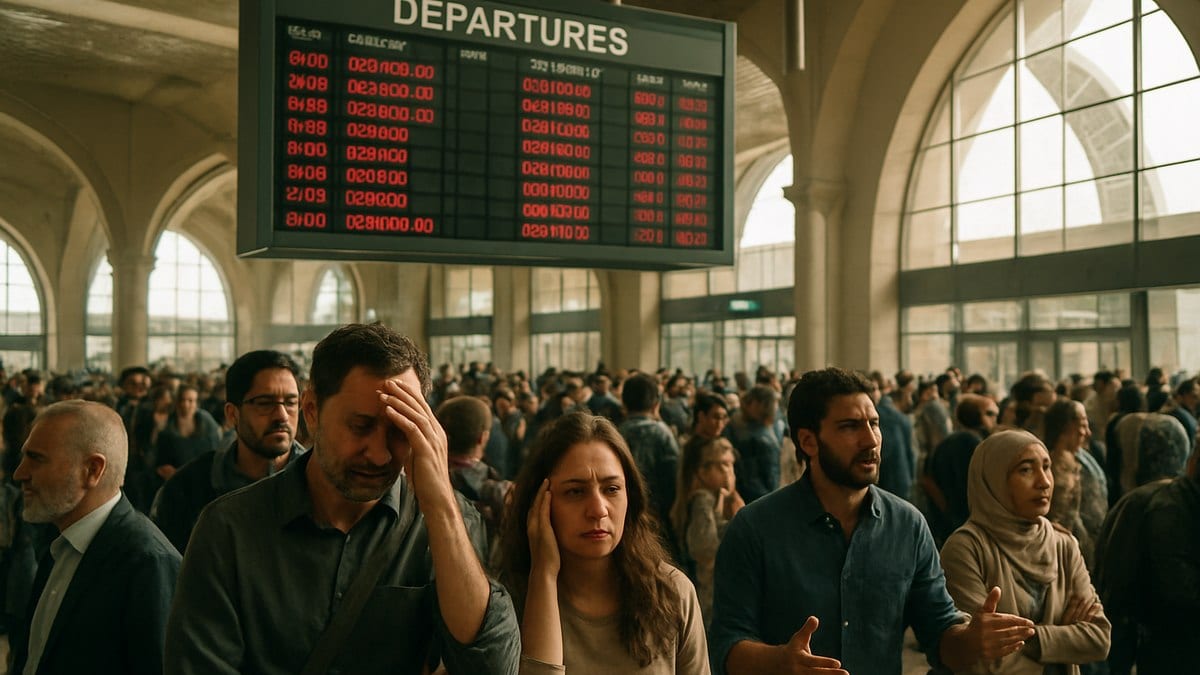
The immediate human impact of the latest cancellations has been felt most acutely by passengers already in transit when schedules shifted again over the weekend. Airport reports and local media coverage describe hundreds of travelers stuck at terminals in Riyadh, Dubai, Abu Dhabi and Doha, many sleeping in departure halls as they wait for seats on scarce onward connections.
With airspace restrictions forcing airlines to consolidate operations, rebooking options are frequently limited to indirect routings via less-affected hubs in Saudi Arabia, Oman or further afield in Europe and South Asia. Even when alternatives exist, longer flying times and constrained capacity are pushing some journeys into multi-day odysseys, particularly for passengers heading to or from secondary cities that have lost their direct links to Gulf gateways.
Travel advisories circulating among regional agencies in early April urge passengers to treat itineraries touching the Middle East as highly fluid. Recommendations consistently highlight the importance of monitoring flight status up to the moment of departure, remaining flexible on routing and dates, and being prepared for extended layovers if onward connections fall apart at short notice.
Compounding the strain, airline policies on compensation and care differ sharply depending on whether cancellations are attributed to security-related airspace closures or to internal operational constraints. Consumer advocates note that many affected travelers are discovering at the airport that hotel vouchers and meal support are limited or unavailable when disruptions are classified as beyond the carrier’s control.
Security Concerns Keep Airspace Map in Flux
Underlying the aviation turmoil is a still-evolving security landscape. Since late February, missile and drone exchanges tied to the conflict with Iran have driven repeated, short-notice changes to airspace access across parts of the Gulf. According to publicly available summaries of the crisis, strikes and attempted attacks near critical energy and transport infrastructure have led authorities to suspend or restrict overflight permissions on multiple occasions.
Dubai International, the region’s busiest long-haul hub, has been operating on a reduced schedule following drone-related incidents that temporarily halted movements and forced diversions to Abu Dhabi, Doha and other airports. Reports from regional outlets indicate that limited operations resumed in late March and early April, but the hub continues to run below normal capacity, amplifying the impact of every additional cancellation or routing change.
Other major gateways have also been reshaped by the conflict. Aviation coverage from Doha highlights earlier closures of Qatari airspace and subsequent disruptions at Hamad International, while advisories focused on Saudi Arabia describe constrained operations at Riyadh’s King Khalid International and other airports subject to heightened security postures.
For international carriers, the constantly shifting risk assessment has translated into extended suspensions on certain city pairs and more conservative flight planning over and around the Gulf. Some airlines have publicly signaled that schedules to select Middle Eastern destinations will remain limited or paused at least through the end of April, even if local hubs remain technically open, in order to provide crews and passengers with a more predictable operating environment.
Airlines Balance Limited Restarts With Precaution
Despite the grounding of 29 flights and ongoing uncertainty, there are signs of a cautious restart strategy among several Gulf-based airlines. Travel agency bulletins issued in early April describe Etihad Airways operating a trimmed but stable schedule from Abu Dhabi to around 80 destinations, while Emirates and other regional carriers gradually rebuild frequencies on high-demand routes where airspace is reliably available.
At the same time, some international airlines that serve the region are opting for more rigid suspensions. Coverage from global outlets in late March documented decisions by carriers such as Cathay Pacific to cancel services to and from Dubai through at least the end of April, citing the developing security situation. Similar notices from European and Asian airlines show long-haul flights to certain Gulf cities either suspended outright or downgraded to less frequent operations to reduce exposure to further disruption.
Network planners face a delicate balancing act between restoring connectivity and avoiding last-minute schedule changes that can erode traveler confidence. Many are using rolling reviews, updating timetables week by week as they track regional developments, airspace permissions and the capacity of local airports to handle diverted or delayed traffic.
The result for passengers is a patchwork of availability. On some trunk routes through the Gulf, seats can still be found at short notice as airlines consolidate demand onto a smaller number of departures. On other corridors, particularly those linking conflict-adjacent states or relying on overflights that remain restricted, tickets are scarce and expensive, reflecting both reduced capacity and elevated operational risk.
What April Travelers Can Expect Next
Looking ahead to the remainder of April 2026, travel specialists and regional advisories suggest that volatility is likely to persist even if no major new security incidents occur. The backlog of passengers created by earlier blanket groundings has yet to fully clear, meaning that any new set of cancellations, such as the 29 flights grounded this week, can quickly cascade into wider network disruption.
Operational bulletins currently in circulation indicate that several airlines have extended flexible change and refund policies for itineraries touching affected Middle Eastern destinations through at least the end of the month. Travelers booked via Dubai, Abu Dhabi, Doha, Riyadh and other key hubs are being urged to consider voluntary rebooking onto later dates or alternative routings where possible, especially if their journeys are discretionary rather than time-critical.
For those who must travel in the coming days, there are a few practical themes emerging from the early April disruption. Passengers are being encouraged to keep contact details up to date in airline booking systems, travel with essentials in carry-on luggage in case of overnight airport stays, and build in additional time between connections to accommodate rolling delays.
While the specific tally of grounded flights will continue to shift day by day, the grounding of 29 services across the Middle East in early April underscores how fragile the region’s aviation recovery remains. As airlines, airports and travelers adapt to an unsettled security picture, each new cancellation wave reinforces the reality that journeys through the Gulf are likely to remain complex and changeable well beyond the current news cycle.