

More news on this day
Escalating conflict involving Iran, Israel and U.S. forces has triggered a fresh wave of airspace closures across the Gulf, with Gulf Air, Saudia and EgyptAir cancelling 154 flights and deferring 11 more across Bahrain, Saudi Arabia, Egypt and the United Arab Emirates, leaving thousands of passengers stranded in airports and hotels from Manama to Dubai.
Get the latest news straight to your inbox!
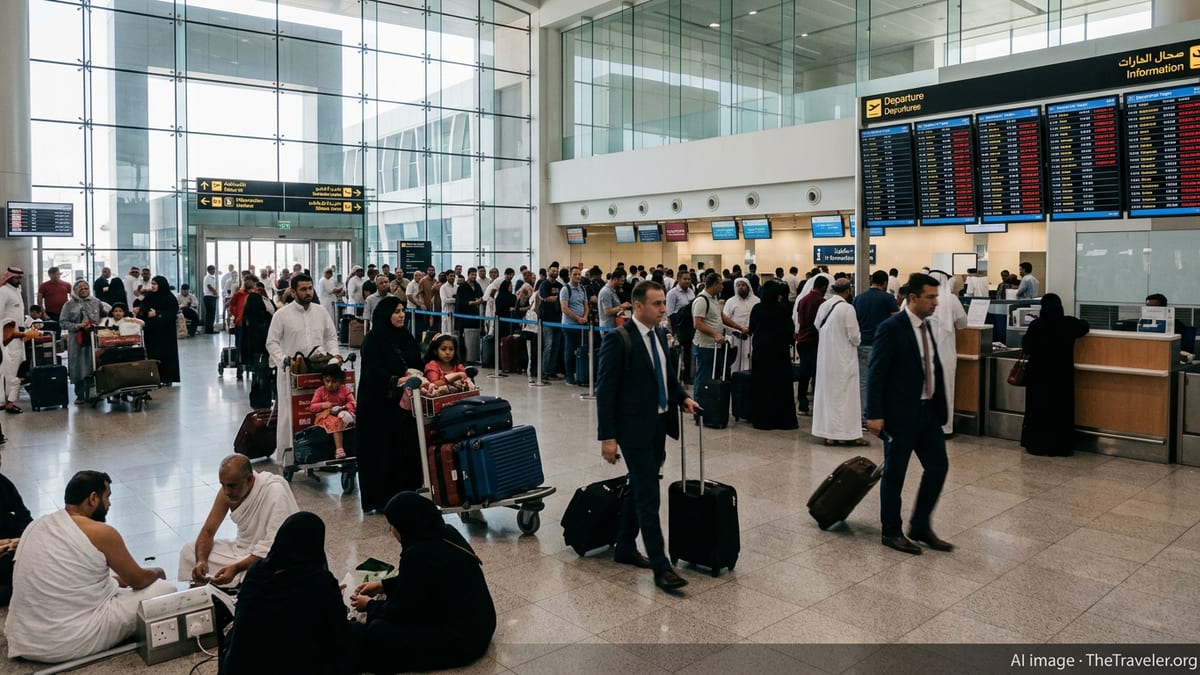
How the Middle East Conflict Triggered Mass Flight Cancellations
The latest round of cancellations follows missile and drone attacks that began on February 28, 2026, prompting multiple Gulf states to shut or severely restrict their airspace for safety reasons. Bahrain remains one of the hardest-hit hubs, with its airspace effectively closed and regular operations at Bahrain International Airport suspended, forcing the grounding of Gulf Air’s scheduled network.
Saudi Arabia, whose airspace has stayed partially open, has seen rolling disruptions as Saudia cut services to several regional capitals, including Amman, Kuwait City, Abu Dhabi, Doha and Manama, in response to fast-evolving security assessments. Although some domestic and long-haul routes continue to operate, congestion in Saudi airspace and the diversion of overflying traffic have produced severe knock-on delays and last-minute changes.
Egypt and the UAE have been caught in the wider fallout, with EgyptAir and Gulf-based carriers temporarily suspending or thinning out services on core routes between Cairo and Gulf hubs such as Dubai, Sharjah, Abu Dhabi and Dammam. Even where airports remain technically open, shifting no-fly zones and air traffic control restrictions have forced airlines to cancel flights at short notice.
In total, schedule data and airline advisories indicate that at least 154 flights operated or marketed by Gulf Air, Saudia and EgyptAir have been scrapped in recent days, while 11 more have been formally deferred or pushed into limited “exceptional operations” windows, concentrating scarce capacity on repatriation and essential travel.
Where Disruptions Are Worst: Bahrain, Saudi Arabia, Egypt and the UAE
Bahrain has emerged as a key chokepoint. With its airspace closed as a precautionary measure, Bahrain International Airport has suspended regular passenger operations, effectively halting Gulf Air’s hub activity. The carrier is running only a handful of special repatriation flights to bring Bahraini citizens and residents home, leaving transit passengers and foreign visitors facing extended waits for rerouting via other countries.
In Saudi Arabia, major airports such as Riyadh’s King Khalid International and Jeddah’s King Abdulaziz International remain open but heavily burdened. Saudia has extended suspensions on routes to neighboring Gulf and Levant destinations, and regional carriers have trimmed schedules into the kingdom, using it primarily as an alternative overland or short-haul gateway for travelers trying to bypass closed airspace elsewhere in the Gulf.
Cairo has turned into both a pressure valve and a bottleneck. EgyptAir initially suspended flights to a wide list of Gulf destinations, including Dubai, Abu Dhabi, Sharjah, Doha, Bahrain and several Saudi cities, before announcing a gradual resumption of limited services to the UAE and parts of Saudi Arabia. That phased restart, however, has done little to ease crowding at Cairo International Airport, where passengers on cancelled connections are competing for scarce seats on outbound flights that are themselves subject to last-minute changes.
In the UAE, airports in Dubai, Abu Dhabi and Sharjah have shifted from full closure to tightly controlled “exceptional” operations. Limited outbound services are being used to move stranded travelers onward, but airlines are still thinning schedules, retiming flights around overnight safety windows and avoiding certain air corridors, which means that disruption remains severe even as selected routes return.
What Affected Passengers Can Expect From Gulf Air, Saudia and EgyptAir
Gulf Air has extended free rebooking options for passengers with tickets touching Bahrain during the airspace closure period. Travelers whose flights form part of the 154 cancelled services are being allowed to shift their journeys without change fees onto later Gulf Air flights up to the end of March, subject to seat availability. Full refunds are being offered to passengers who can no longer travel because Bahrain remains inaccessible or because onward connections through the Gulf have disappeared.
Saudia, facing a dynamic security environment and restrictions on neighboring airspace, has focused on consolidating operations on trunk routes while keeping suspensions in place to several regional capitals. Passengers booked on axed flights are typically being offered free date changes or rerouting via alternative Saudi gateways where possible. However, because many disruptions are treated as security-related and outside the airline’s control, cash compensation is limited, and hotel or meal coverage varies by ticket type and point of sale.
EgyptAir has issued multiple rolling advisories since the start of March, outlining which Gulf destinations are suspended and which are being gradually restored. For cancelled flights, the carrier is offering a choice between full refunds and rebooking without penalties onto later services, with priority given to travelers with urgent medical, family or residency needs. Travelers transiting Cairo are being urged to confirm their connection status before departure, as last-minute timetable updates remain common.
Across all three airlines, call centers and airport service desks are under intense pressure, and passengers are reporting long waits to reach agents. Many are being advised to manage changes through official mobile apps or booking platforms where possible, and to monitor airline communication channels closely for fresh operational updates.
Travel Alternatives: Rerouting via Open Corridors and Overland Options
With much of the northern Gulf airspace either closed or heavily restricted, the most reliable alternatives for now are routes that use open corridors over Saudi Arabia and the Red Sea, or that connect via relatively less affected airports such as Muscat in Oman or certain European and North African hubs. Some airlines have quietly added extra capacity on these paths to absorb displaced travelers from cancelled Gulf itineraries.
For passengers stranded in Bahrain or the UAE, one emerging pattern has been to move overland, where safe and permitted, to airports with more stable operations. Travelers with the right visas have been taking buses, private transfers or rental cars to Saudi or Omani cities with functioning airports, from which they can board long-haul flights home. These journeys can take many hours, and road routes are themselves subject to security checks and curfews, but they have provided a vital escape valve for some.
In Egypt and Saudi Arabia, regional travelers are increasingly turning to direct flights that bypass traditional Gulf hubs entirely. Instead of connecting through Dubai, Doha or Bahrain, passengers bound between Europe, Africa and South Asia are looking to itineraries routed via Cairo, Jeddah, Riyadh, Istanbul, Athens or major European capitals, accepting longer travel times in exchange for a higher likelihood that flights will actually operate.
Travel agents and corporate travel managers report that flexible one-way tickets, last-minute inventory and higher-fare economy and premium cabins are selling briskly as passengers prioritize certainty over cost. Travelers prepared to split their journeys into multiple shorter segments and to accept unexpected overnight stops are having the greatest success in finding a way out.
Practical Advice if Your Flight Is Affected
For anyone booked on Gulf Air, Saudia or EgyptAir in the coming days, the single most important step is to verify the real-time status of your flight directly with the operating airline before heading to the airport. Schedules are changing too quickly for printed itineraries or third-party confirmations to remain reliable, and a departure that appears on time in the morning can be pushed back or cancelled by afternoon as security assessments evolve.
Passengers whose flights are among the 154 cancellations or 11 deferrals should document all communications with airlines and keep boarding passes, receipts and booking confirmations. While statutory compensation is limited due to the security nature of the disruptions, these records are essential for securing refunds, rebooking assistance or reimbursement from travel insurers that cover war-related disruptions or government-mandated airspace closures.
Experts also recommend building additional flexibility into any urgent travel across the region. That means avoiding tight connections, packing essential medication and valuables in carry-on bags in case baggage is delayed, and being prepared for extended stays in transit cities. Where possible, travelers are advised to coordinate with employers, tour operators or family at home in advance, in case connectivity at the airport is disrupted.
Ultimately, while limited services are beginning to return on some routes, the combination of closed airspace, damaged infrastructure and high military activity means that flight disruptions in Bahrain, Saudi Arabia, Egypt and the UAE are likely to persist in the short term. Anyone planning to transit the region in the coming days should treat itineraries as tentative and prioritize safety and flexibility over speed or cost.