

More news on this day
Escalating conflict across the Middle East is rippling through global aviation, shuttering vital air corridors, grounding aircraft at major hubs and stranding passengers as airlines race to rework schedules on the fly.
Get the latest news straight to your inbox!
Airspace Closures Turn a Regional War into a Global Travel Crisis
What began as a sharp military escalation involving Iran, Israel and their allies at the end of February has rapidly evolved into one of the most disruptive aviation crises in years. Large portions of airspace over Iran, Iraq, Jordan, Israel and parts of the Gulf have been repeatedly shut or heavily restricted, severing some of the shortest and busiest routes between Europe, Asia and Africa.
Data compiled by aviation analysts indicates that tens of thousands of flights have been canceled, delayed or rerouted since February 28, when the conflict dramatically intensified and several states moved to close their skies to civilian traffic. Published assessments of the 2026 Iran war describe aviation as one of the sectors most severely affected, with airlines forced onto longer paths that skirt the region and add hours to journey times.
Regional hubs that normally act as essential waypoints on east–west itineraries are among the hardest hit. Bahrain, Iraq, Kuwait, Qatar, Syria, Israel and the United Arab Emirates have all imposed broad restrictions or full closures of their airspace at various points, while airports in Dubai, Abu Dhabi and Doha have faced waves of disruption and, in some cases, physical damage from missile or drone strikes. Publicly available operational maps show swathes of red over the eastern Mediterranean and Gulf, signaling closed or severely constrained routes.
The resulting bottlenecks have turned Saudi Arabian airspace into one of the few relatively stable east–west corridors still functioning at scale. Travel advisories circulated in early March describe unprecedented congestion in the kingdom’s skies, with air traffic controllers managing dense flows of diverted flights that would ordinarily transit multiple neighboring states.
Airlines Slash Schedules and Park Jets as Passenger Chaos Mounts
Airlines based both inside and outside the region have responded by slashing schedules, suspending entire routes and in some cases sending aircraft into temporary storage. Industry trackers report that major Middle Eastern carriers, including those based in Qatar and the United Arab Emirates, have dramatically reduced operations to and from key hubs as demand softens and safety concerns mount.
Flightradar-style monitoring shows Qatar Airways cutting back sharply on services through Doha, with some widebody jets ferried to out-of-the-way airfields for storage while the carrier reassesses its network. Similar patterns are visible for Gulf-based rivals that built their business models around using Dubai and Abu Dhabi as mega-hubs connecting Europe, Asia, Africa and Australasia.
Flag carriers elsewhere are also trimming exposure. According to widely cited timelines of the conflict, international airlines such as British Airways, Lufthansa, Cathay Pacific, Virgin Atlantic and Wizz Air have suspended or significantly curtailed flights touching the Middle East, sometimes extending earlier suspensions on routes to Tel Aviv, Beirut or Amman. Vietnam Airlines and several European leisure operators have announced targeted cuts to long-haul services as they grapple with longer flight times and higher fuel bills.
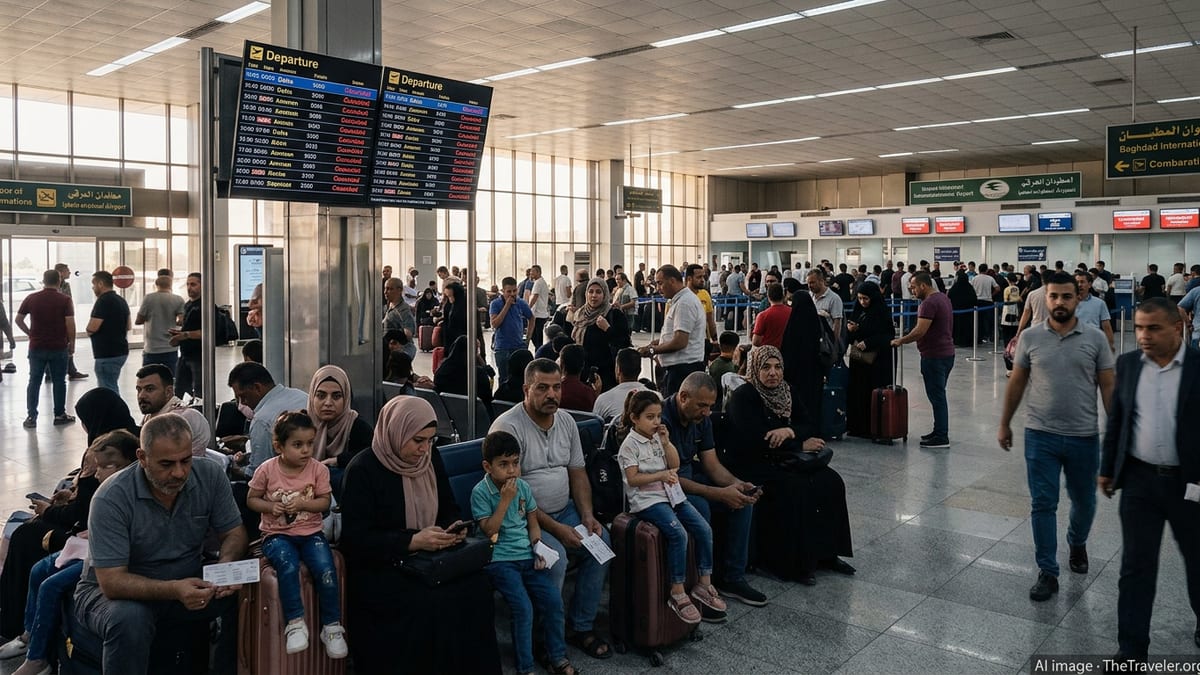
For passengers, the impact is immediate and often chaotic. Travelers report lengthy queues at transfer desks in Europe and Asia as they scramble to rebook itineraries that once relied on seamless connections through the Gulf. Airline advisories urge customers to monitor flight status closely, while global carriers from the United States to Asia have rolled out special flexibility waivers for tickets involving affected destinations.
Cancellations Pile Up as Hubs Operate on a Knife Edge
By early March, aviation data firms estimated that cancellations linked directly to the Middle East turmoil had already surpassed the mid tens of thousands, with additional knock-on disruptions radiating into North America, Europe and East Asia. One travel-analytics briefing cited more than 14,000 flights scrapped out of Middle Eastern airports in just the first couple of weeks after the fighting escalated.
Operational snapshots from the period show major hubs lurching between limited operations and near-total standstill. Dubai International, one of the world’s busiest airports in normal times, has been operating on a reduced schedule after suffering damage from missile debris and facing repeated security alerts. Abu Dhabi has experienced similar turbulence, with locally based Etihad Airways at one point cutting back to a skeletal timetable before cautiously rebuilding a “limited commercial schedule.”
Doha’s Hamad International in Qatar, another key transfer point for travelers between Asia and Europe, has also faced closures of national airspace and short-notice suspensions as Iranian strikes on regional infrastructure triggered new waves of flight diversions. Published timelines of the Iranian attacks describe short but highly disruptive shutdowns that left aircraft and crews out of position worldwide.
In Israel, restrictions around Ben Gurion Airport near Tel Aviv have forced a sharp reduction in departures, particularly on long-haul routes to North America and Europe. According to publicly available information on the Iranian strikes, outbound passenger numbers on some routes were capped well below aircraft capacity after missiles damaged private jets and raised concerns about congestion on departure corridors.
Longer Routes, Soaring Fuel Costs and Rising Fares
Even when flights are not canceled outright, the geography of the conflict is affecting everyone on board. With direct paths over Iran, Iraq and parts of the eastern Mediterranean frequently unavailable, long-haul services are detouring over Central Asia, the Caucasus, North Africa or the Arabian Sea. Analysts tracking flight plans estimate that many Europe–Asia journeys are now between one and three hours longer than under normal routing.
Those extra miles come at a steep cost. The war has tightened supplies of crude and refined products by disrupting exports through the Strait of Hormuz and damaging energy infrastructure, a pattern detailed in assessments of the economic impact of the conflict. As jet fuel prices surge, airlines face a double hit of higher operating costs and reduced aircraft utilization, with some carriers choosing to consolidate frequencies rather than operate heavily delayed or uneconomical flights.
Travel-fare trackers in Europe report that average ticket prices on some Asia–Europe city pairs have jumped by more than 20 percent since late February, reflecting both the extra fuel burned and the sudden reduction in available seats. Budget-conscious travelers, who once relied on ultra-competitive connector fares through Gulf hubs, are finding fewer bargains and more multi-stop routings that stretch trips across multiple days.
Corporate travel managers and tour operators are beginning to factor these changes into their planning. Specialist advisories recommend postponing nonessential trips to affected states, building larger time buffers into essential itineraries and monitoring airlines’ rebooking and refund policies as schedules continue to shift with little notice.
Uncertain Timeline Keeps Travelers and Industry on Edge
With the military situation still volatile in early April, aviation planners remain braced for further shocks. Safety notices to pilots and operators highlight the risk of uncoordinated missile or drone launches, warning that sudden changes in airspace status are likely to continue across parts of the Middle East. The result is a planning environment where even freshly published timetables may change within hours.
Some signs of stabilization are emerging at individual airports as security conditions ebb and flow, but the broader network remains fragile. Airlines that rushed to add back limited services in early March have had to calibrate each move carefully, weighing the benefits of restoring connectivity against the risks of stranding aircraft, crews and passengers if the conflict flares again.
For travelers, the message from publicly available guidance is to remain flexible, stay informed and expect disruption to linger well beyond any eventual cease-fire. With aircraft parked, routes redrawn and key hubs still operating under strain, the Middle East turmoil has already reshaped global flight patterns, and the aviation industry is preparing for the possibility that today’s emergency detours may become tomorrow’s new normal.