

More news on this day
Escalating conflict across the Middle East is rippling through key holiday and transit hubs in the United Arab Emirates, Turkey and Cyprus, triggering rolling flight cancellations, diversions and security alerts that are significantly disrupting UK leisure travel and airline operations at the start of the spring getaway season.
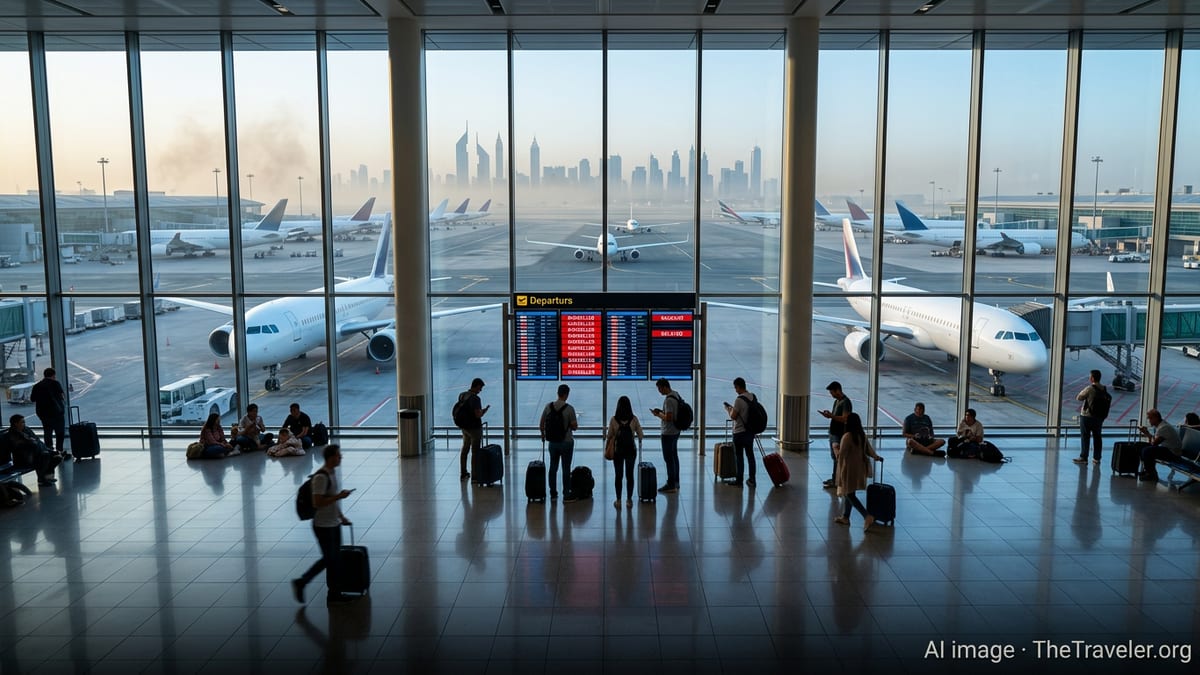
UAE Hubs Struggle to Restart Amid Ongoing Security Threats
Airports in the United Arab Emirates, including Dubai, Abu Dhabi and Sharjah, remain at the heart of the current travel turmoil, as authorities juggle heightened missile and drone threats with intense pressure to restore connectivity. After widespread airspace closures and mass cancellations from late February, carriers such as Emirates, Etihad and flydubai have begun operating limited schedules, prioritising repatriation flights and essential connections while warning that services may change at short notice.
Industry tracking data and airline advisories indicate that hundreds of flights to and from UAE hubs have been cancelled or heavily delayed in recent days, with knock-on disruption for long-haul routes between the UK, Europe, Asia and Australasia. Aviation analysts say extended routings around closed or restricted airspace over the Gulf are adding hours to journey times and sharply increasing fuel costs, with some airlines opting to suspend routes altogether rather than operate uneconomical diversions.
The UK Foreign, Commonwealth and Development Office has updated its travel advice for the UAE, highlighting significant security risks linked to Iranian missile and drone activity and warning of further sudden closures or restrictions at airports. British nationals have been urged to register their presence, avoid travelling to airports without confirmed bookings and be prepared for rapid changes to flight schedules, including short-notice cancellations.
UK carriers are also adjusting their operations. British Airways has suspended regular passenger services to several Gulf destinations, while focusing on a small number of flights via Muscat to repatriate travellers stranded in the region. Seats on these services have quickly sold out, underscoring the scale of demand from holidaymakers and business travellers attempting to return to the UK.
Turkey Becomes a Crowded Detour as Routes Shift Around Conflict Zones
With large swathes of Gulf airspace constrained, Turkey has emerged as a critical detour for flights between the UK and destinations in the Middle East and Asia, increasing pressure on Istanbul and Antalya as alternative hubs. Major European and Gulf carriers have been funnelling traffic through Turkish airspace, reconfiguring schedules to avoid the most volatile areas while maintaining at least a skeleton network for stranded passengers.
Turkish authorities have tightened security at key airports and along major tourist corridors on the Aegean and Mediterranean coasts, in response to the broader regional escalation. While there have been no direct attacks on Turkish tourist resorts, security analysts note that Ankara is acutely aware of the risks posed by the conflict and has placed air defence and surveillance systems on a higher state of readiness.
For UK leisure travellers booked on Easter and early summer breaks to Turkish beach destinations, the impact so far has been more operational than security-related. Package operators report isolated cancellations and re-timed flights as aircraft are redeployed to support repatriation efforts elsewhere in the region. However, tour firms warn that the heavy use of Turkey as a diversion corridor could lead to congestion, longer flight times and tight aircraft availability as the season approaches.
Airlines and tour operators are advising UK customers with imminent departures to monitor communications closely and prepare for last-minute schedule changes, particularly for journeys involving connections via Istanbul, Antalya or other Turkish hubs used as stepping stones between Europe and Asia.
Cyprus Balances Open Skies with Rising Security Concerns
Cyprus, a longstanding favourite for UK family holidays, has been thrust into the frontline of the aviation crisis after a drone strike on the British RAF Akrotiri base and subsequent security scares at Larnaca and Paphos airports. Authorities temporarily evacuated Paphos and briefly halted operations at Larnaca following the sighting of unidentified objects, and social media rumours of a blanket airspace closure prompted widespread confusion among travellers.
Cypriot officials have since stressed that national airspace remains open, even as commercial schedules continue to be heavily disrupted. Data from airport operators and travel platforms show dozens of daily cancellations and diversions at Larnaca and Paphos, alongside suspended connections to Gulf hubs and Israel. The government has convened repeated emergency security meetings and reinforced military cooperation with the UK to protect Akrotiri and other strategic sites.
For British holidaymakers, the picture is mixed. Budget carrier easyJet has resumed many services to Cyprus following precautionary cancellations, while other airlines, including charter and leisure operators, are still running reduced schedules as they assess evolving risks. Travel industry sources say demand for Cyprus remains resilient, but bookings are increasingly concentrated in later months as customers seek clarity on the trajectory of the conflict.
The UK Foreign Office has updated its travel advice for Cyprus, highlighting the drone incident and advising travellers to stay alert to local security announcements. Tour operators stress that resorts and beaches on the south of the island are operating largely as normal, but caution that further disruptions cannot be ruled out if regional tensions escalate.
UK Holidaymakers Face Cancellations, Detours and Tough Choices
The combined effect of airspace restrictions in the Gulf, security incidents in Cyprus and rerouted corridors via Turkey is being felt acutely by UK leisure travellers. Thousands of holidaymakers heading for or transiting through Dubai, Abu Dhabi, Doha and other regional hubs have seen trips cancelled outright or transformed into multi-stop odysseys with extended layovers and overnight diversions.
Major UK tour operators, including package specialists with large programmes in the UAE and eastern Mediterranean, say they are closely tracking Foreign Office guidance and adjusting itineraries accordingly. Some have suspended or amended departures to destinations where the government now advises against all but essential travel, offering affected customers rebooking options to alternative resorts in Spain, Portugal or the western Mediterranean.
Independent travellers, particularly those who used UAE hubs as stepping stones to Indian Ocean islands, Southeast Asia or Australia, are encountering the most complex re-routing challenges. With seat capacity squeezed by cancellations and aircraft redeployments, options to bypass the Gulf via longer northern or southern routes are limited and often significantly more expensive than the original itineraries.
Consumer advocates in the UK are urging travellers to familiarise themselves with their rights under air passenger regulations and package travel rules, stressing that compensation, refunds or free date changes may be available depending on whether flights are cancelled, delayed or proactively rebooked for security reasons.
Airlines and Authorities Brace for a Prolonged Period of Volatility
Airlines, airport operators and regulators across Europe and the Middle East are warning that the current disruption may persist for weeks, even if active hostilities subside, as they work to unwind large backlogs of stranded passengers and reposition aircraft and crews. Some carriers have extended booking flexibility for trips touching the region through mid-March and beyond, allowing fee-free changes or refunds for customers no longer willing to travel.
Aviation security experts note that the conflict has reignited long-standing concerns about the vulnerability of civilian aircraft to state and non-state actors equipped with increasingly sophisticated missiles and drones. Risk assessments for overflying certain parts of the Middle East have been tightened, and insurers are closely scrutinising routes and operating procedures, adding another layer of complexity to airline planning.
For the UK travel industry, the crisis arrives just as demand for overseas holidays had been rebounding strongly, driven by pent-up appetite for sunshine breaks and city escapes. While operators report that bookings to western Mediterranean and Atlantic destinations remain robust, they acknowledge that uncertainty around the UAE, Turkey and Cyprus is likely to dampen sales and shift demand westward in the short term.
With the situation in flux, both airlines and government agencies are reiterating a single message to would-be travellers: check your flight status repeatedly, stay across official travel advice, and be prepared to adapt plans quickly as the security and airspace picture across the wider Middle East evolves.