

More news on this day
Thailand’s tourism industry, a cornerstone of the country’s economy, is bracing for a sharp setback in 2026 as the escalating conflict in the Middle East disrupts long-haul air routes, stokes energy-price shocks and undermines confidence among high-spending visitors from Europe, the Americas and the Gulf.
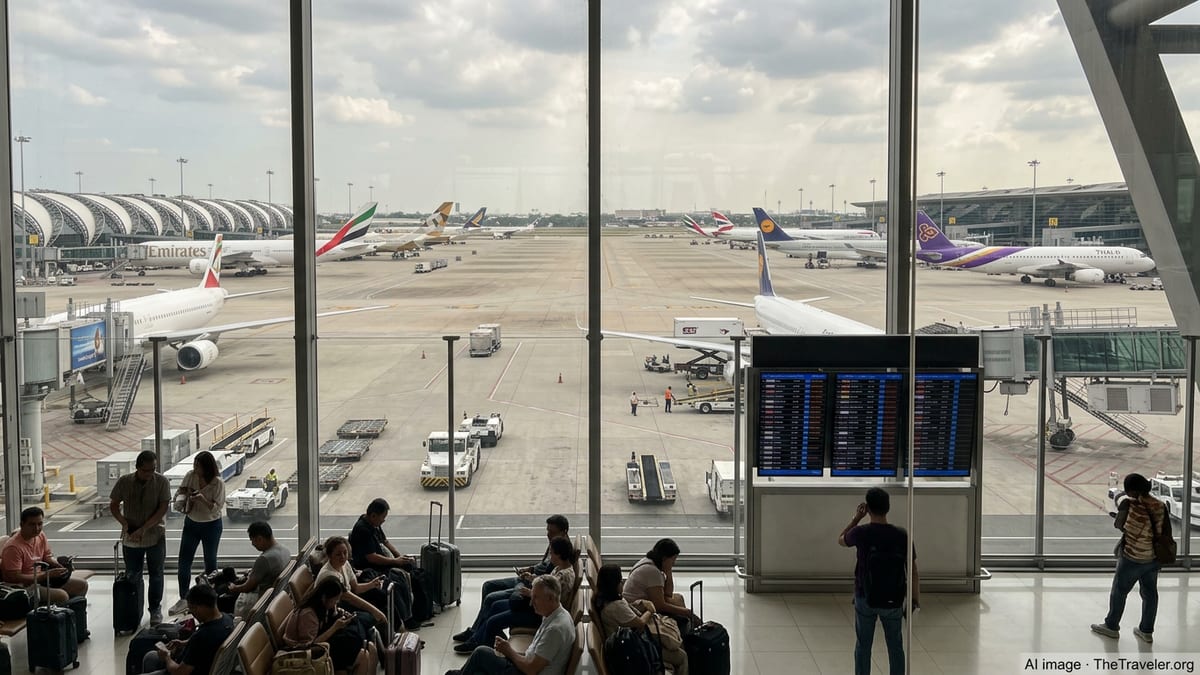
Conflict Ripples Through Key Long-Haul Markets
As fighting in the Middle East drags on, Thai policymakers and industry analysts warn that the fallout is beginning to erode one of the few bright spots in the country’s tourism mix: long-haul markets that had finally surpassed pre-pandemic levels. European, North American and Middle Eastern travelers, many of whom reach Thailand via major Gulf hubs, are suddenly facing higher fares, longer flying times and heightened security concerns, dampening demand for trips planned into late 2025 and 2026.
The conflict has rattled aviation networks across the region, with airlines rerouting services away from contested airspace and reducing frequencies on some trunk routes that link Western gateways to Bangkok and Phuket. Travel agents report a wave of inquiries about postponements and cancellations, particularly among first-time visitors and family groups who are more sensitive to perceived risk and cost. For Thailand, which has relied heavily on these higher-spending segments to offset weakness in short-haul markets, the timing could hardly be worse.
Economic planners had expected long-haul demand to drive a fresh leg of recovery in 2026, supporting forecasts of foreign arrivals climbing toward the mid-30-million range after a difficult 2025. Now, those projections are being rapidly revised. Securities houses and tourism consultants are sketching downside scenarios in which long-haul arrivals fall well short of earlier expectations, shaving percentage points off national tourism revenue at a time when domestic consumption and exports are also under strain.
Oil Price Shock and Airfare Surge Hit Thailand’s Competitiveness
Beyond direct security worries, surging oil prices linked to the conflict are emerging as a critical threat to Thailand’s tourism competitiveness. Benchmark crude prices have spiked since fighting intensified, feeding into jet fuel costs and prompting airlines to introduce or increase fuel surcharges on long-haul tickets. For prospective tourists weighing multiple destinations in Asia, even modest increases in airfare can tip the balance away from long-haul journeys, especially for middle-income travelers from Europe and the Middle East.
Thai economic agencies have publicly flagged the risk that a prolonged war could push global oil prices significantly higher, squeezing airlines and raising the cost base for carriers serving Thailand. Industry executives say that if fares continue to climb into the peak winter booking window, some travelers are likely to trade down from long-haul holidays in Southeast Asia to cheaper regional breaks closer to home, cutting into Thailand’s crucial high season for 2026.
Higher fuel and insurance costs are also filtering through to the broader tourism ecosystem. Domestic airfares on key tourist routes are edging up, logistics expenses for hotels and tour operators are rising, and small businesses that depend on imported goods are seeing margins narrow. While the immediate effect is manageable, a sustained period of elevated energy prices could force operators to pass more of the burden on to visitors next year, reinforcing perceptions that Thailand is becoming a more expensive destination relative to its regional rivals.
Warning Signs in Early 2026 Arrival Data
Recent visitor figures have given policymakers fresh cause for concern. After a fragile rebound in late 2025, foreign arrivals into Thailand softened noticeably in the opening weeks of 2026, with analysts noting a double-digit week-on-week decline at one point as momentum from the Lunar New Year holidays faded. While a portion of the slowdown reflects seasonal patterns and the unwinding of pent-up regional travel, market watchers say it also signals emerging caution among long-haul travelers digesting news of the widening conflict.
Brokerage research tracking international entries has highlighted a broad-based cooling across source markets, but particularly among East Asian and European visitors whose trips often rely on Middle Eastern transit hubs. Tour operators servicing Europe and the Middle East report that group bookings for the second half of 2026 are being reassessed, with some partners trimming capacity or delaying promotional campaigns until the security outlook becomes clearer.
Against that backdrop, private-sector forecasts for 2026 arrivals are becoming more conservative. Where some institutions earlier projected foreign arrivals in the mid-30-million range, newer estimates are increasingly framed with downside risks, acknowledging that a drawn-out conflict could knock several million visitors off the tally. Any such shortfall would reverberate across Thailand’s hotel, aviation and retail sectors, and could weigh on overall economic growth projections for next year.
Government and Industry Scramble to Contain the Damage
The Thai government has begun rolling out a series of measures aimed at cushioning the blow and signaling stability to overseas partners. An “economic war room” has been convened in Bangkok, bringing together economic planners, financial regulators and security agencies to monitor channels of impact spanning energy, trade, tourism and capital markets. Officials insist that Thailand’s oil reserves and financial buffers are adequate in the short term, but acknowledge that confidence in the tourism pipeline is increasingly fragile.
Tourism authorities have intensified crisis monitoring, tasking overseas offices to track sentiment in long-haul markets and to maintain close contact with airlines and tour operators. Campaigns targeting Europe, the Middle East and North America are being recalibrated to emphasize Thailand’s perceived distance from the conflict zone, as well as the country’s track record of remaining open and accessible during periods of global turbulence. At the same time, new incentives are under discussion to encourage airlines to maintain capacity and resume growth plans for 2026 once conditions stabilize.
Within the private sector, hotel groups and inbound agencies are diversifying their customer base and length-of-stay mix, seeking to reduce exposure to any single region. Some operators are pivoting toward wellness, medical and long-stay tourism segments, betting that higher-yield visitors with specific purposes are less likely to cancel trips purely because of higher airfares or headlines from overseas. Others are accelerating digital marketing to tap into independent travelers who may be more flexible and less risk-averse than traditional group-tour customers.
Pivot to Regional Markets and Value-Driven Travel
As concerns mount over a potential decline in long-haul arrivals in 2026, Thailand is looking closer to home to help plug the gap. Authorities are reviving campaigns in Southeast Asia, India and other short- to medium-haul markets that can be served without reliance on Middle Eastern transit hubs. While these travelers typically spend less per trip than visitors from Europe or the Gulf, they are often more resilient to global shocks and can respond quickly to promotional fares and visa facilitation.
Industry analysts note, however, that an aggressive pivot to regional markets will not fully offset the loss of long-haul spending power. Travelers from Europe, North America and the Middle East tend to stay longer and spend more on accommodation, dining and experiences, making them particularly important for high-end hotels and destinations that have invested heavily in premium tourism infrastructure. A downturn in these segments could leave some properties and provinces struggling to fill rooms even if headline arrival numbers remain respectable.
To bridge that gap, Thai tourism businesses are experimenting with value-driven offers designed to keep Thailand attractive even as the cost of getting there rises. Flexible cancellation policies, bundled experiences and targeted discounts for shoulder seasons are becoming more common, aimed at reassuring hesitant travelers and smoothing out fluctuations in demand. Whether these efforts will be enough to counteract the powerful headwinds from the Middle East conflict remains uncertain, but they underline the sector’s determination to defend Thailand’s position as one of the world’s leading tourist destinations in 2026 and beyond.