

More news on this day
Residents of Hyderabad are facing an abrupt spike in international airfares as regional instability in the Middle East forces airlines to cancel flights, take longer routes and absorb sharply higher fuel costs, pushing up ticket prices across key routes to the Gulf, Europe and North America.
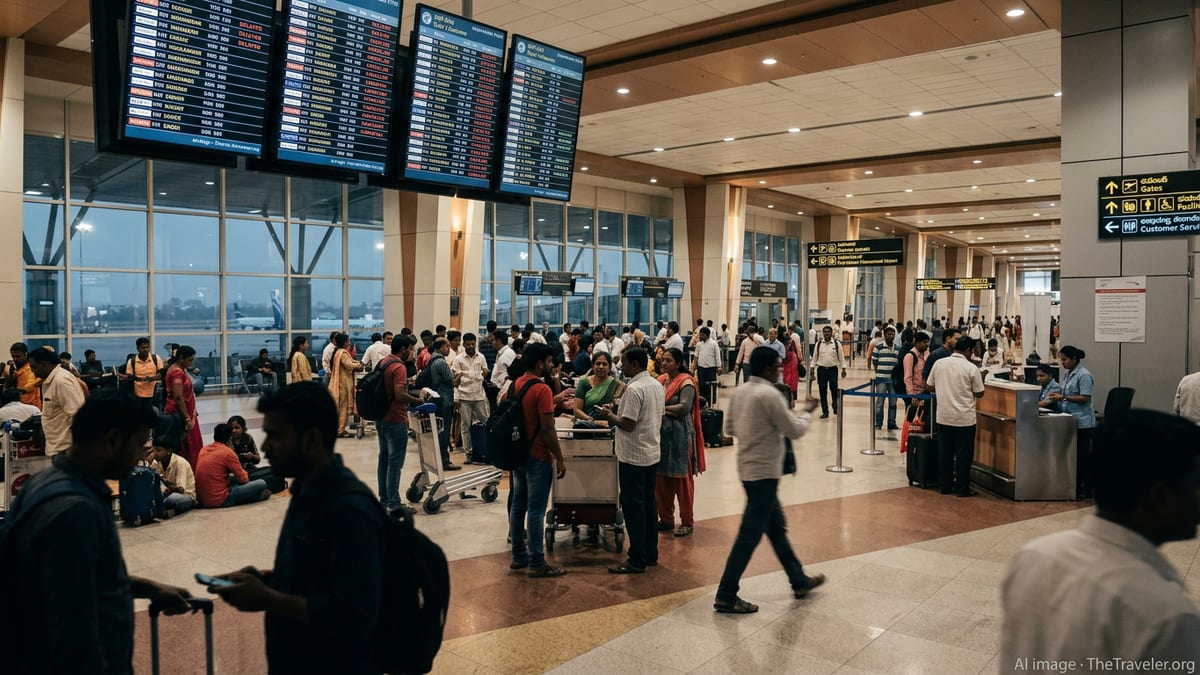
Conflict Fallout Hits a Key Indian Gateway
The latest surge in aviation costs for Hyderabad residents comes against the backdrop of a rapidly escalating conflict involving the United States, Israel and Iran, which has shut or restricted major portions of Middle Eastern airspace. The region has long served as a vital bridge between India and the rest of the world, with Gulf hubs acting as primary stopover points for millions of Indian travelers each year.
Hyderabad’s Rajiv Gandhi International Airport is heavily dependent on these corridors, particularly for links to the United Arab Emirates, Saudi Arabia, Qatar and onward connections to Europe and North America. As airspace closures and security concerns ripple through the Gulf, this dependence is translating into immediate pain for outbound passengers in the form of steeper fares and fewer options.
Local reports from Hyderabad indicate that one way fares to London have nearly doubled in recent days, with tickets jumping into the 65,000 to 90,000 rupee range. Similar spikes are being seen on routes to Germany and other European destinations, where prices have climbed by 200 to 300 percent compared with typical levels during the same period last year.
The price shock is not limited to Europe. Long haul itineraries to the United States that would usually route through Gulf or African hubs are also markedly more expensive, reflecting the combined impact of detours, fuel surcharges and constrained seat capacity.
Airspace Closures and Reroutes Drive Up Costs
At the heart of the current disruption is the growing patchwork of closed or restricted flight information regions across the Middle East. Large swathes of Iranian and Gulf airspace have effectively become no go zones for commercial carriers, while major hubs such as Dubai, Doha and Abu Dhabi are operating at a fraction of their normal schedules.
For airlines serving Hyderabad, this has forced a rapid reconfiguration of route networks. Flights that once took relatively direct great circle paths over the Gulf now need to be replanned via longer, less fuel efficient corridors, either looping north through Central Asia and the Caucasus or south via the Arabian Sea, Oman and Egypt. Each additional hour in the air adds significantly to jet fuel consumption and crew costs.
Industry analysts note that fuel prices were already trending higher before the latest escalation, but the closure of the Strait of Hormuz to much commercial shipping and the wider Iran conflict have intensified the squeeze on energy markets. Oil benchmarks have jumped, and airlines are now facing both higher per unit fuel costs and higher volumes of fuel burned on every rerouted flight.
Those added expenses are quickly being passed on to travelers. For carriers operating on thin margins and uncertain schedules, charging more per seat is one of the few immediate levers available to offset spiraling operating losses and war risk insurance premiums.
Hyderabad–Gulf Lifeline Severely Disrupted
The most acute disruption for Hyderabad residents is on the city’s high traffic routes to the United Arab Emirates and other Gulf destinations, which together handle thousands of passengers daily. These flights connect not only tourists but also a large diaspora of migrant workers and professionals who rely on frequent, relatively affordable services to maintain family and business ties.
In recent days, dozens of departures and arrivals between Hyderabad and Gulf cities have been canceled outright, according to airport and airline advisories. With Dubai and Doha functioning at limited capacity and several regional carriers cutting frequencies or consolidating services, many passengers have found their journeys abruptly halted or rebooked via unfamiliar and longer routings.
Travel agents in Hyderabad report a surge in distressed calls from customers who have seen their flights scrubbed at short notice, often with limited clarity from airline call centers overwhelmed by the volume of changes. Those attempting to rebook at short notice are encountering sky high fares, particularly on the few remaining non stop or one stop options to the Gulf.
For workers on tight budgets and fixed reporting dates in the Middle East, the combination of cancellations, higher prices and visa constraints is particularly challenging. Some have opted to delay departures in the hope that conditions stabilize, while others are borrowing or dipping into savings to secure alternative seats at premium prices.
Longer Journeys to Europe and North America
Hyderabad residents traveling beyond the Gulf to Europe or North America are also facing significantly lengthened journeys. With traditional Gulf stopovers constrained, airlines and passengers are shifting to alternate hubs in South and Southeast Asia, such as Mumbai, Delhi, Bengaluru, Singapore and Kuala Lumpur, or to African and Turkish gateways where airspace remains open.
These indirect routings can add several hours of travel time, with multiple transfers and narrow connection windows. A typical Hyderabad to London trip that previously involved a single change in Dubai or Doha is now, in many cases, a two stop itinerary via an Indian metro and a European or Asian hub. Similar patterns are emerging on Hyderabad to New York or Toronto routes, where passengers are being funneled through more northerly corridors.
Aviation consultants warn that such network reconfigurations are not easily reversed in the short term. Even if some Gulf airspace restrictions are eased, airlines must secure slots, adjust crew rosters and recalibrate fleets, while passengers may remain cautious about transiting conflict affected regions. That lag complicates any immediate relief on fares for Hyderabad flyers.
In the meantime, those who must travel are being advised by local agents to book as early as possible, to remain flexible on dates and routings, and to carefully review fare rules given the elevated risk of last minute operational changes.
Household Budgets and Local Travel Industry Under Strain
The escalation in aviation costs is quickly feeding into household budget calculations across Hyderabad, where foreign travel for work, education and family visits constitutes a significant share of discretionary spending. For families who routinely send members to Gulf countries for employment or maintain close ties with relatives abroad, the jump in ticket prices can represent several additional weeks of local wages per trip.
Education consultants in the city note that students planning to join universities in Europe or North America later this year are revisiting travel timelines and, in some cases, reconsidering destination choices based on airfare volatility. Higher one time travel costs, layered on top of foreign tuition and living expenses, risk narrowing options for middle class households.
Hyderabad’s own travel ecosystem is under pressure as well. Tour operators, ticketing agencies and corporate travel desks are grappling with rolling schedule changes, refund disputes and anxious clients. Some are shifting focus to domestic tourism within India, where air routes remain relatively stable, even as they caution customers that domestic fares can also climb if airlines redeploy capacity away from international sectors.
With no clear end in sight to the regional instability, industry observers expect elevated fares and fragile connectivity from Hyderabad to persist, at least in the near term. For now, residents are learning to navigate a costlier, more uncertain global travel landscape shaped not by demand, but by distant geopolitics.